REVIEW · ROME
Haunted Rome: Eternal City Night Walking Tour
Book on Viator →Operated by Republic Experiences · Bookable on Viator
A dark walk through Rome is a great way to learn fast. This Haunted Rome night tour strings together famous piazzas and eerier side streets in the centro storico, with stories tied to accidents, executions, poison, and church relics. It’s the kind of Rome lesson that sticks because it’s built around places you’ll actually walk past.
Two things I really like: the evening timing and the storytelling. You get a cooler, calmer feel than daytime sightseeing, and guides such as Antonio, Simon, and Domenica are consistently praised for clear, engaging delivery.
One thing to plan around: the tour is advertised as about two hours, but it can run shorter depending on the group pace and breaks. Also, a few spots can be noisy, so if you’re sensitive to street noise, position yourself to hear well.
In This Review
- Key highlights to look forward to
- Why This Haunted Rome Tour Works Better After Dark
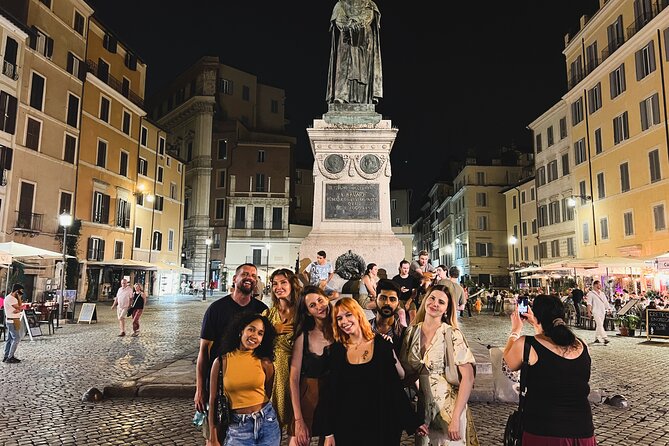
- Start at Campo de’ Fiori: The Piazza Where People Died
- Piazza Farnese and the Crime-Stopping Madonelles
- Bridges and Poison: Ponte Sisto and Fontana del Mascherone
- Churches with Human Remains: Orazione e Morte and the Power of Fear
- Monserrato, Spanish Secrets, and Cosmetics That Could Kill
- Mastro Titta and the Cenci Fate at Castel Sant’Angelo
- Price, Group Size, and What You’ll Really Get
- Tips to Hear the Guide in Noisy Roman Streets
- Who Should Book This Haunted Rome Night Walk
- Should You Book Haunted Rome: Eternal City Night Walking Tour?
- FAQ
- How long is the Haunted Rome night walking tour?
- What is the tour price?
- Where does the tour start and end?
- What language is the tour offered in?
- Do I need good weather?
- Is there free cancellation?
Key highlights to look forward to
- Small group size (max 20): easier to hear and keep the group together.
- Evening avoids daytime heat and crowds: a smarter way to see the center.
- More dark history than ghost scares: executions, crime, and legends, not jump scares.
- A route through major “Roman postcards”: Campo de’ Fiori, Ponte Sisto, Via Giulia, Castel Sant’Angelo.
- Guides who speak clearly: multiple named guides are singled out for keeping everyone engaged.
- Value at about $17.97: you’re paying for stories and route guidance, not museum entry fees.
Why This Haunted Rome Tour Works Better After Dark
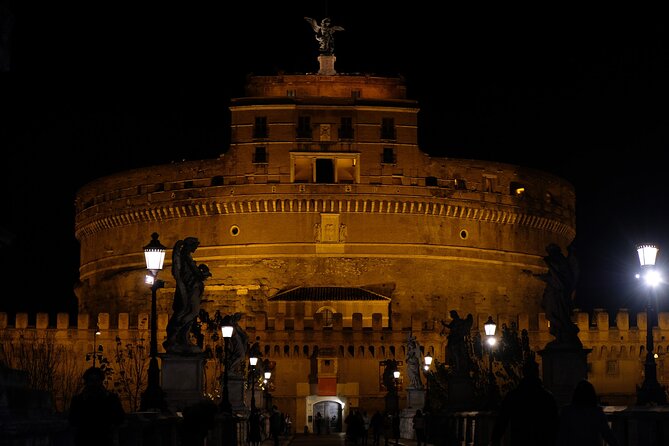
Rome is best at different hours for different reasons. By night, the city feels less like a checklist and more like a place where people still live their lives. This tour leans hard into that idea: you walk through the historic center when the light is lower, the temperatures are kinder, and the streets feel less pressured.
The second big advantage is the format. You’re not just walking between landmarks—you’re getting story links that turn each stop into a mini-history lesson. It’s a smart way to understand Rome’s past because the route is built around real locations: piazzas, bridges, churches, and streets you’d likely pass in daylight without realizing what happened there.
And yes, it’s called haunted. But in practice, it plays more like a crime-and-fate tour with spooky atmosphere. If you want squeaky-ghost entertainment, you might find it more “dark history” than truly scary. If you want the side of Rome where power, punishment, and rumor lived next to daily life, this fits perfectly.
You can also read our reviews of more tours and experiences in Rome.



Start at Campo de’ Fiori: The Piazza Where People Died
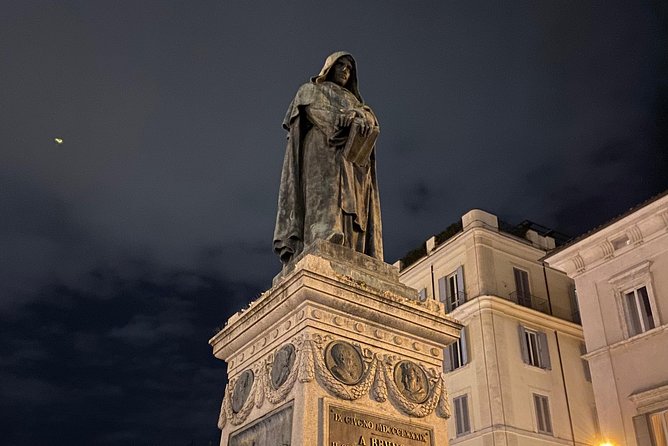
Most night tours start somewhere convenient. This one starts somewhere iconic: Campo de’ Fiori. It’s now known for bars and restaurants, and it’s lively in the way only Rome can pull off. But the reason it’s such a strong opening stop is that it carries a heavier past than the current vibe suggests.
The guide’s job here is to flip the switch. They set the tone by tying everyday life to what once took place on the same ground. That contrast matters. Once you learn to notice that kind of contradiction, you’ll start seeing Rome’s history everywhere along the route.
It also helps that the meeting point is central and easy to get to by public transportation. You’re not hunting for some back-alley start time. You show up, find the group, and let the stories lead you forward.
Piazza Farnese and the Crime-Stopping Madonelles
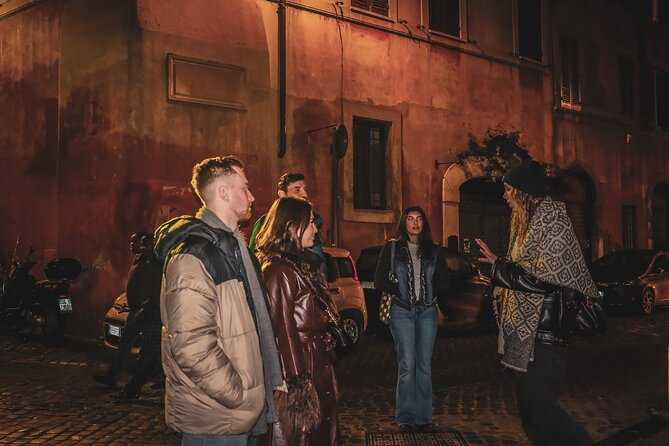
Right after Campo de’ Fiori, you head toward Piazza Farnese, a square that once belonged to the city’s wealthier elite. The tour frames it as a place where lavish parties came with consequences—an idea that keeps the theme consistent: privilege, danger, and punishment.
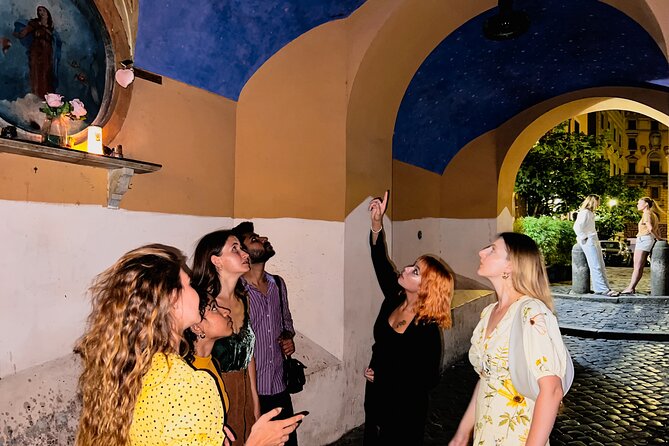
Then the route shifts to smaller streets where the details get more interesting. You’ll learn about madonelles, the small roadside Madonna statues placed along the way. The tour explains them as crime-stopping symbols—street-level reminders meant to protect people in a world that could turn violent quickly.
This is one of the tour’s underrated strengths. Rome’s big monuments get all the attention, but the little religious icons stuck into walls and corners are where daily life history hides. If you like walking and noticing street-level details, these stops are a payoff.
Practical note: these are short segments. The goal is to keep you moving and listening rather than to stop for long viewing windows.
Bridges and Poison: Ponte Sisto and Fontana del Mascherone
Bridges are perfect for ghost stories because they connect places—and in Rome, they also collect the memory of what went wrong. You’ll visit Ponte Sisto, described as one of Rome’s oldest bridges, and you’ll hear the darker side of its past: tragic accidents, power struggles, theft, and suspicious deaths.
From there, the tour turns to something that sounds almost silly until it isn’t. You stop at Fontana del Mascherone, and the warning is clear: don’t treat the fountain like a souvenir drink. The story links it to some of Rome’s most notorious poison legends, including Aqua Tofana, a topic that comes up in the comments from people who did the tour.
Here’s why this works as a travel experience: it gives you a theme you can carry. Poison shows up in different parts of the European imagination, but Rome makes it concrete by connecting it to objects you can see and photograph—buildings, fountains, and streets with names that hint at the darker tradition.
If you’re the kind of traveler who likes understanding how people lived when rules were harsher and justice was public, these stops will land well.
Churches with Human Remains: Orazione e Morte and the Power of Fear
One of the most striking stops is Chiesa di Santa Maria dell’Orazione e Morte. The tour describes a 17th-century church decorated with human remains. That’s not just a shock point; it’s a statement. The message is about how death is never far away, even when you’re surrounded by art and ritual.
This stop is also a good example of why the tour feels balanced. Even when the stories get spooky, the guide anchors them in how Romans thought and acted. The macabre isn’t presented as entertainment only—it’s framed as a worldview, a way of talking about mortality and consequences.
Timing matters here. The stop is short in the tour plan, so don’t expect a slow museum-style experience. Still, you’ll leave with the sense that you’ve seen something most visitors miss or misunderstand.
If you’re sensitive to images or ideas related to death and remains, consider how comfortable you are with that. The tour is built around dark subjects, even if it keeps the pace moving.


Monserrato, Spanish Secrets, and Cosmetics That Could Kill
After the major dramatic stops, the route moves into areas where legends cling to buildings and names. Along Via di Monserrato, you’ll hear why this apartment block is often described as one of Rome’s haunted places. It’s the kind of story that makes you look at plain facades differently. You start wondering what people whispered about behind windows, not just what happened in public squares.
Then comes Chiesa di Santa Maria in Monserrato degli Spagnoli. The tour frames it with scandalous Spanish church stories—full of gossip energy, the kind that sounds like a show because the stakes were real.
Next you walk toward Via Giulia, which the tour connects to a former beauty shop. Here the theme shifts again: the story ties cosmetics to danger, with the point that appearance and survival could collide. People who did the tour loved hearing about the danger behind the beauty angle, especially the way it connects religious power, politics, and poison rumors into everyday commerce.
If you like history that feels human—jealousy, ambition, and survival choices—this portion is a highlight. It’s not just “Rome was old.” It’s “Rome worked a certain way,” and the stories explain why.
Mastro Titta and the Cenci Fate at Castel Sant’Angelo
You end on a place with massive story energy: Castel Sant’Angelo. On the way, you’ll visit Via dell’Arco dei Banchi, a street stop centered on Mastro Titta, Rome’s infamous executioner. The tour uses the setting to explain how execution stories became part of the city’s street life—names and reputations tied to the route people walked.
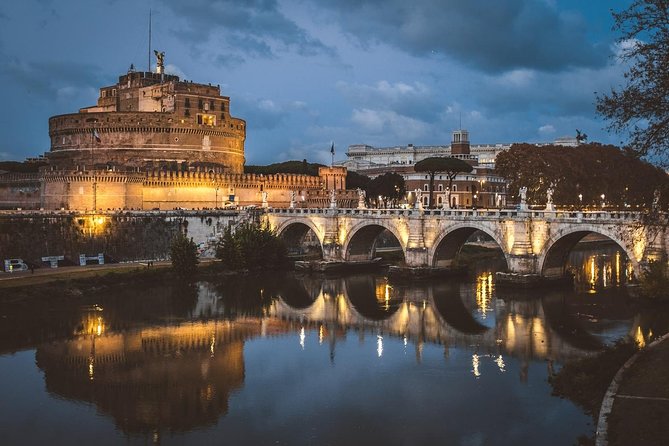
Then the final chapter brings it all together at Castel Sant’Angelo. The tour explains how the bridge area used to expose the bodies of the executed as a warning, and how the modern setting changes the mood. Today there are statues of angels, but the story keeps the focus on the Cenci family and their fatal end.
This ending is satisfying because it’s both dramatic and legible. You can see the fortress-bridge zone and understand why it was the kind of place where punishment became a public message. When the guide finishes, you’re standing at a real, powerful landmark with a story you’ll remember—not just a photo.
Price, Group Size, and What You’ll Really Get
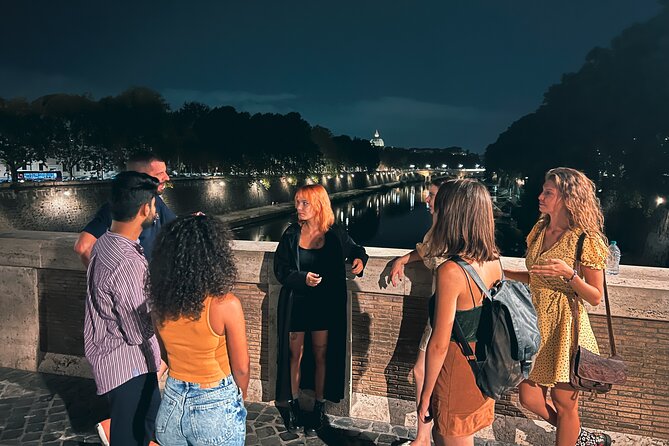
The price here is about $17.97 per person, and that’s one of the reasons it’s easy to justify. You’re paying for a guided walk plus story context, not for expensive museum tickets or a bus ride. That makes it a solid value if you want to “learn as you go” without adding heavy planning.
The group size cap of 20 is also meaningful. Smaller groups tend to move better at night, and it’s easier for the guide to keep everyone together. In the comments, people repeatedly praise guides for engaging the group and making sure they can hear—especially guides like Sarah, Maham, Ana, Diletta, and Bruce.
Duration is listed as about 2 hours. In practice, you should assume it may run a bit shorter depending on the pace and stops. One review called out finishing early, and another mentioned longer toilet breaks. So if you have a strict dinner reservation, plan a little buffer.
Tips to Hear the Guide in Noisy Roman Streets
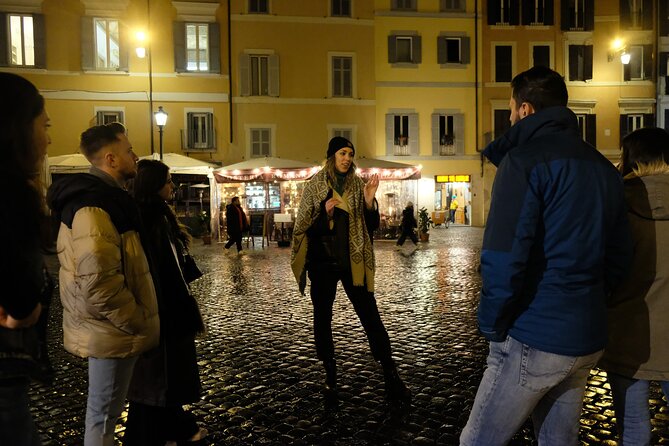
This tour is mostly walking outdoors, so sound is your main variable. Some guides are praised for speaking clearly and staying loud enough over street noise, and at least one person noted the need for better audio help at times.
So here’s what I’d do to get the best experience:
- Show up a bit early so you can find a good listening spot right from the first stop.
- Stay close enough to hear without shouting. If people are spreading out, tighten your position.
- Keep your phone away unless you’re checking directions. The guide’s pacing relies on everyone listening at each stop.
- Wear comfortable walking shoes. The route is in the centro storico, where cobblestones and uneven sidewalks are part of the deal.
Even if you’re not a “spooky” person, you’ll likely enjoy this more if you treat it like a guided storytelling route through real Rome.
Who Should Book This Haunted Rome Night Walk
This tour is a strong fit if you:
- Want an easy way to learn Rome’s darker side without extra museums
- Like walking tours with clear stops and story-based context
- Enjoy crime, legends, and the way places become symbols over time
- Travel with kids who like spooky stories but won’t need gore or jump-scare theatrics
It may be less ideal if you:
- Need a guaranteed full two hours with zero variation
- Are very sensitive to death-related themes like human remains
- Hate standing still briefly at indoor or church-related stops
If you do most of your sightseeing in the morning or early afternoon, this is a smart “second-night” activity. It also works well as one of your first nights because it helps you understand the city’s layout and character fast.
Should You Book Haunted Rome: Eternal City Night Walking Tour?
I’d book it if you want a value-priced, small-group evening that turns Rome’s famous center into an understandable story. The route across major landmarks plus the consistent praise for engaging, clear guides makes it a good bet, especially at night when the city is more comfortable to walk.
Just go in with the right expectation. This isn’t a supernatural haunted-house experience. It’s about Rome’s human shadows—punishment, politics, poison rumors, and the way belief shaped daily streets. If that sounds like your kind of Rome, you’ll probably have a memorable evening.
FAQ
How long is the Haunted Rome night walking tour?
It runs for about 2 hours, approximately.
What is the tour price?
The price is $17.97 per person.
Where does the tour start and end?
It starts at Piazza Campo de’ Fiori and ends at Castel Sant’Angelo (Lungotevere Castello, 50).
What language is the tour offered in?
The tour is offered in English.
Do I need good weather?
Yes. The experience requires good weather. If it’s canceled due to poor weather, you’ll be offered a different date or a full refund.
Is there free cancellation?
Yes. You can cancel for a full refund up to 24 hours in advance. If you cancel less than 24 hours before the start time, the amount paid isn’t refunded.