REVIEW · ROME
Ghost & Legends in Night Rome Walking Tour
Book on Viator →Operated by Rome Adventures · Bookable on Viator
Night Rome has a darker soundtrack. This 2-hour walk threads together ghosts, executions, and murders with real street corners you can actually see, right when Rome gets calmer and cooler. You’ll start in the historic heart of the city and end at Castel Sant’Angelo, all while your guide brings the stories to life in a way that feels made for the nighttime atmosphere.
What I like most is the story-first pacing: you stop often, listen, and keep moving—so it stays entertaining without dragging. I also like that you’re not just hearing general “Rome myths”; the route links together specific places like Campo de’ Fiori and the bridge areas tied to gruesome history. Guides such as Antonio, Dominica, Sarah, Simon, and Paula have been called out for making it fun, with clear detail and even visual aids.
One thing to consider: sound can be tricky at night. In louder piazzas and busy corners, it can get harder to catch every word—so you may want to pick a spot close to the guide and be ready for some stop-and-listen moments.
In This Review
- Key highlights worth your attention
- Why Night Walk Ghost Stories Work So Well in Rome
- Price and Logistics: Is $29.96 Good Value?
- The Route From Campo de’ Fiori to Castel Sant’Angelo
- Campo de’ Fiori: From Market Square to Execution-Linked Legends
- Piazza Farnese: Wealth, Parties, and a Secret-Passage Legend
- Via del Mascherone and Vicolo dei Venti: Little Madonnas and Crime-Prevention Lore
- Ponte Sisto: The Old Bridge With a Gruesome Reputation
- Fontana del Mascherone: A Fountain You Shouldn’t Test
- Chiesa di Santa Maria dell’Orazione e Morte: The Church Made of Human Bones
- Via di Monserrato: Haunted Apartment Blocks and Prison History
- Chiesa di Santa Maria in Monserrato degli Spagnoli: Spanish Church Drama
- Via Giulia: When Cosmetics Can Kill
- Via dell’Arco dei Banchi: Mastro Titta’s Childhood Home
- Castel Sant’Angelo: Angels, Exhibited Bodies, and the Cenci Tragedy
- The Guides: Storytelling Style That Keeps It Fun at 10 Minutes per Stop
- How to Hear the Stories (When Rome Gets Loud)
- Who This Tour Fits Best (And Who Might Want Something Different)
- Should You Book This Ghost & Legends Night Walk?
- FAQ
- How long is the Ghost & Legends in Night Rome Walking Tour?
- What is the price per person?
- Where does the tour start and where does it end?
- Is the tour offered in English?
- What size is the group?
- Do I need to buy admission tickets for the stops?
- Is a mobile ticket used?
- Is it suitable for most travelers?
- Do they require good weather?
- Can I cancel for a refund?
- Are service animals allowed?
Key highlights worth your attention
- Night timing makes the storytelling feel right, with fewer crowds and cooler temps
- Bone-church stop adds a truly unforgettable, macabre real-Rome moment
- Execution-related sites connect stories across bridges, churches, and streets
- Small group cap (20 people) helps you stay engaged and hear your guide better
- Guides use visuals on their phones, so the details land faster
Why Night Walk Ghost Stories Work So Well in Rome
Rome at night isn’t just quieter—it’s a different mood. When you’re walking under streetlights instead of midday sun, the city feels more like a stage. That’s exactly where this tour shines: you’re not learning history in a classroom; you’re getting a guided story walk through streets where the past still feels close.
The format matters. This is a 2-hour walking route with short stops (about 10 minutes each), so you stay mentally switched on. You get time to look around, hear the next chapter, and move before your attention slips. It’s the kind of tour where the pace keeps you from tuning out.
Also, the theme is focused. Instead of mixing everything from ancient ruins to modern art, it zeroes in on Rome’s darker side—executions, suspicious deaths, and legends tied to particular streets. That focus is a real value, because it gives you a clear “what you’ll get” promise.
You can also read our reviews of more tours and experiences in Rome.



Price and Logistics: Is $29.96 Good Value?
At $29.96 per person for about 2 hours, this is priced as an evening add-on rather than a major-ticket experience. What makes it feel like good value is the length and the number of meaningful stops you cover in a single outing—especially when the tour runs in English and keeps the group to a maximum of 20.
You also get a mobile ticket. That sounds minor, but in Rome it helps. Less fuss means more time for the actual walk.
A couple practical notes from what’s clearly part of the setup:
- It’s offered in English.
- The tour is near public transportation, which makes it easier to plug into your evening plan.
- Most travelers can participate, but you’ll still want comfortable shoes, because you’ll be on your feet for the full stretch.
- Good weather is required, and if conditions are poor you’ll be offered another date or a refund. Rome nights can turn damp fast, so plan layers.
The Route From Campo de’ Fiori to Castel Sant’Angelo
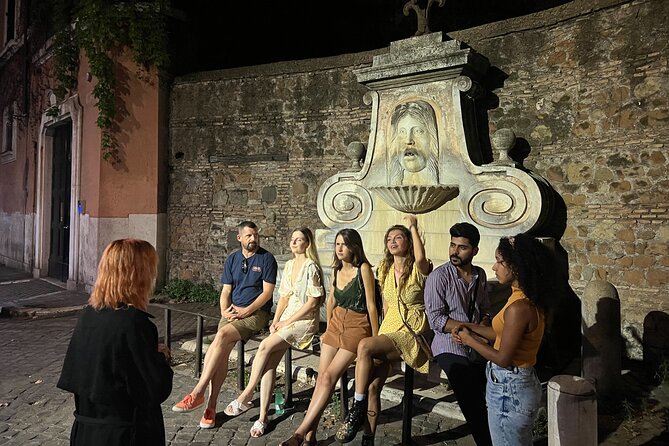
This is a start-to-finish route where the story has a beginning, middle, and a hard landing at the end. You meet in Piazza Campo de’ Fiori and finish at Castel Sant’Angelo (Lungotevere Castello, 50). That’s helpful because you’re not stuck backtracking—after the tour, you can keep enjoying the evening around the river.
Plan on nighttime walking between stops, with the guide setting the rhythm. Your best strategy is simple: stay attentive early, then let the route build your sense of place. By the last stretch, the theme should feel coherent, not random.
Below is what you’ll encounter, in the order you’ll likely see it.
Campo de’ Fiori: From Market Square to Execution-Linked Legends
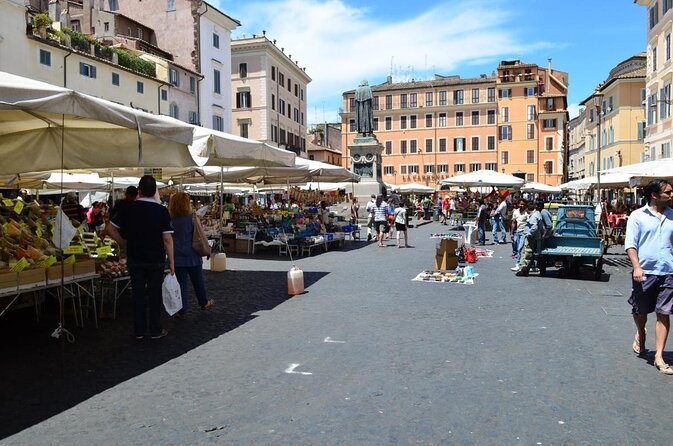
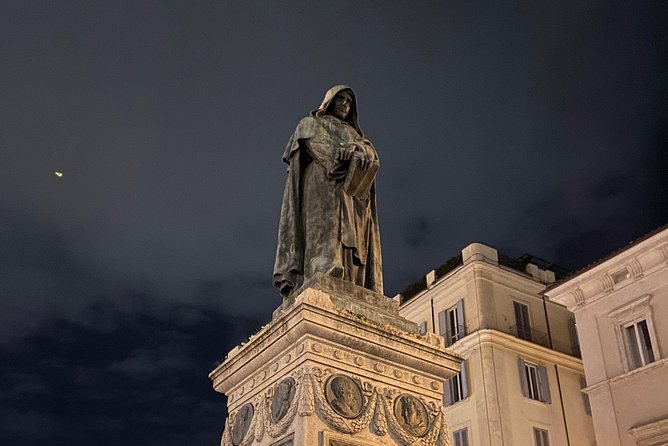
Your first stop is Campo de’ Fiori, one of Rome’s best-known piazzas. By day, it’s all about food stalls and evening energy. But the tour frames it differently: this square has a history that makes it a strong “opening scene” for a ghost walk.
Why it works as a starting point: it anchors you in a major public space, and it reminds you how quickly Rome’s identity changes by era. The guide sets up the idea that in older Rome, public squares weren’t just for gathering—they could also be used for punishment and fear. Even if you know the piazza from daytime wanderings, the nighttime storytelling perspective gives you a new mental map.
Piazza Farnese: Wealth, Parties, and a Secret-Passage Legend
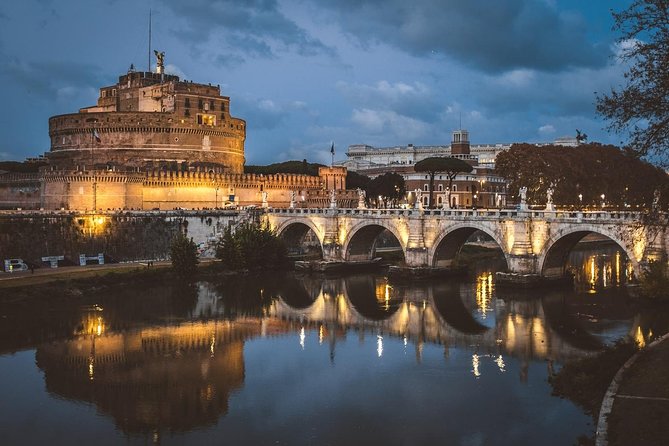
Next comes Piazza Farnese, tied to stories of wealthy power and lavish social life. This stop leans into legend—specifically, a story about a secret passageway.
This is one of those “Rome is stranger than fiction” moments. You’re not just hearing that elites had secrets; you’re standing in the setting where those kinds of legends feel believable. If you like your horror history with a dash of intrigue, this is the kind of stop that keeps attention.


Via del Mascherone and Vicolo dei Venti: Little Madonnas and Crime-Prevention Lore
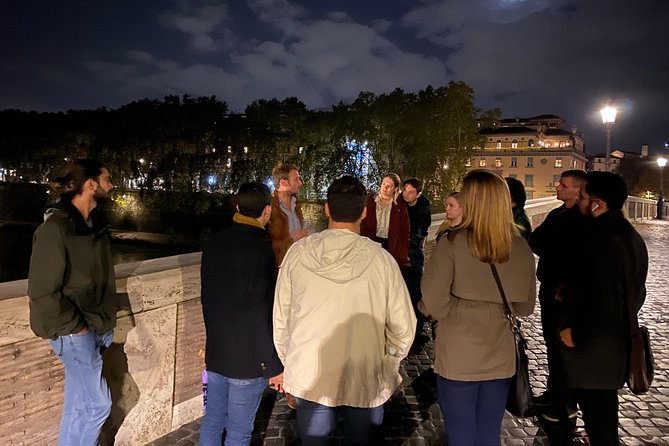
Then the route tightens into smaller lanes: Via del Mascherone and Vicolo dei Venti. Here you’ll look for small religious icons—madonelles, often called little Madonnas—and hear how they were connected to the idea of preventing crime.
This is a useful kind of stop because it changes how you see Rome. Instead of only noticing big monuments, you start clocking the small visual details that locals used to live around. At night, those small stone figures also feel a bit more eerie, since they’re not competing with crowds.
Ponte Sisto: The Old Bridge With a Gruesome Reputation
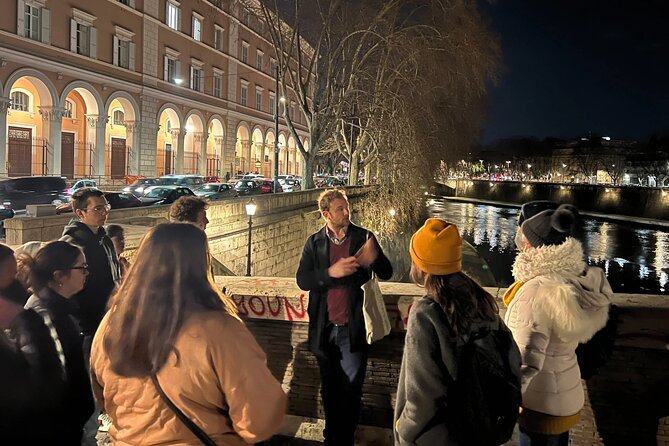
Next up is Ponte Sisto, highlighted for being the oldest bridge in Rome. But the tour doesn’t treat it like a photo spot—it treats it like a crime scene in story form, with tales involving accidents, power struggles, theft, and suspicious deaths.
Even if you don’t love ghost stories, bridges have a special pull: they funnel movement and create “crossing moments.” That makes them perfect for a narrative about warning, punishment, and fallout. You’ll also likely find this stop gives you the most cinematic sense of Rome’s past—long views, river shadows, and the feeling that a lot happened in one narrow crossing.
Fontana del Mascherone: A Fountain You Shouldn’t Test
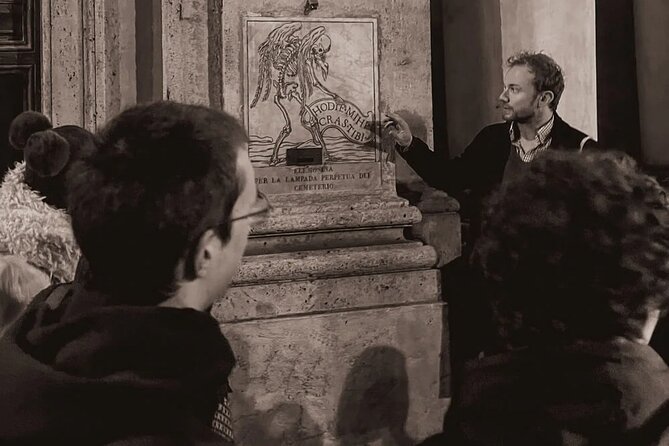
The tour then moves to Fontana del Mascherone and adds a clear warning: you’re not supposed to drink from fountains in Rome, and this one comes with deadly consequences in the legend.
This is horror-tour logic in the best way. You get a practical reminder about tourist behavior, then the guide turns it into story tension. If you tend to roll your eyes at legends, don’t rush to judge this one—it’s anchored in a very Rome-specific rule and then it plays with the fear response.
Chiesa di Santa Maria dell’Orazione e Morte: The Church Made of Human Bones
One stop you should not skip is Chiesa di Santa Maria dell’Orazione e Morte, a 17th-century church connected to death so directly it’s hard to forget. The tour points out that it is associated with human bones, and the whole place becomes a reminder that death is never far away.
This is where the tone becomes serious, and that balance is part of the tour’s value. You don’t just hear shock stories; you get at least one moment that feels like a real encounter with Rome’s relationship to mortality.
Via di Monserrato: Haunted Apartment Blocks and Prison History
Then the route shifts to Via di Monserrato, described as one of Rome’s most haunted apartment blocks. The story ties it to an era when this area was linked to one of Rome’s worst prisons.
This stop is especially effective because it’s not a museum setting. You’re seeing residential buildings and imagining what they once were. That contrast is the point: Rome layers eras on top of each other, and this tour uses that layering to make the past feel personal rather than distant.
Chiesa di Santa Maria in Monserrato degli Spagnoli: Spanish Church Drama
After that, you’ll visit Chiesa di Santa Maria in Monserrato degli Spagnoli, a Spanish church with a scandalous story. It’s the kind of stop that feels like it could belong in a TV drama—intrigue, reputation, and consequences.
If you like storylines with human motives (jealousy, ambition, rivalry), this is one of the more satisfying chapters. It also breaks up the heavier themes with a different flavor of dark history.
Via Giulia: When Cosmetics Can Kill
At Via Giulia, you’ll hear a story connected to cosmetics and the idea that beauty tools can have fatal consequences. This is a clever turn in the route, because it moves away from execution scenes and into something people recognize—appearance, fashion, and risk.
It also helps the tour stay varied. The theme stays dark, but the subject matter changes, so you’re not only getting one type of macabre detail.
Via dell’Arco dei Banchi: Mastro Titta’s Childhood Home
Next is Via dell’Arco dei Banchi, tied to the childhood home of Mastro Titta, one of Rome’s famous executioners. This stop gives the tour a direct connection to a named figure instead of only legends or generalized fear.
It’s also a smart way to humanize history without excusing it. You don’t just hear about punishment as an abstract system—you connect it to the people who carried out the grim work. That makes the stories stick.
Castel Sant’Angelo: Angels, Exhibited Bodies, and the Cenci Tragedy
The final stop is Castel Sant’Angelo, and the tour frames it as more than a scenic landmark. It explains that the bridge area and surrounding spaces were used to expose bodies of the executed as a warning, then it lands on the Cenci family story and their fatal end.
It’s a strong closing chapter because the location already has a dramatic feel. And by the time you reach the castle, you’ve heard enough across churches, bridges, and streets to understand why Rome’s warnings were so public.
When the tour ends at Castel Sant’Angelo, you’re perfectly placed to keep walking along the river afterward. You’ll have built a darker mental picture of the city, but it won’t stop you from enjoying the scenery.
The Guides: Storytelling Style That Keeps It Fun at 10 Minutes per Stop
This tour lives or dies on the guide. The strongest patterns show up in the names people mention—Antonio, Dominica, Sarah, Simon, Maham, Diletta, Paula, and others. The common thread is a relaxed, entertaining delivery that doesn’t turn into a lecture.
Here are practical ways that shows up in the experience:
- You’ll get detailed stories that connect place to event, not just isolated facts.
- Some guides use pictures on their phones to help explain what you’re looking at.
- The tone often includes humor, so the night doesn’t feel grim the whole time.
- If you’re traveling with kids, you may find guides can adapt how they tell the stories for younger listeners, including keeping it fun while still respecting the subject.
One note to plan around: nighttime walking means cold can sneak up on you. If you’re doing this in winter, bring a layer—you’ll likely feel it more than you expect.
How to Hear the Stories (When Rome Gets Loud)
A recurring issue with any walking tour is noise. This one moves through piazzas and corners where conversation, footsteps, and traffic can mask the guide. The fix is simple:
- Stand closer to the guide when you stop.
- Don’t drift to the edges to take photos right away.
- If you’re at a loud stop, let your phone camera wait until the story pauses.
You don’t need to be first in line, but you should be in the zone where you can hear. Otherwise, you’ll miss the best parts—the specific legend details that make the route feel like more than a walk.
Who This Tour Fits Best (And Who Might Want Something Different)
This experience is best for you if:
- You like story-driven history more than museum facts.
- You enjoy Rome from street level—piazzas, alley turns, and recognizable landmarks.
- You want a night plan that feels different from daytime sightseeing.
It may be less ideal if you:
- Prefer quiet, contemplative tours with minimal walking.
- Get frustrated when audio is hard in crowded or loud public squares.
Also, if you’ve already done a bunch of standard “top sights” tours, this is a good way to add a new angle without repeating the same route. It’s themed, focused, and it uses the city’s layout to tell the story.
Should You Book This Ghost & Legends Night Walk?
I think this is an easy yes if you want an entertaining evening with actual Rome locations tied to execution-era lore and creepy legends. The pricing is reasonable for a two-hour walk, and the strong rating (4.8) plus 94% recommendation rate suggests the experience usually lands well.
Book it now if you’re the kind of traveler who likes:
- nighttime atmosphere,
- a clear story thread,
- and a route that ends with a big, dramatic landmark.
If you’re sensitive to cold nights or you’re worried about hearing in louder areas, go prepared. Wear good shoes, bring a warmer layer, and stay close when the group gathers.
If your goal is a light, easy evening stroll with no dark theme, look elsewhere. But if you want Rome with a shadow side—and you’re ready to listen—this one is worth your time.
FAQ
How long is the Ghost & Legends in Night Rome Walking Tour?
It runs about 2 hours.
What is the price per person?
The price is $29.96 per person.
Where does the tour start and where does it end?
You start in Piazza Campo de’ Fiori and end at Castel Sant’Angelo (Lungotevere Castello, 50).
Is the tour offered in English?
Yes, it’s offered in English.
What size is the group?
The tour has a maximum of 20 travelers.
Do I need to buy admission tickets for the stops?
The stops listed show admission ticket free.
Is a mobile ticket used?
Yes, the tour uses a mobile ticket.
Is it suitable for most travelers?
The tour notes that most travelers can participate.
Do they require good weather?
Yes. The experience requires good weather; if it’s canceled for poor weather, you’ll be offered a different date or a full refund.
Can I cancel for a refund?
Yes. It offers free cancellation and you can cancel up to 24 hours in advance for a full refund.
Are service animals allowed?
Yes, service animals are allowed.