REVIEW · ROME
Experience Rome in this Mysterious Ghost Tour
Book on Viator →Operated by Italy Wonders SRLS · Bookable on Viator
Rome at night has a darker heartbeat. This ghost tour threads together executions, poison lore, and haunted church stories across major Roman landmarks, with a night walk that’s aimed at history-heads and thrill-seekers. I really like the tight 2-hour pace and the way the route uses famous sites like Castel Sant’Angelo to anchor the spooky tales. The one thing to keep in mind is that many stops are viewed from outside because sites may be closed when you arrive.
You’ll start at Ponte Sant’Angelo near the St. Angelo Bridge and end at Campo de’ Fiori. It’s set up for an easy evening stroll with a mobile ticket, and there’s no hotel pickup to worry about. That means you’ll do best if you’re comfortable navigating on your own for a short walk between landmarks.
You get a professional English-speaking guide and a small group size (max 20), which helps the stories land without turning into a train-of-headsets. Still, if you’re hoping for non-English support, plan ahead. One caution from real-world feedback: language fit matters, and small groups can mean a tour feels less flexible if you and your guide aren’t on the same page.
In This Review
- Quick hits
- Rome’s Dark Side, Guided in Plain English
- The main theme: punishment, secrecy, and rumor
- Price and Timing: What $23.95 Buys You
- What’s not included
- The 2-Hour Route, Stop by Stop
- Stop 1: Castel Sant’Angelo
- Stop 2: Casa di Mastro Titta
- Stop 3: Via di Monserrato (Giulia Tofana and Tofana’s Water)
- Stop 4: Chiesa di Santa Maria in Monserrato degli Spagnoli
- Stop 5: Regina Coeli
- Stop 6: Chiesa di Santa Maria dell’Orazione e Morte (included entry)
- Stop 7: Fontana del Mascherone
- Stop 8: Ponte Sisto
- Stop 9: Piazza Farnese
- Stop 10: Campo de’ Fiori (end)
- What You’ll Hear About: Executions, Poison, and Haunted Churches
- Logistics That Matter at Night in Rome
- Meeting point and ending point
- Mobile ticket and timing
- Group size and movement
- Outside viewing
- Language fit
- Is the Ghost Stuff Too Much? Keeping It Real
- Who Should Book This Ghost Tour
- Should You Book This Ghost Tour or Skip It?
- FAQ
- How long is the ghost tour?
- How much does the tour cost?
- Where does the tour start and end?
- Is it a mobile ticket tour?
- Are entrance fees included?
- Can I get a refund if I cancel?
Quick hits
- Ponte Sant’Angelo to Campo de’ Fiori: a classic Roman river-to-square route with an evening mood
- Major landmarks used as story anchors: Castel Sant’Angelo, Ponte Sisto, Piazza Farnese, Campo de’ Fiori
- A mix of true-ish crime history and folklore: executions, poison myths, haunted tomb lore
- Most stops are outside: good for moving fast, less good if you were hoping for lots of entrances
- One church stop includes entry: Chiesa di Santa Maria dell’Orazione e Morte
- Small group, mobile ticket: more personal than the huge-bus style tours
Rome’s Dark Side, Guided in Plain English
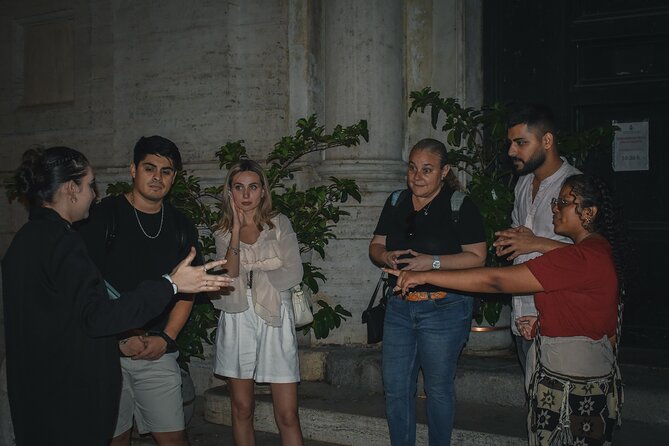
This ghost tour is the kind of Rome evening that swaps sightseeing smiles for side-eye. You’ll walk through historic pockets of the city while your guide ties the spooky parts to real places and real crimes—or at least the stories Rome built around them. It’s not just jump-scare theater. The best moments feel like: wait, this used to be where what happened?
I like that the tour keeps a clear structure: short stops, a story at each one, then you move on. That pacing matters because you’re doing it at night, and you want your feet and your brain to agree with each other.
Also, the route avoids a lot of the usual crowd magnets. Instead of spending the whole time in the busiest postcard spots, you bounce between darker, lesser-celebrated corners with famous backdrops.
You can also read our reviews of more tours and experiences in Rome.



The main theme: punishment, secrecy, and rumor
The tour leans into three big buckets:
- Execution and imprisonment (fortresses and prisons tied to punishment)
- Poison lore (Giulia Tofana and Tofana’s Water)
- Haunted burial and mourning (churches tied to death, crypts, and spirits)
Even if you treat the ghost claims as folklore, you still get a strong sense of how people in older Rome explained the unexplainable—through legend, fear, and repeating stories.
Price and Timing: What $23.95 Buys You
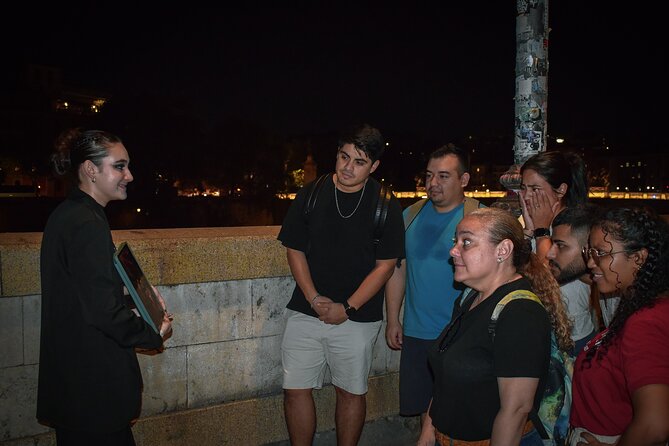
At $23.95 per person for about 2 hours, you’re paying for two things:
1) A guide who can connect the dots between each site and the darker narratives
2) A focused night walk that uses recognizable landmarks without requiring you to piece everything together
This isn’t a long tour, and that’s part of the value. You’re not paying for hours of slow transit or dead time. The stops are around 10–15 minutes each, which keeps the energy up and makes it easier to fit into a night schedule.
A practical note: your tour is booked ahead on average (about 42 days), so it’s smart to lock in early if you’re traveling in peak season. And because this is a night walk with a small group (max 20), you generally want the tour date you choose to actually be available.
What’s not included
- Entrance fees to attractions are generally not included (and some stops are listed as not included specifically)
- You do get one church stop with admission included: Chiesa di Santa Maria dell’Orazione e Morte
In other words: you’re paying for the guiding and storytelling, not a bundle of ticketed museum time.
The 2-Hour Route, Stop by Stop

The route runs from Ponte Sant’Angelo (start) to Campo de’ Fiori (end). You’ll mostly be looking at places in the context of Rome’s history, with plenty of exterior viewing since some sites may be closed at the time of your visit.
Below is what you can expect at each stop—and where the payoff is (or isn’t).


Stop 1: Castel Sant’Angelo
You begin at Castel Sant’Angelo, an ancient fortress that started as Emperor Hadrian’s mausoleum. Over time it became a prison and execution site, and that transformation is exactly why it works for a ghost tour.
What to expect:
- Exterior and story-led context (admission isn’t included here)
- A focus on the grim “death-to-detention” evolution of the fortress
Possible drawback:
- Since entry may not be part of your visit, you’re getting the atmosphere and history more than a full inside tour.
The spooky part in the pitch is that people report eerie sounds and ghost sightings. Even if you’re skeptical, the setting itself is enough to make the hairs-on-arms effect happen.
Stop 2: Casa di Mastro Titta
Next you stop at Casa di Mastro Titta, tied to Rome’s most famous executioner, Mastro Titta. The story goes that his spirit lingers in the area, with people describing a shadowy figure wielding an axe after dark.
What to expect:
- A short pause for the executioner lore
- A strong emphasis on Rome’s “mechanics of punishment,” not just the tragedy
Practical reality:
- Like the fortress, admission is not included. This stop is more about the tale and the location’s reputation than an in-depth visit.
If you love history that feels human and ugly—people doing their jobs inside a system—this one tends to work.
Stop 3: Via di Monserrato (Giulia Tofana and Tofana’s Water)
Then it’s onto Via di Monserrato, where you’ll hear about Giulia Tofana and something called Tofana’s Water. The tour’s storyline frames her as a mysterious woman connected to the poisoning of more than 600 men.
What to expect:
- A narrative stop that ties a real-sounding name to a dark legend
- Explanations designed to connect the dots between the woman, the method, and the fear around it
Possible drawback:
- This is a “story at a street corner” moment, so if you were hoping for a lot of physical artifacts or museum-style context, you might feel it’s more imagination than evidence.
Still, it’s a standout stop because it changes the tone from executions to covert harm.
Stop 4: Chiesa di Santa Maria in Monserrato degli Spagnoli
Here you pause at Chiesa di Santa Maria in Monserrato degli Spagnoli, where the tour links the site to Spanish nobles and claims their spirits may roam the church.
What to expect:
- A focus on ornate tomb areas and the vibe of “death made decorative”
- Stories about whispering voices and fleeting shadows among tombs
Practical reality:
- Admission isn’t included for this stop, so you may mostly be viewing from outside or spending limited time on what’s accessible.
This stop works best if you like your “ghosts” tied to burial culture and the way older Rome treated death as part of public life.
Stop 5: Regina Coeli
Next is Regina Coeli, a notorious prison where Giulia Tofana was held and then executed. The ghost angle here is a sorrowful woman said to wander the streets at night.
What to expect:
- A grim look at the prison setting as part of the story chain
- A strong link between the poison narrative and the punishment ending
Possible drawback:
- As with other stops, admission isn’t listed as included, so you’re not counting on indoor access.
Even if you skip the ghost beliefs, this stop tells you something real: in older Rome, people were punished, displayed, and remembered in ways that went beyond the courtroom.
Stop 6: Chiesa di Santa Maria dell’Orazione e Morte (included entry)
Now you get the one entrance stop that’s flagged as admission included: Chiesa di Santa Maria dell’Orazione e Morte.
This church is described as dedicated to the care of souls who died without proper burial. The crypt is said to be filled with skeletal remains, and the stories claim the ghosts of those whose bones rest there may still linger.
What to expect:
- A more hands-on, in-person portion than most other stops
- A chance to see the darker side of ritual care and death culture in a concrete way (even without leaning into the ghost claims)
This is the stop I’d point you toward if you want the tour to feel more than just a series of street anecdotes.
Stop 7: Fontana del Mascherone
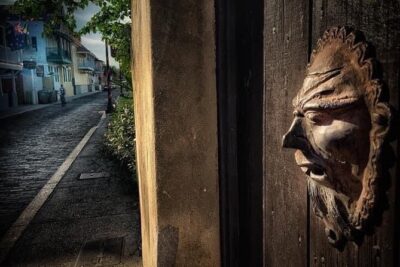
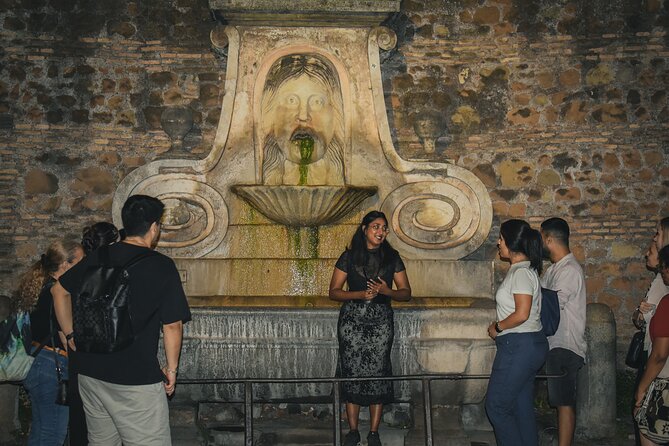
Next you visit Fontana del Mascherone, a fountain with a grotesque mask. The tour labels it as cursed, telling stories about people who drank from it and then suffered misfortune.
What to expect:
- A quick but atmospheric stop with a strong visual anchor (the mask)
- A folklore angle that mixes humor and fear
Practical note:
- Admission isn’t listed as required for this stop. This one should be low-friction.
If you like your spooky with a pinch of dark comedy, this is where the tour can feel fun rather than heavy.
Stop 8: Ponte Sisto
Then comes Ponte Sisto, a bridge over the Tiber. It’s described as having seen many tragic events, and the tour claims lost souls wander the bridge at night.
What to expect:
- A classic Rome river-crossing moment with a story attached
- A quick shift into “urban legend on water” mode
Possible drawback:
- It’s a short stop. If you want long views and lots of photographs, you’ll probably need to be quick and respectful of the group pace.
Bridges in Rome already feel dramatic at night. Add the ghost lore and you get instant mood.
Stop 9: Piazza Farnese
You then reach Piazza Farnese, an elegant square tied to the Palazzo Farnese. The tour says the palace and family are haunted by restless spirits.
What to expect:
- A contrast: elegant surroundings with dark story claims
- A brief stop focused on the contrast between beauty and fear
Practical reality:
- No entrance is listed here, so you’re mostly absorbing the setting and the story.
This is one of those stops that’s good for imagination. You don’t need to believe the haunting to feel the eerie “what happened here?” pull.
Stop 10: Campo de’ Fiori (end)
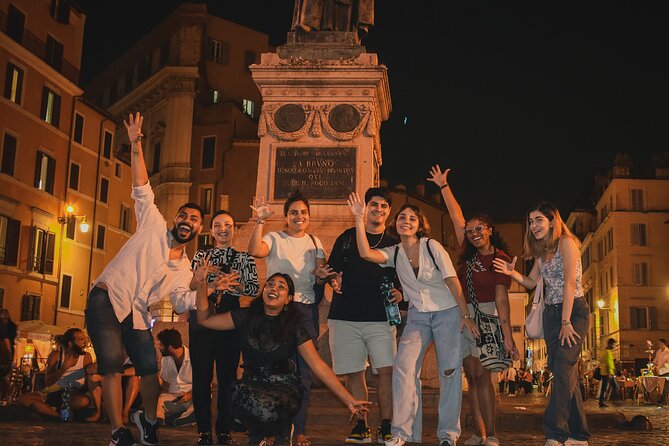
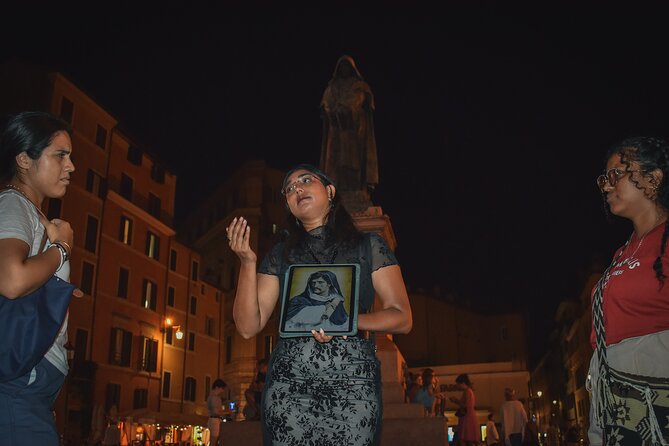
Finally, you wrap at Campo de’ Fiori, a lively square today that was once tied to public executions. The ghost story connected here is Giordano Bruno, a philosopher said to haunt the area after being burned at the stake.
What to expect:
- A final story with a huge Roman “memory” impact
- A natural finish point in a popular square, which makes it easy to keep your evening going afterward
Possible drawback:
- Because this is the ending location, you may end up wanting to slow down and explore right away, but your tour time is done.
What You’ll Hear About: Executions, Poison, and Haunted Churches
The storytelling is built around the idea that Rome used fear as a public language. The tour’s strongest moments usually happen when you notice how each story “fits” into the space.
- At Castel Sant’Angelo, the setting itself feels like machinery for punishment.
- With Mastro Titta, you’re hearing the human side of executions: the people who did the work and the legend that grew around them.
- With Giulia Tofana and Tofana’s Water, the focus shifts to secrecy and how rumors spread when harm is invisible.
- In the churches, the focus turns to death ritual and what happens when bodies (or souls) don’t get handled the right way.
So even if you treat the ghost sightings as stories, you still learn how older Rome processed violence and death—then repeated it until it became legend.
Logistics That Matter at Night in Rome
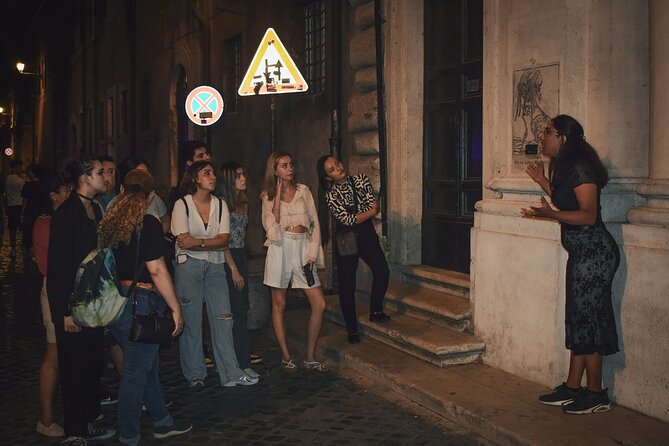
Here’s the practical stuff that decides whether a night tour feels smooth or stressful.
Meeting point and ending point
- Start: Ponte Sant’Angelo / St. Angelo Bridge (Ponte Sant’Angelo, 00186 Roma RM)
- End: Campo de’ Fiori (00186 Roma RM)
There’s no hotel pickup, so you’ll want to plan how you’ll get to the start area and how you’ll walk from the end.
Mobile ticket and timing
You’ll have a mobile ticket and should receive confirmation within 48 hours, depending on availability. So if you’re planning other evening activities, keep some breathing room.
Group size and movement
Max 20 travelers means you should get less crowd friction than the biggest tours. But this is still a moving walking tour. The info calls for moderate physical fitness, which usually means cobblestones and hills can slow you down. If you’re nursing sore knees, I’d take it at a gentler pace and mention it to your guide.
Outside viewing
One big heads-up: most of the stops will be visited from the outside because sites may be closed when you get there. That’s not a deal-breaker, but it changes expectations. This is a guided storytelling tour first. If you’re hoping for constant interior access, you might come away wanting more.
Language fit
The tour is described as having a professional English-speaking guide. If you need another language, don’t assume it’ll be available. One real-world caution from feedback: language mismatch can turn a small tour awkward fast, especially when the group is tiny.
Is the Ghost Stuff Too Much? Keeping It Real
This is a ghost tour, so the stories go there. But you can still enjoy it without turning your brain off.
I recommend treating the ghost claims like folklore and atmosphere. Focus on what the guide uses to make each site interesting:
- Why a place became tied to executions
- Why poison stories caught fire
- Why certain churches grew reputations around burial and death
That way, you get value even if you’re the type who says, Sure, I believe in history. The ghost part is just the delivery system.
Also, because you’re seeing famous landmarks like Castel Sant’Angelo and Ponte Sisto, the tour gives you a sense of Rome’s layout. At night, that alone can be worth it.
Who Should Book This Ghost Tour
This one fits best if you:
- Like darker history and crime stories tied to real places
- Want a night walk that feels like a guided story, not a museum sprint
- Prefer a smaller group (max 20) over a huge crowd
- Are okay with some exterior viewing and at least one entrance stop
It might be less satisfying if you:
- Want constant indoor access or lots of paid entry included
- Need support in a language other than English
- Have trouble walking at night for about 2 hours with moderate fitness demands
Should You Book This Ghost Tour or Skip It?
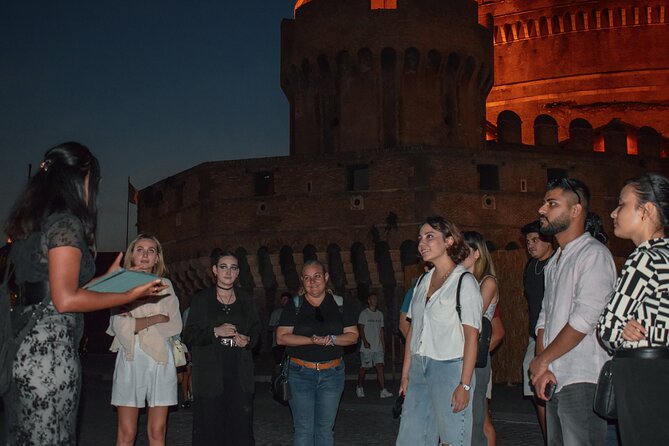
Book it if you want a fun, fast-moving night tour that uses Rome’s most story-heavy locations. The route from Ponte Sant’Angelo to Campo de’ Fiori is a smart way to see the city’s darker side without spending your whole evening in long lines.
Skip it if you’re expecting lots of entrances at nearly every stop. The tour’s format leans heavily on exterior viewing due to closures, and admission is mostly not included except for Chiesa di Santa Maria dell’Orazione e Morte.
My call: it’s good value for a $23.95 night walk, especially if you like your history with a spooky edge—and you show up ready for a guide-led story tour rather than an all-access ticket package.
FAQ
How long is the ghost tour?
The tour lasts about 2 hours.
How much does the tour cost?
It costs $23.95 per person.
Where does the tour start and end?
It starts at Ponte Sant’Angelo (St. Angelo Bridge) and ends at Campo de’ Fiori.
Is it a mobile ticket tour?
Yes. The tour uses a mobile ticket.
Are entrance fees included?
Entrance fees are generally not included, except that Chiesa di Santa Maria dell’Orazione e Morte lists admission as included. Other stops are listed as not included or free.
Can I get a refund if I cancel?
Yes. You can cancel up to 24 hours in advance for a full refund. Cancellation within 24 hours is not refundable.