REVIEW · ST AUGUSTINE
Ancient City Tarot Walk and Ghost Stroll in St. Augustine
Book on Viator →Operated by No 9 Tours · Bookable on Viator
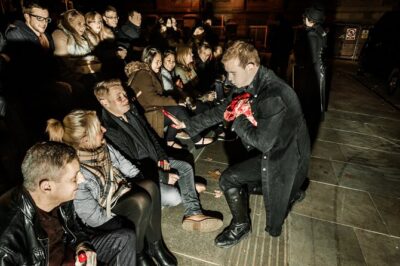
St. Augustine turns darker after dark. This Ancient City Tarot Walk and Ghost Stroll pairs a guided walk with a tarot card reader, using real local locations to talk about old legends, grief, and the way stories stick to stone. You’re not just hearing spooky tales. You’re connecting symbols from the tarot to places you can actually stand in and look at.
I really like that the tour keeps moving, so you get momentum instead of a long sit-down sermon. I also like the way your guide (Brittany is one example of the guides who lead) blends personalized tarot reading with practical St. Augustine context as you go. One possible drawback: it’s a nighttime outdoor walking tour, and it requires good weather—so if clouds roll in and visibility drops, the whole experience may feel less theatrical.
In This Review
- Key things you’ll notice on this tarot-and-ghost stroll
- Why this St. Augustine ghost tour feels different from the usual scares
- Stop 1: Old Spanish Trail Zero Mile Marker and The Fool energy
- Stop 2: Huguenot Cemetery, Five of Swords, Seven of Swords, and gold-teeth lore
- Stop 3: Tolomato Cemetery and Bishop Augustin Verot’s Six of Pentacles
- Stop 4: St. Augustine city gates, young Elizabeth, and Chariot-style motion
- Stop 5: The Love Tree and the 2 of Cups vs. The Lovers question
- Price and what makes the ticket feel worth it
- Pacing, group size, and how to get the most out of it
- Who should book this tarot-and-ghost stroll
- Should you book it?
- FAQ
- How long is the Ancient City Tarot Walk and Ghost Stroll?
- What time does the tour start and where do we meet?
- Is the tour offered in English?
- What’s included in the ticket price?
- Is the tour limited to a certain group size?
- What happens if the weather is bad?
Key things you’ll notice on this tarot-and-ghost stroll
- Tarot cards tied to specific stops instead of one generic reading
- Cemetery visits that focus on how legends and names live on
- Old Spanish Trail Zero Mile Marker used as an origin point for the story
- The Huguenot Cemetery and its haunting folklore, including the ghost linked to gold teeth
- Tolomato Cemetery connections to Bishop Augustin Verot (and the Six of Pentacles theme)
- St. Augustine city-gate lore plus a stop at the Love Tree for relationship symbolism
Why this St. Augustine ghost tour feels different from the usual scares
Most ghost tours in old towns go for the same rhythm: quick background, a couple of spooky stops, then a final story that tries to top the rest. This one has a different engine. Each stop is built around a tarot theme, and the guide uses the symbolism to frame what you see—gravestones, cemetery lore, and street-level landmarks tied to the city’s past.
That matters because it changes how you pay attention. Instead of scanning for “proof” of ghosts, you start noticing patterns: repeated themes of betrayal and trickery, the idea of giving and selflessness, and the way love can be treated as a force as real as weather. If you like history but also enjoy the fun side of myth, this format is easy to stay with.
It also helps that the group is capped at 22 people. You’re not stuck in a massive crowd where the guide can’t read the room. And with a tour length of about 1 hour 15 minutes to 1 hour 30 minutes, the pacing stays brisk—enough time for several stops, not enough time to drag.
You can also read our reviews of more tours and experiences in St Augustine.



Stop 1: Old Spanish Trail Zero Mile Marker and The Fool energy
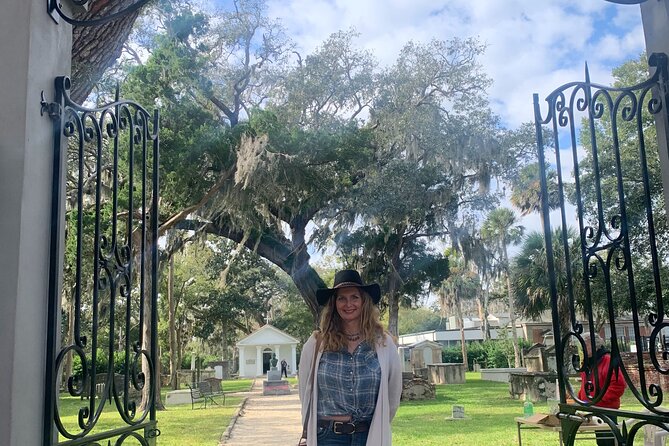
You start at the Old Spanish Trail Zero Mile Marker, a spot tied to the idea of a huge journey beginning. The guide uses it like a tarot kickoff, leaning into the vibe of The Fool—fresh steps, uncertain outcomes, and the notion that believing comes before seeing.
Practically, this first stop is there to get everyone oriented. You get a story hook early, and you also learn the tour’s method: tarot cards aren’t thrown in at random. They’re used as lenses for what you’ll notice at the next location.
Possible consideration here: because it’s an opening stop, it can feel like a “set up” portion rather than a jump straight into the spook factor. If you’re looking for immediate cemetery chills, you may want to keep expectations flexible for the first leg.
Stop 2: Huguenot Cemetery, Five of Swords, Seven of Swords, and gold-teeth lore
The Huguenot Cemetery is where the tour leans hardest into the dark side. This cemetery was built for burials dating from 1821 to 1884, and the guide treats it like a map of stories that survived by becoming legend. As you walk through, you might hear folklore and ghost legends connected to what people remember—and what they think still lingers.
This stop is also where the tarot themes start getting sharper. The guide links the area’s lore to the Five of Swords and Seven of Swords, with meanings tied to trickery and theft. Even if you don’t take those card meanings literally, they give you a way to interpret why some parts of the cemetery feel heavier than others.
One of the most specific threads is the mention of a famous ghost who haunts and is searching for gold teeth. Whether you treat it as a spooky story or a piece of old local myth, it gives the site a focal point—and helps the guide keep the discussion concrete instead of vague.
You’ll also hear the Ace of Swords theme connected to inventions and the yellow fever epidemic from the 1800s. That twist is useful. It reminds you that cemeteries aren’t only about fear. They’re also where human effort, crisis, and problem-solving leave their marks—sometimes in ways that show up as legends later.
Possible drawback: cemeteries are emotional places. If you tend to dislike graveyard settings or want purely light entertainment, this stop may feel too intense for you.
Stop 3: Tolomato Cemetery and Bishop Augustin Verot’s Six of Pentacles
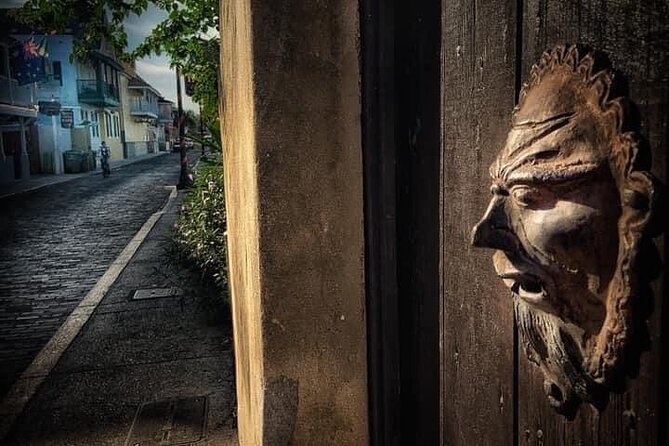
Next comes the Tolomato Cemetery. This stop shifts the tone in a smart way. The guide brings Bishop Augustin Verot (1805–1876) into the story and links him to the Six of Pentacles, the theme of the constant giver.
That framing does more than just name a tarot card. It points you toward how to read a life through action. Verot is described as selfless and focused on helping others. Instead of only asking what went wrong in the past, this stop asks what people did to support their community—especially at times when survival and support mattered most.
You’ll also see a tombstone tied to a local odd story: Jimmy, who supposedly fell out of a tree. The guide notes it as not like the Hanged Man card, which gives you a quick way to compare tarot symbolism with real-world events. In other words, you get a practical lesson: tarot is metaphor, not a literal instruction manual for what happened long ago.
Possible consideration: compared with the Huguenot Cemetery, this stop may feel less focused on haunting legends and more on how a person’s character becomes part of the myth-making. If you want every minute to be about ghost sightings, plan for a calmer rhythm here.
Stop 4: St. Augustine city gates, young Elizabeth, and Chariot-style motion
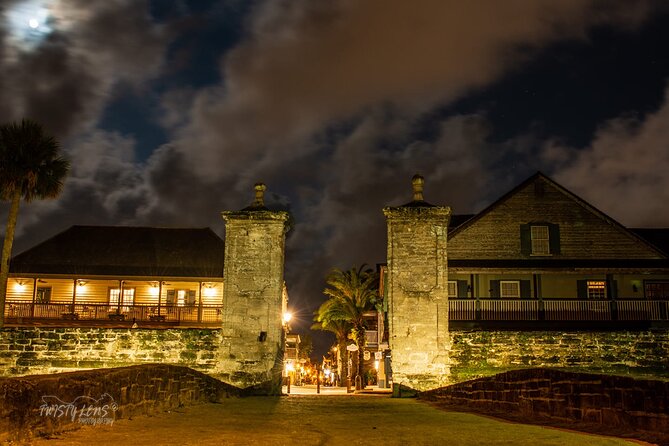
The tour then returns to the St. Augustine street level with a stop at the City Gates. This is where the ghost storytelling connects to motion—travel, entry, leaving, and the hope that a new place can reset your luck.
The guide mentions claims that young Elizabeth wanders around the gates. Elizabeth is described as the inquisitive daughter of the gate keeper. Then the tarot connection kicks in again: the Chariot becomes the lens for what people may have felt as they traveled through in 1808, coming into the city and wishing they could leave troubles behind.
For you, this kind of stop is valuable because it changes the scenery. You go from headstones and cemetery grounds to architecture and thresholds. It also helps you understand why St. Augustine’s legends feel tied to place. City gates aren’t abstract. They’re built spaces where people decide who enters, where stories begin, and where fear or hope can follow you.
A small practical note: this stop is listed as an admission-free portion, which can matter for your sense of value on a ticket. You’re spending paid time in the cemetery stops, then getting additional lore time outside.






Stop 5: The Love Tree and the 2 of Cups vs. The Lovers question

The final major stop is the Love Tree, focused on connection. The guide frames it as an interpretation question: is the Love Tree more like the 2 of Cups or more like The Lovers?
That’s a fun way to end, because it puts you in the role of reader, not just listener. You’re looking at how trees grow together, and you’re deciding what the symbolism suggests. It’s not about forcing one “correct” answer. It’s about noticing that some places tell stories through their physical form.
The guide’s take is that only something as powerful as love could draw trees together—described as either a force of nature, undying love, or a combination of both. Even if you don’t read it as romance, you can read it as survival and partnership: living things adapting to each other over time.
Possible drawback: because this part is more symbolic and interpretive, it may feel less “spooky” than the cemetery stops. But if you like a tour that ends with wonder instead of dread, it’s a good landing.
Price and what makes the ticket feel worth it

There’s no price listed here, so I’ll focus on value based on what’s included. Your ticket covers admission fees for the stops that charge. Tips aren’t included, and parking isn’t included either, so you’ll want to plan for both if you’re driving in.
What you get for your money is also about how the tour is structured. You’re paying for a guide and a tarot card reader, plus access to significant cemetery locations and named landmarks. That combination can feel more satisfying than a basic ghost walk that only covers streets with no added site access.
The also-hidden value is time efficiency. With a compact route and a stated duration of about 1 hour 15 minutes to 1 hour 30 minutes, you can fit this into your evening without losing half your night to slow pacing.
Pacing, group size, and how to get the most out of it
This tour works best when you show up ready to walk and listen. The group size is capped at 22, which helps your guide keep the pace moving and still connect tarot themes to what’s in front of you.
Also, you’re starting at 7:30 pm. That means you’ll feel the evening mood right away, and it’s likely the tour relies on the ambience of nighttime in historic downtown. Since it requires good weather, it’s a good idea to bring a little flexibility to your schedule if conditions change.
For maximum enjoyment, consider what kind of traveler you are:
- If you like local lore and cemetery atmosphere, you’ll probably love the way tarot gives structure to each stop.
- If you prefer strict factual history only, you might still appreciate the symbolism as a way to interpret legends, but you may want to treat the tarot side as storytelling rather than proof.
- If you want a quick, compact evening activity that doesn’t require a ton of planning, this format makes sense.
Who should book this tarot-and-ghost stroll
I think this is a great fit for:
- People who enjoy St. Augustine and want something more personal than a general walking tour
- Visitors who like the idea of tarot readings tied to real places
- Travelers who want a ghost story experience that also pauses for context—cemeteries, names, and how themes repeat
It may not be ideal if:
- You dislike walking at night outdoors
- You want a ghost tour with no tarot element at all
- You’re uncomfortable in cemetery settings
Should you book it?
Book it if you want an evening activity in St. Augustine that blends walking, local legend, and tarot symbolism in a structured way. The best reason to choose this tour is the way the guide connects each location to a specific tarot theme—especially the cemetery stops with named figures like Bishop Augustin Verot and stories like the haunting linked to gold teeth.
Skip it if cemeteries and nighttime walking aren’t your thing, or if you want purely historical facts with no interpretive layer.
If you’re already planning a night out in the Historic District, this is one of the more focused “story-first” options that still feels grounded in recognizable places.
FAQ
How long is the Ancient City Tarot Walk and Ghost Stroll?
The tour runs about 1 hour 15 minutes to 1 hour 30 minutes.
What time does the tour start and where do we meet?
The start time is 7:30 pm, and the meeting point is Historic Downtown Parking Facility 1, 1 Cordova St, St. Augustine, FL 32084.
Is the tour offered in English?
Yes, the tour is offered in English.
What’s included in the ticket price?
The ticket includes admission fees. Tips are not included, and parking is also not included.
Is the tour limited to a certain group size?
Yes. The tour has a maximum of 22 travelers.
What happens if the weather is bad?
This experience requires good weather. If it’s canceled due to poor weather, you’ll be offered a different date or a full refund.