REVIEW · MILWAUKEE
Milwaukee Downtown Ghost Tour – The Shadow of City Hall
Book on Viator →Operated by American Ghost Walks - Wisconsin · Bookable on Viator
Milwaukee’s downtown has a dark side. This Milwaukee Downtown Ghost Tour, The Shadow of City Hall, turns famous landmarks into story prompts, with a spooky walk that fits neatly into an evening plan. I like that it keeps the focus on real places and specific episodes, not vague horror mood.
I especially like the way the route spotlights Milwaukee architecture while staying fun and easy to follow. You’ll spend time at the Pabst Theater and the Pfister Hotel, then switch gears to pub-and-museum style stops where the ghost talk has something concrete to hang onto.
One possible drawback: if you prefer your ghost stories very light (or you get antsy about sadness and suicide themes), this tour’s grim historical details may feel intense for your taste.
In This Review
- Key things that make this tour worth your time
- Milwaukee downtown at night: what your $29 is really buying
- Getting oriented: the Wells Street start and how the pace stays manageable
- Pabst Theater: Frederick Pabst’s era and the idea of a resident presence
- Milwaukee City Hall: height, tragedy, and a recurring type of story
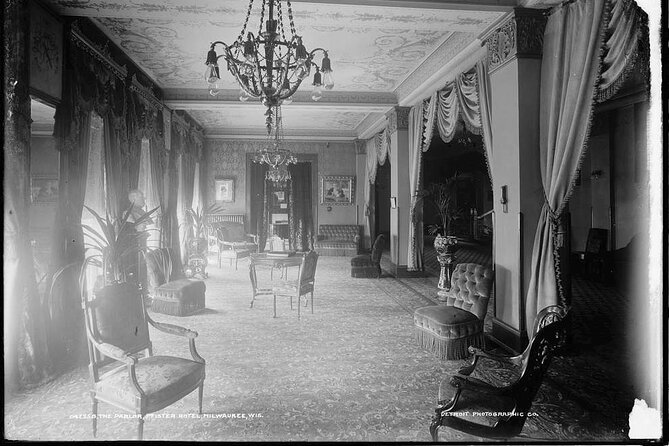
- The Pfister Hotel: famous guests, baseball anecdotes, and why it feels different
- Hilton Garden Inn in the Loyalty Building: from Newhall House fire to Room 201 and 326
- Newsroom Pub: a hundred-year-old bar, stained glass, and Anubis above it all
- SafeHouse: secret-agent themes plus Cold War exhibits that feel real
- Bronze Fonz and the Milwaukee RiverWalk: humor, then waterline stories
- Who should book this Milwaukee ghost tour (and who might skip it)
- Should you book The Shadow of City Hall?
- FAQ
- How much is the Milwaukee Downtown Ghost Tour, The Shadow of City Hall?
- How long does the tour last?
- Where is the meeting point, and when does the tour start?
- Do I get a mobile ticket?
- Are admission tickets included for all stops?
- What if plans change or weather affects the tour?
Key things that make this tour worth your time
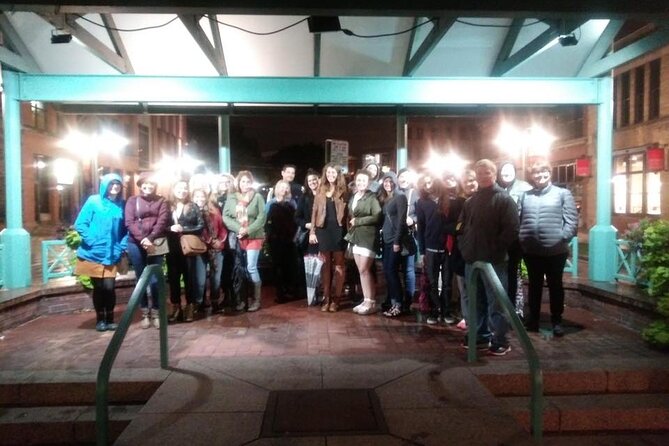
- Small-group feel: limited to nine travelers for a more personal evening.
- City Hall stories with specifics: the tour points to well-defined incidents tied to the building’s upper floors and atrium.
- Landmark-to-landmark pacing: short stops that keep moving without rushing you.
- A mix of classic hauntings and Cold War artifacts: you’re not only chasing folklore.
- Included entry at two stops: you get access built into the tour price at select locations.
- Nighttime downtown route: great if you want something to do after dinner that doesn’t swallow your whole day.
Milwaukee downtown at night: what your $29 is really buying
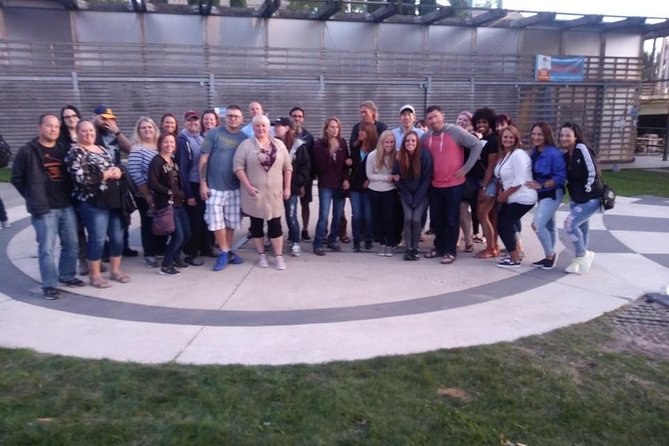
At $29 per person, this isn’t a “theme park” experience—it’s a guided walking tour built around places you’d likely pass on your own. The value comes from the connective tissue: your guide links Milwaukee’s standout buildings to the kinds of stories people repeat, while also keeping the stops short enough that you still have time to keep exploring afterward.
The tour runs about 1 hour 30 minutes to 2 hours, starting at 7:30 pm and ending back at the meeting point at 144 E Wells St. That timing matters. In the evening, downtown feels different—quieter, more dramatic, and a lot easier to take in slowly without midday crowds.
This is also a good pick if you’re the type who likes your sightseeing with a point of view. The “ghost” part isn’t the only goal. You’re also learning how these buildings function, where they sit in Milwaukee’s timeline, and why people connect certain locations to strange stories over and over.
Dress for cool night air and plan for walking. You’ll be on foot through downtown sidewalks, so comfortable shoes beat fashion here.
You can also read our reviews of more tours and experiences in Milwaukee.


Getting oriented: the Wells Street start and how the pace stays manageable
The tour kicks off at 144 E Wells St, and it loops back there. That simple start-and-finish plan makes it easier to fit into a dinner-and-drinks evening. A big plus for a walking tour is that you’re not left wandering alone at the end.
Expect an easy pacing strategy: multiple stops, each about 10 to 15 minutes, with enough time for you to hear the story and look at what’s in front of you. The format also helps if you’re the sort of person who likes to ask questions—short segments keep the group moving but don’t feel like a sprint.
The tour is designed for most travelers and allows service animals. It’s also near public transportation, which is useful if you don’t want to fight for parking downtown.
One more practical note: you’ll need to be ready for good weather. If conditions aren’t right, the tour may be rescheduled or refunded. Since it’s an evening walk, rain and cold can change the experience fast.
Pabst Theater: Frederick Pabst’s era and the idea of a resident presence
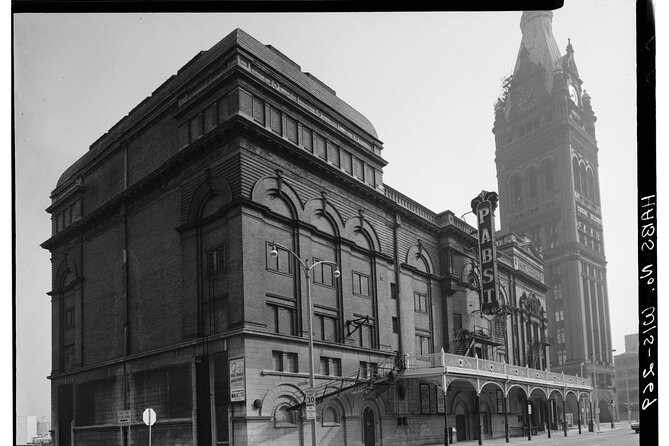
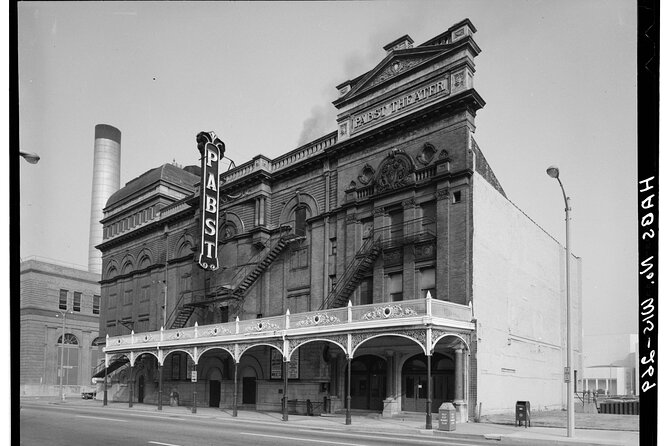
Your first major stop is the Pabst Theater, built in 1895 by Milwaukee beer baron Frederick Pabst. The tour leans into the theater’s past as a place where the famous show up—and where, in story form, the dead are remembered dramatically.
One of the most specific details you’ll hear: in 1919, the former director Franz Kirchner’s body was laid in state on stage. That kind of concrete historical anchor gives the haunting tales weight. It’s not just “a theater is spooky.” It’s this theater, and this moment.
Then the story stretches outward to the idea that the Pabst name itself is tied to hauntings around Milwaukee buildings. Whether you take it literally or treat it as local legend, this stop works because it connects story to setting. You’ll also likely enjoy the chance to look at the theater as an architectural landmark—not only as a haunted headline.
Milwaukee City Hall: height, tragedy, and a recurring type of story
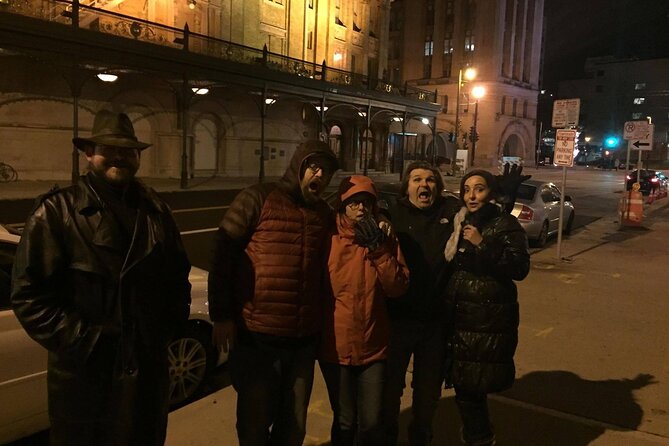
Next up is Milwaukee City Hall, once the tallest building in the city. The tour frames the building’s height as part of why it developed dark stories. The key detail here is the period from 1929 to 1940, when seven people are described as jumping from the upper floors into the open atrium.
This stop is where the tone can shift. The “ghost” element here is mixed with sadness, and the tour includes references to related reports and the possibility of residual haunting. If you’re on board for chilling history, this is the emotional center of the walk.
At the same time, the stop still makes practical sense: City Hall is a major landmark, easy to see from downtown, and it’s the kind of place where you can’t help noticing the scale. The atrium idea is also visually easy to connect to the stories you’re hearing—your eyes have something to match.
If you’re worried about strong themes, it’s worth knowing this is the most heavy-handed segment. For many people, though, that honesty is part of what makes the tour feel more grounded than generic “boo” tourism.
The Pfister Hotel: famous guests, baseball anecdotes, and why it feels different
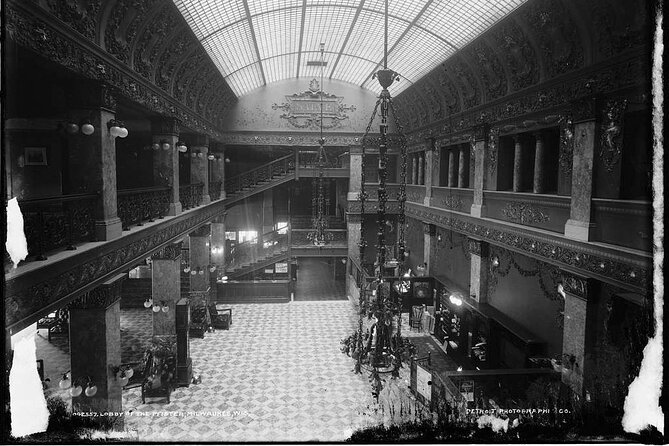
The Pfister Hotel is one of Milwaukee’s best-known landmarks, and this tour uses that fame to pull you into a different style of haunting story. The Pfister is described as hosting the rich and famous and as a stopover for visiting sports teams.
Here’s what gets attention in the telling: Major League Baseball players are said to have reported paranormal activity including object manipulation, electrical anomalies, and at least one apparition. That detail matters because it shifts the conversation from “old legend” to “people who were busy and skeptical in a normal working setting still noticed strange things.”
You’ll likely enjoy this stop if you like stories that feel slightly different from haunted-house clichés. It’s about a hotel that still operates and still attracts visitors. When a place is active, the rumors can feel more plausible—and more personal.
There’s also an extra bonus here for architecture and design fans. Hotels like this are built to impress, and the tour’s time window gives you enough minutes to look around without turning it into a long interior tour.
Hilton Garden Inn in the Loyalty Building: from Newhall House fire to Room 201 and 326
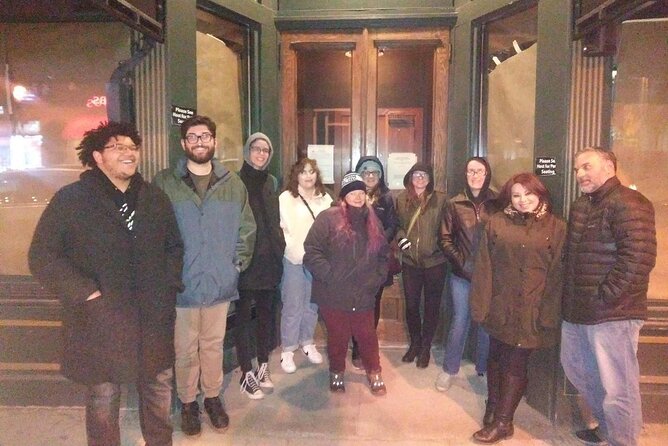
The route continues to the Hilton Garden Inn Milwaukee Downtown, located in the historic Loyalty Building. This part of the story is tied to the site’s earlier life: the building is described as standing where a Newhall House once existed, destroyed by a deadly hotel fire in 1883.
The haunting talk here is linked to what past businesses on the site supposedly experienced, and the tour also points to modern reports from staff and guests, with particular attention to rooms 201 and 326.
This stop is a nice change because it’s not only about ghost stories floating in the air. It’s also about how a site keeps changing hands while carrying memories. You’re looking at a living location that has layers, and the tour helps you understand that “history” isn’t just a date—it’s a physical place that gets rebuilt.
One practical thought: because the focus is on specific rooms, you may want to mentally note the room numbers so the story sticks as you walk. Then you can decide later whether you’re the type who wants to investigate further once you’re back on your own.
Newsroom Pub: a hundred-year-old bar, stained glass, and Anubis above it all
At Newsroom Pub, the tour shifts into a more playful, “wait, what is that?” mode. You’ll see an opulent setting with a hundred-year-old bar and a stained glass partitioned dining room. The tour also ties the space to press history as the headquarters of the Milwaukee Press Club in 2000.
Above the bar, you’ll hear about a glass-enclosed shrine connected to a Milwaukee Press Club mascot, with an occult history. The story centers on the question: who or what is Anubis?
This stop earns its keep because it’s visually specific. Even if you don’t follow the occult angle, you can still enjoy the oddity and the way it fits Milwaukee’s habit of mixing serious institutions with surprising curiosities.
Also, this is one of the tour segments where admission is included. That means you’re getting access built into the experience, rather than paying extra or just stopping outside.
SafeHouse: secret-agent themes plus Cold War exhibits that feel real
The next stop is SafeHouse, a secret-agent themed bar and restaurant operating in a building with a long memory. Since 1966, it’s been described as offering spy-movie flair, including secret passageways, sight gags, and memorabilia.
What makes this stop especially effective is the addition of museum-quality Cold War exhibits. The tour describes real artifacts such as a cell door connected to an infamous KGB/Stasi prison era and a piece of the Berlin Wall.
If the building feels “strange” in the story, the tour points to an idea: the powerful energy absorbed by storied items could explain odd occurrences people report over the years. Even if you don’t buy the metaphysics, you can still appreciate why the place sparks eerie feelings. These aren’t abstract props. They’re tied to real 20th-century history.
Admission is included here too, which is a big value advantage. You’re not just walking past a location—you’re getting time inside where the exhibits can do their work.
Bronze Fonz and the Milwaukee RiverWalk: humor, then waterline stories
After the heavier stops, the tour adds a lighter beat with a photo opportunity at Bronze Fonz by Gerald P. Sawyer. The statue connects Milwaukee to pop culture through Henry Winkler and his character Arthur The Fonz Fonzarelli from Happy Days.
This kind of stop might seem off-theme, but it actually helps. After City Hall and the Pfister, a brief humor reset keeps the walk from feeling like nonstop dread. It also gives you a clear landmark to point your camera toward if you’re documenting the night.
Then you move to the Milwaukee RiverWalk. Here the focus turns to the waterways, with haunted stories tied to Milwaukee’s river locations. A riverwalk stop is a smart closing move for a walking tour: it’s scenic, it gives you space to shift your attention from architecture to setting, and it leaves you with a sense of place.
This part is short, but that’s the point. You’re ending with atmosphere rather than adding another full history lecture.
Who should book this Milwaukee ghost tour (and who might skip it)
You’ll like this tour if you:
- enjoy history tied to recognizable downtown buildings
- want ghost stories that include specific incidents and named places
- like walking tours where the guide keeps things moving and focused
You might want to skip (or at least go in with expectations) if:
- you don’t enjoy darker topics, especially where the stories relate to suicide and tragedy
- you want only light, playful hauntings with no heavy historical elements
It’s also a good fit for couples, small friend groups, and solo travelers who want a guided evening without committing to a full-day activity.
If you’re deciding between “do I want a spooky story tour” or “do I just want to sightseeing on my own,” this tour has a clear edge: you’re paying for the guide’s ability to connect buildings, names, and episodes into a single downtown walk.
Should you book The Shadow of City Hall?
My take: yes, if you want a practical, story-driven Milwaukee evening with real landmarks. At $29, the tour is priced like a guided add-on to your night, not a big splurge. The value is strongest when you care about architecture and you like your ghosts grounded in places and specific details.
The only real caution is emotional. City Hall’s segment includes genuinely heavy subject matter, and the tour doesn’t soften the tone. If that’s a dealbreaker, consider a different style of ghost tour.
If you’re good with that, book it. This is one of those experiences where the downtown itself becomes the exhibit, and the stories make the streets feel newly alive.
FAQ
How much is the Milwaukee Downtown Ghost Tour, The Shadow of City Hall?
The price is $29.00 per person.
How long does the tour last?
The tour duration is approximately 1 hour 30 minutes to 2 hours.
Where is the meeting point, and when does the tour start?
You meet at 144 E Wells St, Milwaukee, WI 53202, USA. The start time is 7:30 pm, and the tour ends back at the meeting point.
Do I get a mobile ticket?
Yes, the tour uses a mobile ticket.
Are admission tickets included for all stops?
Admission is included at Newsroom Pub and SafeHouse. Other stops on the walking route are listed as free admission.
What if plans change or weather affects the tour?
You can cancel for a full refund up to 24 hours in advance. The experience requires good weather, and if it’s canceled due to poor weather, you’ll be offered a different date or a full refund.