REVIEW · MILWAUKEE
The Original Milwaukee Ghost Walk – Third Ward
Book on Viator →Operated by American Ghost Walks - Wisconsin · Bookable on Viator
Milwaukee’s Third Ward turns spooky after dark. This 90–120 minute walking tour pairs Milwaukee history with haunting tales at real buildings, so you leave with a new way to see the neighborhood. I especially like how the stops mix legend with real context, and I like that it’s paced like an evening stroll, not a sprint. One thing to keep in mind: the experience leans more toward story-and-history than heavy paranormal action, and storytelling quality can vary by guide.
I like the practical setup: it starts at the Milwaukee Public Market at 400 N Water St around 7:30 pm, uses a mobile ticket, and keeps groups to a maximum of 30. It’s offered in English, near public transportation, and service animals are allowed. If you need a guaranteed spook-only show, you may want to approach this as a guided neighborhood history walk with ghostly commentary.
In This Review
- Key points worth knowing before you go
- Price and value: what $29 buys you
- The meeting point at Milwaukee Public Market and how the evening flows
- Why the Third Ward is the right place for spooky stories
- The route: stops that mix hauntings, tragedies, and real Milwaukee details
- Stop 1: Milwaukee Public Market and the Bloody Third streets
- Stop 2: 116 E Pleasant St and the spectral boy Timmy
- Stop 3: Broadway Theatre Center and Clair Richardson’s trap room remains
- Stop 4: Tied House Milwaukee and the unlucky lady of the night
- Stop 5: 207 E Buffalo St and the vanishing man in dusty overalls
- Stop 6: The Marshall Building and an apparition that won’t explain itself
- Stop 7: Milwaukee Institute of Art & Design and classroom hauntings
- Stop 8: The Wicked Hop, the oldest building, and one dark story
- Stop 9: Historical Marker 327 and the Lady Elgin sinking
- Guides and storytelling style: what you should expect from the experience
- Pace, weather, and comfort on a nighttime walk
- Who should book this tour, and who should skip it
- Should you book the Original Milwaukee Ghost Walk – Third Ward?
- FAQ
- How long is the Original Milwaukee Ghost Walk – Third Ward?
- How much does the tour cost?
- Where do I meet for the tour?
- What time does the tour start?
- Is the tour offered in English?
- How big is the group?
- Is it weather-dependent?
- Is there anything I should know about tickets and services?
Key points worth knowing before you go
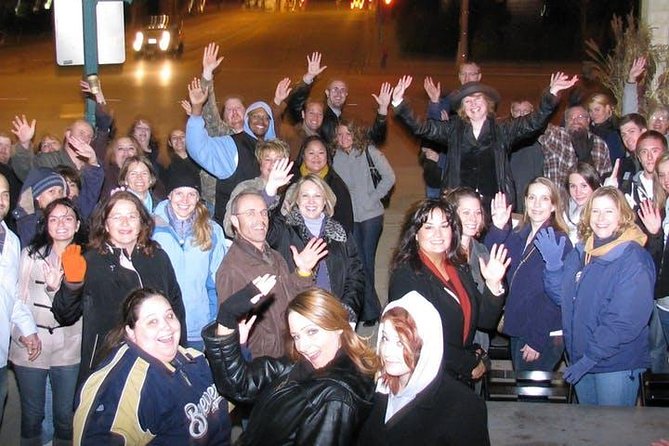
- Small-group pacing: a maximum of 30 people means you’re more likely to hear the guide clearly and keep the flow.
- Streets with a purpose: every stop is tied to a specific site in Milwaukee’s Historic Third Ward, not generic spooky lore.
- History that hurts in places: the route includes a major maritime tragedy tied to the Lady Elgin sinking.
- Ghost stories with local anchors: legends connect to named locations and even a specific newspaper writer.
- Guides can make or break the mood: some are praised as entertaining and knowledgeable, while a few guests felt the storytelling wasn’t up to snuff.
- Good-weather dependent: the tour runs when conditions allow for an evening walking route.
Price and value: what $29 buys you
At $29 per person for about 1 hour 30 minutes to 2 hours, you’re paying for guided storytelling, not museum entry fees. A big part of the value is that most stops are time on the sidewalk plus site-specific context, so you get a lot of variety without spending extra at each location.
The tour also works as an “instant orientation” for Milwaukee’s Third Ward. You’ll see how the area’s identity shifts from older brewing and boarding-house lore to arts and theater sites, and then you top it off with a disaster marker tied to the Great Lakes. If you like tours that help you connect places to stories, this format usually feels worth it.
You can also read our reviews of more tours and experiences in Milwaukee.
The meeting point at Milwaukee Public Market and how the evening flows
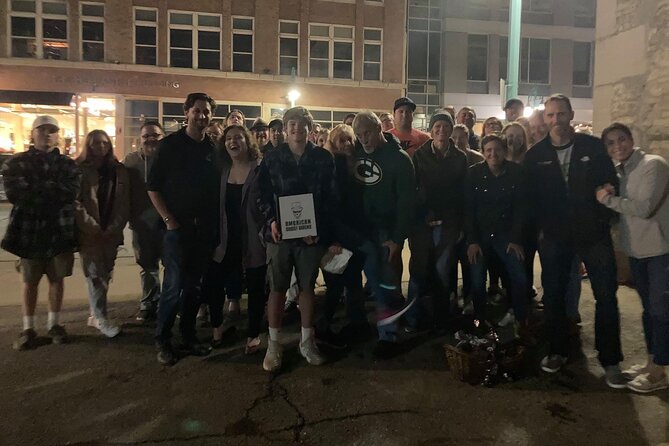
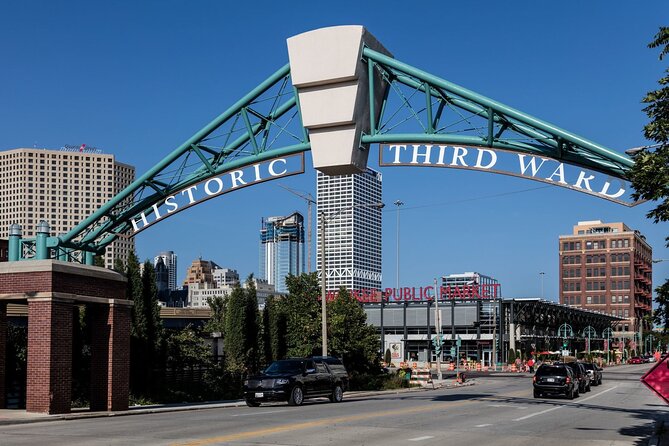
The walk starts at Milwaukee Public Market, 400 N Water St, and ends back near the same meeting point. Starting at 7:30 pm puts you in the sweet spot where street lighting does the work, but you’re not out until super late.
Because it’s near public transportation and the group size caps at 30, you can usually fit it into a standard evening plan without needing a car. Just remember it’s a walking tour, so the main “logistics” are simple: show up on time, stay with the group, and be ready to move between stops.
Why the Third Ward is the right place for spooky stories
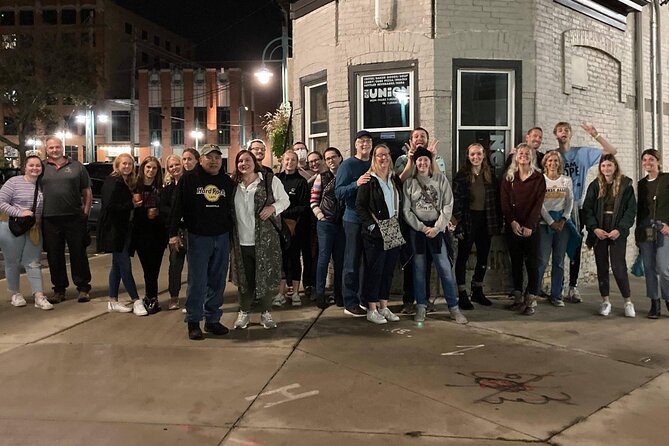
The Third Ward has a built-in mix of old-world commerce, theaters, and institutions—places where people lived, worked, and occasionally met tragic ends. This tour takes advantage of that. It starts with the streets around the Public Market and moves through buildings tied to industry and entertainment, then it pivots into education and a major historical disaster.
That order matters. You start with the neighborhood’s rougher reputation (including references to a nickname tied to blood and crime), then you gradually move toward specific haunting legends. By the end, even if you’re skeptical, the route makes you think about how Milwaukee remembers its past—through buildings, markers, and stories that refuse to stay quiet.
The route: stops that mix hauntings, tragedies, and real Milwaukee details
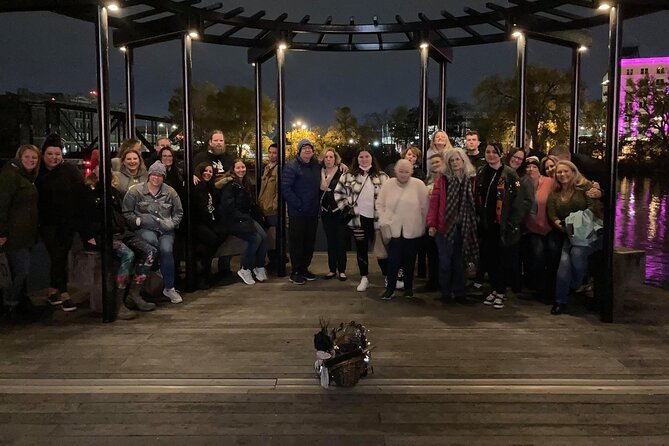
Here’s what you can expect as the walk moves site to site. Each stop is short—often around 10 minutes—so the guide keeps things moving while still giving enough context to make the stories land.
Stop 1: Milwaukee Public Market and the Bloody Third streets
You meet at the corner of St. Paul Avenue and Water Street for a history lesson that focuses on the neighborhood’s rough 19th-century reputation. The guide frames the area as the Bloody Third, and it sets the tone for why the Third Ward has so many grim tales attached to it.
This first stop is a smart warm-up. It’s not just “spooky build-up.” It gives you a backdrop so later legends don’t float in space.
Stop 2: 116 E Pleasant St and the spectral boy Timmy
At 116 E Pleasant St, the story centers on a building from 1910 that was originally the F. Mayer Boot & Shoe Co. The tour keeps a recurring figure alive in the legend: a spectral little boy named Timmy, blamed over the years for supernatural mischief that got pinned on him.
If you like legends that focus on a specific personality rather than vague ghost sightings, this is one of the more character-driven stops.
Stop 3: Broadway Theatre Center and Clair Richardson’s trap room remains
At the Broadway Theatre Center, the tour highlights Clair Richardson, described as the founder connected to Skylight Music Theatre in 1959. He died in 1980, and the tour explains that his cremated remains have been in the Cabot Theatre’s trap room since 1993—an arrangement that fuels beliefs his spirit still returns.
This stop blends theater details with the haunting angle, and it’s a good reminder that legends often stick to places with long memories and physical artifacts.
Stop 4: Tied House Milwaukee and the unlucky lady of the night
Next is Tied House Milwaukee, previously known as the Pabst Brewing Co. Saloon and Boarding House. The boarding-house label shows up again here, because the legend ties it to a reputation for wrongdoing, including a story about an unlucky lady of the night who haunts the building.
This is one of those stops where you’re meant to weigh what sounds like folklore against how real businesses and social attitudes can shape rumors.
Stop 5: 207 E Buffalo St and the vanishing man in dusty overalls
At 207 E Buffalo St, the tour points you toward a late-night elevator ride legend. The “vanishing man” is described as wearing dusty overalls, and the story connects him to a writer for Milwaukee’s weekly newspaper, the Shepherd Express.
Even if you’re not a full-on ghost believer, I like this kind of legend because it uses a named publication and a specific image to make the story feel grounded.
Stop 6: The Marshall Building and an apparition that won’t explain itself
The walk then shifts to the Marshall Building, where the guide shares an eerie encounter that remains unclear and unexplained. The focus isn’t on proving anything. It’s on the mystery itself and why people kept wondering about what was seen.
This stop works well as a mood pivot. It gives you a pause before the tour moves into institutions and tragedies.
Stop 7: Milwaukee Institute of Art & Design and classroom hauntings
At the Milwaukee Institute of Art & Design, the tour describes unsettling occurrences involving students and teachers. The key detail is that the building keeps functioning as a center for creativity and learning even with the haunting rumors attached.
This is a compelling contrast: the tour doesn’t just point at a haunted house. It points at a working institution where life keeps going.
Stop 8: The Wicked Hop, the oldest building, and one dark story
The next stop is The Wicked Hop, described as the oldest building in the Third Ward. The tour frames it as one of the area’s darkest ghost stories, and this is one of those “lighter history, heavier mood” stops.
If you want your evening to stay sharp, this is where the tour leans into stronger atmosphere while still staying short and moving.
Stop 9: Historical Marker 327 and the Lady Elgin sinking
Finally, the walk includes Historical Marker 327: Sinking of the Lady Elgin. The guide explains what happened on September 8, 1860, when the steamship Lady Elgin sank on Lake Michigan and more than 300 people died, making it one of the deadliest maritime disasters in Great Lakes history.
This is the tour’s emotional closer. Even if you came for spooky ghost stories, the marker forces you to remember that tragedy leaves a physical imprint—and the past often haunts people in quieter ways than anything with a dramatic reveal.
Guides and storytelling style: what you should expect from the experience
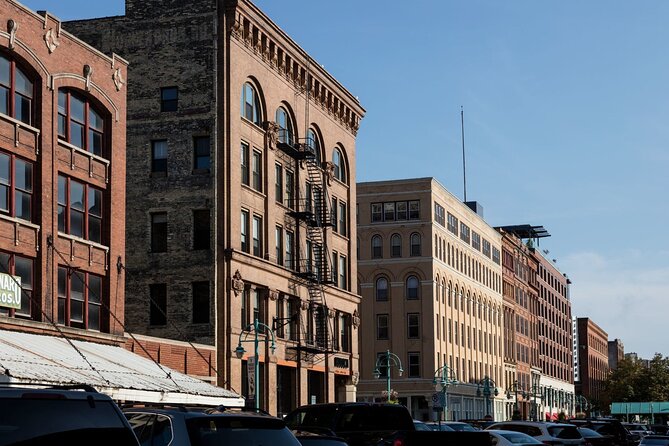
A ghost walk lives or dies by the guide’s delivery. The good news is that several guides linked to this tour have been praised as very knowledgeable and entertaining, with stories that cover both history and hauntings.
You’ll also hear the difference between a guide who treats the spooky side as the point versus a guide who treats it as the flavor. One guest specifically called out a guide named Carrie as knowledgeable, while another mentioned Tea as a great guide and someone who helped them learn a lot. Another mentioned Carol in a positive context as well.
At the same time, there are real caution flags in the reviews. One guest felt the guide’s storytelling didn’t create enough of a spooky mood and even left partway through. Another guest said the tour is more history-based than a true ghost hunt.
So here’s the practical takeaway: go in expecting a guided neighborhood story walk. If you want action-focused paranormal investigation, this may feel mismatched. If you want a mix of local detail and spooky legend, you’re more likely to feel it’s worth your time.
Pace, weather, and comfort on a nighttime walk
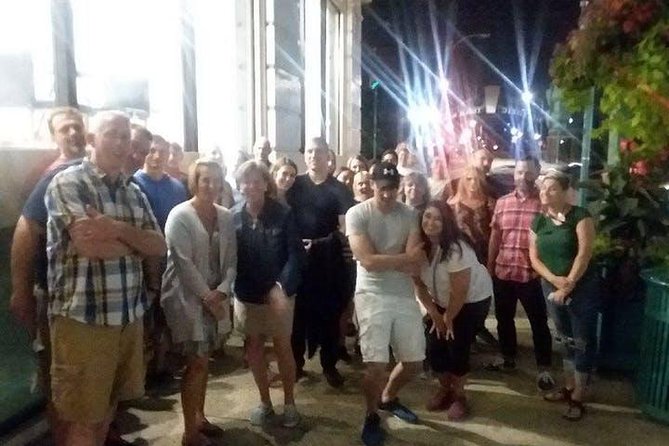
The tour is about 90 minutes to 2 hours, and the stops are brief enough that it doesn’t feel like you’re trapped in one place. One positive thread is that the walking pace is described as leisurely, which helps if you don’t want an overly fast walking tour.
The tour also requires good weather. If conditions aren’t right, it can be offered on a different date or you’ll get a refund. Since it’s outdoors at night, plan for the fact that weather is part of the experience, not a side note.
Who should book this tour, and who should skip it
This walk is a great fit if you want:
- A guided way to learn the Third Ward beyond “landmarks on a map”
- Ghost stories that tie to named buildings and real tragedies
- An evening activity that’s social but not huge (max 30)
You might want to skip it (or adjust expectations) if you:
- Only want full-on ghost hunting or scares as the main event
- Prefer a very theatrical scare show over history-based storytelling
- Are sensitive to storytelling style differences between guides
Should you book the Original Milwaukee Ghost Walk – Third Ward?
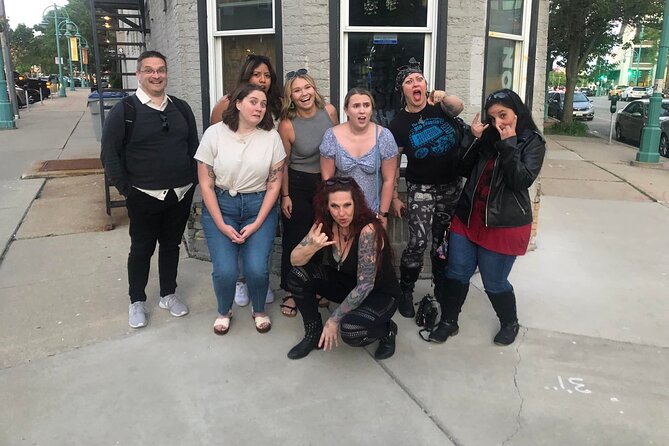
I think it’s a smart booking when you want value and variety: $29 for 9 stops, short segments, and a mix of legend plus real Milwaukee events like the Lady Elgin sinking. If you like neighborhood stories, and you’re happy with “spooky history” over paranormal performance, this tour fits well.
If you’re worried about the quality of storytelling, I’d still book—then go in with the right goal. Treat it as a guided walk where the guide connects a set of specific sites to the darker side of the Third Ward. That’s the experience you’re paying for.
FAQ
How long is the Original Milwaukee Ghost Walk – Third Ward?
It runs about 1 hour 30 minutes to 2 hours.
How much does the tour cost?
The price is $29.00 per person.
Where do I meet for the tour?
You meet at Milwaukee Public Market at 400 N Water St, Milwaukee, WI 53202. The walk ends back at the meeting point.
What time does the tour start?
The listed start time is 7:30 pm.
Is the tour offered in English?
Yes, the tour is offered in English.
How big is the group?
The tour has a maximum of 30 travelers.
Is it weather-dependent?
Yes. The experience requires good weather, and if it’s canceled due to poor weather you’ll be offered a different date or a full refund.
Is there anything I should know about tickets and services?
You receive a mobile ticket. Service animals are allowed, and the tour is near public transportation.