REVIEW · ST AUGUSTINE
St. Augustine’s Lost Souls: a Smartphone Audio Ghost Tour
Book on Viator →Operated by Tripvia Tours · Bookable on Viator
Ghost stories walk beside you in St Augustine. This smartphone audio tour strings together a 2.5-mile route of cemeteries, inns, and Flagler College, with narration that plays as you arrive and a live GPS map to keep you on track.
I love the fact that you can take your time, since it’s built for you to pause, listen, and keep going when you’re ready. I also like how the stops tie the spooky talk to specific real places, from the Huguenot Cemetery to the González–Álvarez House built in 1723.
One drawback to plan around: you’re depending on your phone, so if you forget to download ahead on Wi‑Fi or your battery runs down, the experience gets harder.
In This Review
- Key things you should know before you go
- Why a smartphone ghost tour fits St Augustine’s old streets
- Price and value: what $10.99 really buys you
- Getting the app to run smooth: Wi‑Fi download, GPS, and audio tips
- From Huguenot Cemetery to the Castillo: how the 3 hours usually feels
- Stops 1–4: cemeteries and the Old City Gates mood setter
- Huguenot Cemetery
- City Gate Spirits
- Tolomato Cemetery
- Casa de Sueños Bed and Breakfast
- Stops 5–10: Scarlett O’Hara’s, Casablanca, and Flagler College lost souls
- Scarlett O’Hara’s
- Casablanca Inn On The Bay
- Harry’s Seafood, Bar & Grille
- Historic Tours of Flagler College
- Ponce De Leon Hall
- Penny Farthing Inn Bed and Breakfast
- Stops 11–15: monster street legend and Spanish colonial stops
- Cordova Street & Bridge Street (St Augustine Monster)
- St Francis Inn Bed and Breakfast
- González–Álvarez House (Oldest House)
- Bayfront Marin House
- O C White’s Seafood & Spirits (Margaret’s Manor)
- Stops 16–19: lighthouse mention and the Castillo finish
- Bridge of Lions & Cathedral Place
- Casa de la Paz (phantom cries)
- Agustin Inn (grumpy ghost)
- Castillo de San Marcos National Monument
- Comfort, crowd, and noise: how to make the tour enjoyable
- Who should book this, and who might want a different style
- Should you book St Augustine’s Lost Souls
- FAQ
- How long is St Augustine’s Lost Souls?
- How far do you walk?
- Do I need headphones?
- Do I need cell signal during the tour?
- Are attraction tickets included?
- Where does the tour start and end?
- Can I cancel for a refund?
Key things you should know before you go
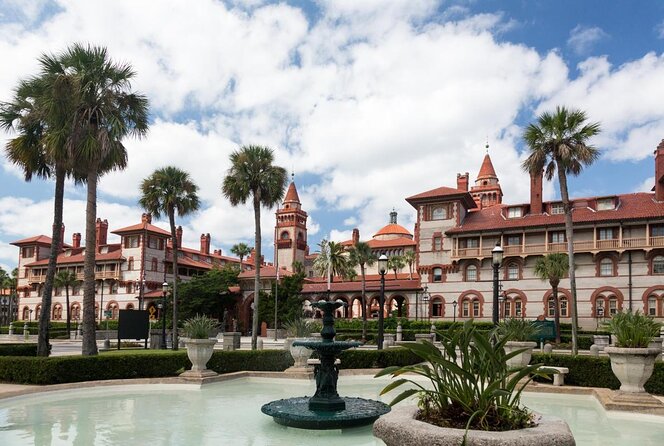
- GPS audio that auto-plays: the guide commentary kicks in as you reach each point of interest.
- A flexible 3-hour pace: you can slow down, reroute on foot, or keep it moving and finish whenever you’re ready.
- A 2.5-mile walking loop: comfortable shoes matter, especially on cobblestones and older sidewalks.
- Most stops are outside: you mostly view from streets and entryways, with extra admission only for certain sites.
- Audio through phone speaker is allowed: headphones are optional, but they help in busy areas.
- Some stories get graphic: if you’re sensitive, know that certain cemetery details can be a lot.
Why a smartphone ghost tour fits St Augustine’s old streets
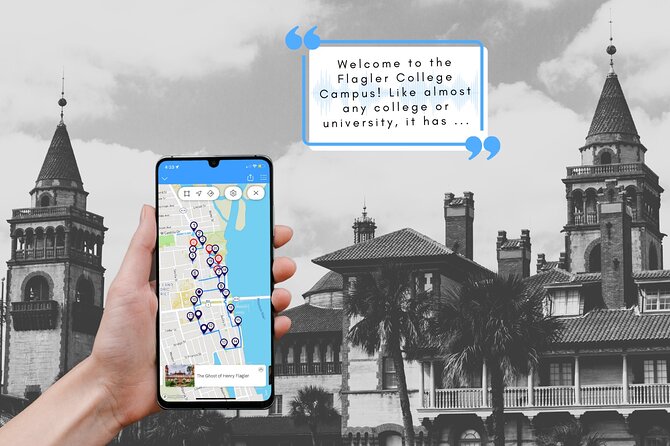
St Augustine is the kind of place where the past isn’t behind glass. It’s right there on corners, in graveyards, and along narrow streets where you can actually imagine 1700s life continuing one more block.
This tour leans into that. You don’t get a single big spooky “set piece.” Instead, you get a route where the story follows the geography. Your phone shows where you are, and the audio guide plays when you hit each stop. That format works well here because you’re not constantly asking where to go next. You’re just walking.
It also helps that the tour is private for your group. So it’s a less chaotic vibe than big open-deck group tours. It’s a good option if you’re traveling with family or a mixed crew and you don’t want everyone forced into the same pace.
One more smart point: the tour is offered in English and you’re not stuck waiting for a fixed time window. You pick your own start time within the listed hours, and the experience is yours to keep and enjoy anytime.
You can also read our reviews of more tours and experiences in St Augustine.



Price and value: what $10.99 really buys you
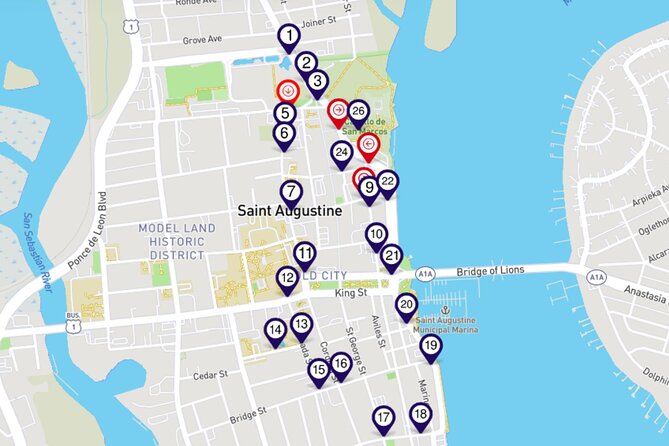
At $10.99 per person, the value is mostly in the self-guided format. You’re paying for:
- a mobile ticket
- downloadable audio directions and a live GPS map
- narration that plays automatically at each stop
- access to customer support (phone and email)
Most of the stops are free to view, at least from the street. That matters because St Augustine is a town where many “haunted” experiences add costs fast once you start buying individual attractions.
That said, don’t assume your ticket covers everything. The tour notes that attraction tickets are not included, and the final fort stop (Castillo de San Marcos) is specifically marked as not included. Some other sites are also flagged as extra. So if you want to go inside, budget for that.
A practical way to think about the price: you’re buying a 2.5-mile walking script that connects multiple landmarks you’d probably want to see anyway. If you already plan to do a historic walk, this turns that walk into a story trail.
Getting the app to run smooth: Wi‑Fi download, GPS, and audio tips
This is an audio tour, so your phone is the engine. The good news: the tour is designed so you can download on Wi‑Fi before you start. During the walk, it says you won’t need signal and it doesn’t use data during the tour.
Still, you’ll want to treat it like any other app-based walking experience:
- arrive with the download finished
- keep your screen brightness usable enough to see the map
- bring a charged phone (the tour does not include charging)
- if you get easily distracted, consider headphones because the audio plays from your device speaker by default
One of the most helpful things for following along is that the tour provides the information as transcribed text, so if you miss a line because traffic or crowds drown it out, you can catch up later.
Also, this route runs through an older historic district with narrow sidewalks and one-way streets. If you get turned around, the GPS map is there to help, but your best move is to pause, check your position, then continue rather than walking faster while confused.
From Huguenot Cemetery to the Castillo: how the 3 hours usually feels

The tour starts and ends at the St Augustine and St Johns County Visitor Information Center, 10 S Castillo Dr. It runs about 3 hours (approx.) and covers roughly 2.5 miles.
Here’s the key pacing detail: you can take as long as you’d like to complete it. That’s a nice setup because the length doesn’t come from speed. It comes from listening time at each stop and deciding whether you want to do optional detours.
You’ll also notice a strong mix of locations:
- cemeteries (multiple)
- inns and historic buildings
- Flagler College area landmarks
- Spanish colonial homes and waterfront-era properties
- the final fort at the end
If you can, start as the light is shifting toward evening. The mood tends to match the theme better, and you’ll likely enjoy the experience more when shadows start changing the look of alleyways and doorways.
Stops 1–4: cemeteries and the Old City Gates mood setter
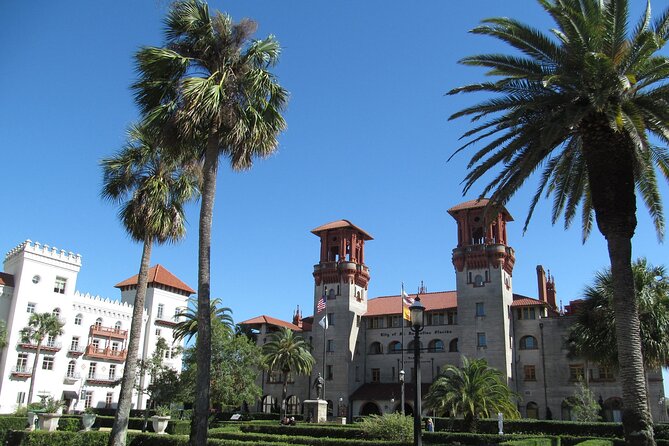
Your first stretch sets the tone with two cemeteries and two classic “place-based” haunted stops.


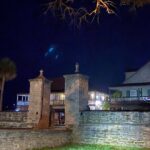


Huguenot Cemetery
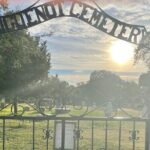
You’ll spot it off to your right early on. The tour frames it as established in 1821, and it connects the grounds to yellow fever victims, including a figure called Little Elizabeth. This is a good first stop because the atmosphere is immediate even before you get into deeper lore.
Practical note: cemeteries can be emotionally heavy even without supernatural add-ons, so if you’re traveling with kids, decide how much of the story fits your comfort level.
City Gate Spirits
Next you move to the Old City Gates area. Instead of focusing on a single person, the narration discusses portals and doorways to the other side, and it positions St Augustine as a city with a long haunted reputation.
This works well after the cemetery because it shifts from “who is buried here” to “what might be passing through,” which keeps the tone varied.
Tolomato Cemetery
Tolomato Cemetery appears after that. The big hook here is that it’s described as the oldest planned cemetery in America. The tour treats it like more than a plot of land; it becomes part of a larger story about lingering presences.
One consideration: one of the cemetery-story details can be intense. If you’re squeamish, be aware that some narration includes graphic imagery. You can always step back, take a breath, and come back when you feel ready.
Casa de Sueños Bed and Breakfast
The fourth stop brings you to a building called Randolph’s Casa de Sueños. Even though the inn opened in 1998, the building itself is described as constructed in 1904 as a private residence. This stop is a nice change of pace because it shifts the ghost focus toward architecture and ownership over time.
Stops 5–10: Scarlett O’Hara’s, Casablanca, and Flagler College lost souls

Mid-tour is where you start seeing the density of St Augustine’s historic buildings in a really walkable way.
Scarlett O’Hara’s
You’ll turn left onto Hypolita Street, passing an old wooden building on the corner. The tour’s description adds a twist: the structure is actually two buildings joined together. That kind of detail makes the story feel grounded, because you’re not just listening to a ghost story. You’re watching a real physical oddity.
Casablanca Inn On The Bay
This next stop is built in 1914 and originally known as the Matanzas Hotel and the Bayfront Boarding House. The narration connects the name Matanzas to the nearby river and bay, using the place-name as an omen.
What I like about this stop type is that it ties Spanish naming and waterfront geography together. Even if you don’t buy into ghosts, you’re learning how the area got its identity.
Harry’s Seafood, Bar & Grille
You’ll see a bright red building and an old stone wall. As of 2022, the building is home to Harry’s Seafood Bar & Grille, but the building’s construction is described as mid-1700s. That’s a long timeline in one footprint, which the ghost narration uses as fuel.
If you’re hungry, this is a decent spot to consider a pause. The tour doesn’t push you to eat, but you’re passing an actual operating restaurant.
Historic Tours of Flagler College
Then you enter the Flagler College campus walking length. The stop focuses on the ghost of Henry Flagler, and it notes that most local legends connect to time before the college existed.
This part is interesting because Flagler’s story is tied to how St Augustine grew. When a narration connects a person to a specific place, it feels less like random spooky entertainment and more like a guided walk through time.
Ponce De Leon Hall
Just ahead you see the entrance area and a statue of Flagler. The narration calls this section The Lost Souls of Flagler College, with lingering spirits tied to the campus.
If you like architecture and campus landmarks, this is one of the strongest stretches because you get a real sense of what the campus looks like in blocks, not just from one quick photo stop.
Penny Farthing Inn Bed and Breakfast
The tour points out a row of inns across the street, including the Penny Farthing Inn. It says the inn was built in 1893, but the stop flags that admission is not included. That’s your cue that you may be looking at some buildings more as exteriors and story stops unless you purchase extra access.
Stops 11–15: monster street legend and Spanish colonial stops
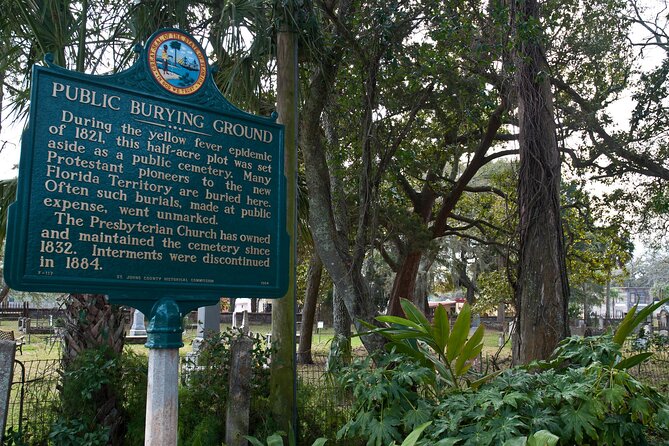
After Flagler, the route moves into a stretch where the stories bounce between urban legends, long-standing inns, and older residences.
Cordova Street & Bridge Street (St Augustine Monster)
This stop is more of a legend than a single building. You’re told it’s a popular urban legend and that you can keep walking while listening, then watch for St George Street ahead.
The story is anchored to November 1896 and references the shores of Anastasia Island. Even if you don’t love monster legends, this part can be fun because you’re doing it in motion, not just standing still.
St Francis Inn Bed and Breakfast
On your left you’ll see an old white building at the corner of St George Street and St Francis Street. The narration says it’s the oldest inn in St Augustine, built in 1791 during the second Spanish colonial period, and it was constructed partly as a fortress.
This is one of the most practical stops for appreciating how Spanish colonial defense influenced everyday buildings. It’s easy to picture why someone might tell stories here.
González–Álvarez House (Oldest House)
This is the “Oldest House” stop. The tour notes it’s officially called the González–Álvarez House, and that it’s the oldest surviving Spanish colonial residence in Florida, built in 1723.
Even if you skip the spooky parts mentally, this is still a landmark stop. The important part is that the narration gives you the building’s correct identity, not just a nickname.
Bayfront Marin House
This stop points you to a large yellow two-story building. The narration says there has been a structure on the property dating back to 1788, with Francisco Marin acquiring the house and lot in the late 1780s. It also mentions later construction changes in the late 1800s.
This stop is good for understanding how waterfront properties shifted over time. It’s also a reminder that the “haunted” label often sits on top of regular human change: new owners, new purposes, new chapters.
O C White’s Seafood & Spirits (Margaret’s Manor)
Finally in this stretch, you’ll see a stone building with green trim described as housing O.C. White’s Restaurant (as of 2021). It says the building has been around since 1790, and the tour uses that longevity as part of the haunting theme.
If you’re doing this walk and you want your spirits food-adjacent, this is a great area to keep in mind for a later meal.
Stops 16–19: lighthouse mention and the Castillo finish
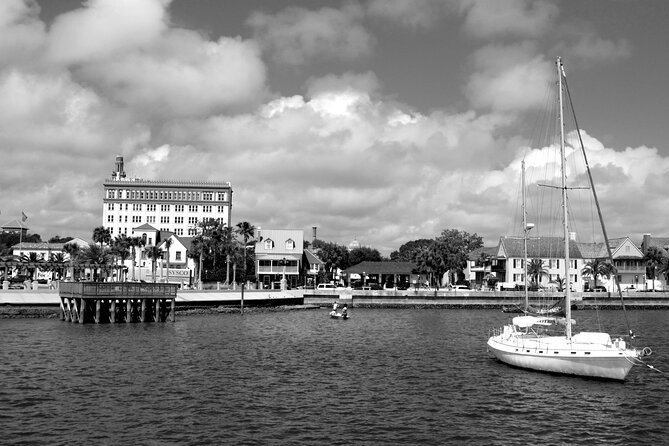
The last segment is where the tour switches from “lots of quick stops” to “one major destination.”
Bridge of Lions & Cathedral Place
The narration calls this The Tortured Souls of the St Augustine Lighthouse. Here’s a key detail: you don’t actually visit the lighthouse. The tour says it’s about half an hour away on Anastasia Island.
So treat this more like a storytelling waypoint than a direct sightseeing stop. You’ll likely still enjoy the Bridge of Lions/Cathedral Place area, but don’t plan your time as if the tour includes the lighthouse itself.
Casa de la Paz (phantom cries)
Next is a stop tied to Casa de la Paz. The narration leans into the idea of a closed and vacant building. It says the property was built as a private residence by and for J. Duncan Puller in 1915.
This stop makes the “haunted building” concept feel less random. You get a specific person and a specific construction date, which grounds the spooky framing.
Agustin Inn (grumpy ghost)
You’ll see the Agustin Inn, described as originally completed in 1904 as a two-story Victorian home. The tour connects the home to wealthy businessman Bernard Masters and notes that fast-forward to 1994, it became what it is today.
This is the kind of stop that tends to work best late in a walking tour. You’re coming off a long stretch, and the story gives you a calmer, more residential vibe.
Castillo de San Marcos National Monument
You finish at the Castillo de San Marcos, described as the oldest masonry fort in the continental United States. This is your big closer, and it’s also the stop where you should assume extra cost if you want entry inside.
The tour specifically marks attraction admission here as not included. So if you love forts and plan to go in, check the fort ticket options separately before you arrive.
Comfort, crowd, and noise: how to make the tour enjoyable
St Augustine can get busy, especially on weekends. If you’re on a Sunday afternoon or anytime the streets are full, plan for noise from cars and people talking.
That’s where headphones can make a real difference. If you don’t want headphones, at least keep the phone volume up and be ready to catch missed bits later using the tour’s transcribed text.
Also, this walk is about 2.5 miles total. It’s not a marathon, but it’s long enough that you’ll want:
- supportive shoes
- water if it’s warm
- a phone you’re comfortable holding or checking often
One small but important mindset shift: treat it like a story walk, not like a “see everything fast” checklist. You’ll enjoy it more if you accept there will be moments you pause, listen, and look around.
Who should book this, and who might want a different style
This one is a good fit if you:
- like local legends tied to real buildings and specific dates
- want a self-guided walk with GPS audio so you can go at your own pace
- travel with family or groups and want flexibility
- enjoy St Augustine landmarks like Flagler College and the Castillo area
It may be less ideal if you:
- hate navigation or you don’t want to rely on your phone
- can’t handle 2.5 miles of walking on older sidewalks
- get easily bothered by graphic story details in cemetery narration
- expect every spooky stop to include admission to attractions (some are extra)
Should you book St Augustine’s Lost Souls
I’d book it if you want a practical way to turn St Augustine’s historic district into a guided-by-your-phone story route. For $10.99, you get a lot of walking segments with real place context, and the ability to move at your pace is genuinely useful in this town.
Before you buy, do two things: charge your phone fully, and download the tour on Wi‑Fi before you start. If you do that, the GPS audio format becomes a stress-free way to enjoy the cemeteries, inns, and Flagler College corridor without juggling paper maps or hunting for the next stop.
If you’re planning to enter the Castillo, budget that extra ticket cost. And if you’re sensitive to intense cemetery details, you can decide ahead of time whether you want to speed through that segment.
FAQ
How long is St Augustine’s Lost Souls?
The tour is about 3 hours (approx.).
How far do you walk?
The route is about 2.5 miles long, so comfortable shoes are a must.
Do I need headphones?
Headphones are not included. Optional audio also plays from your device speaker.
Do I need cell signal during the tour?
No. The tour is designed so you can download on Wi‑Fi before you go, and during the walk it says no signal is required and it doesn’t use data.
Are attraction tickets included?
No. Attraction tickets are not included, including the final Castillo de San Marcos stop.
Where does the tour start and end?
It starts at the St Augustine and St Johns County Visitor Information Center, 10 S Castillo Dr, St Augustine, FL 32084, and ends back at the meeting point.
Can I cancel for a refund?
Yes. Cancellation is free, and you can cancel up to 24 hours in advance for a full refund.