REVIEW · LOUISVILLE
Old Louisville Ghost Tour as Recommended by The New York Times @ 4th and Ormsby
Book on Viator →Operated by Louisville Historic Tours · Bookable on Viator
Victorian ghosts meet real Louisville history. This Old Louisville ghost tour is a fun, guided walk through a Gilded Age neighborhood, with David Dominé (and other stellar local storytellers) turning history and hauntings into a night you can actually follow. You’ll admire the architecture as you hear ghost stories tied to places like Conrad-Caldwell House Museum and the Witches’ Tree, and you’ll come away knowing why Old Louisville is so famous.
I also love that it’s not just spooky for spooky’s sake; the guide weaves in real neighborhood context while keeping the pace friendly for a mostly flat walk. And the tour structure is easy: you meet at 4th & Ormsby, follow the guide from stop to stop, then end right back where you started. One drawback to keep in mind: this is a walking tour at night, and you must be able to walk about 2 hours without a bathroom break—plus the starting area is in a transitional neighborhood where you may see panhandlers.
In This Review
- Key things that make this Old Louisville ghost tour worth your time
- Old Louisville at night: what the tour really feels like
- Meeting at 4th and Ormsby: easy start, real neighborhood context
- The guide lineup: David Dominé plus the storytellers who bring it to life
- Stop-by-stop: how the tour builds spooky momentum
- Old Louisville and the Ferguson Mansion area
- The Filson Historical Society stop: where history has a home base
- Conrad-Caldwell House Museum (Conrad’s Castle)
- Central Park and the Witches’ Tree: the spooky landmarks that are easy to enjoy
- Central Park, Old Louisville’s breathing heart
- The Witches’ Tree: a small stop with big atmosphere
- How long is it, and what pace should you plan for?
- Price and value: is $27.50 a good deal?
- Practical tips so your ghost tour stays fun (not annoying)
- Should you book the Old Louisville Ghost Tour?
- FAQ
- How long is the Old Louisville Ghost Tour?
- Where do I meet for the tour, and does it end there too?
- Is the tour in English, and do I get a ticket on my phone?
- What stops are included on the walking route?
- Is admission included for Conrad’s Castle?
- Can I bring a service animal?
- What if the weather is poor, or I need to cancel?
Key things that make this Old Louisville ghost tour worth your time
- Guides who tell stories with a clear narrative, not random “and then a ghost appeared” moments
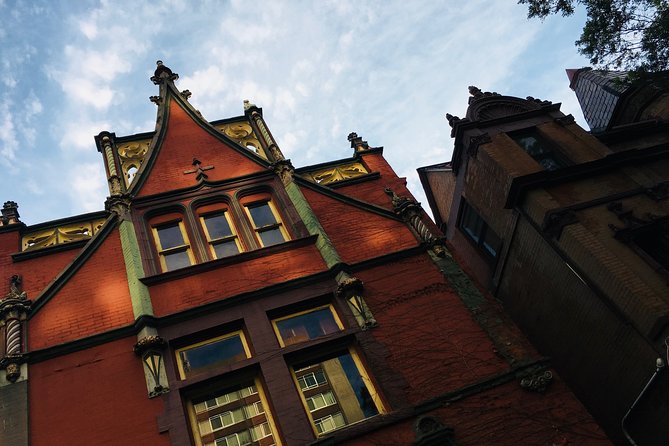
- Old Louisville’s Victorian streetscapes—pretty even in the dark, and easier to enjoy when you have context
- Major stops included like Conrad-Caldwell House Museum (Conrad’s Castle), Central Park, and the Witches’ Tree
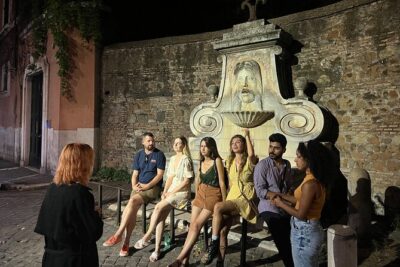
- Small group size (max 35) helps the guide keep everyone together and heard
- Mobile ticket, English tour, and multiple start times make it workable for a real itinerary
- Weather matters, since it runs on good conditions
Old Louisville at night: what the tour really feels like
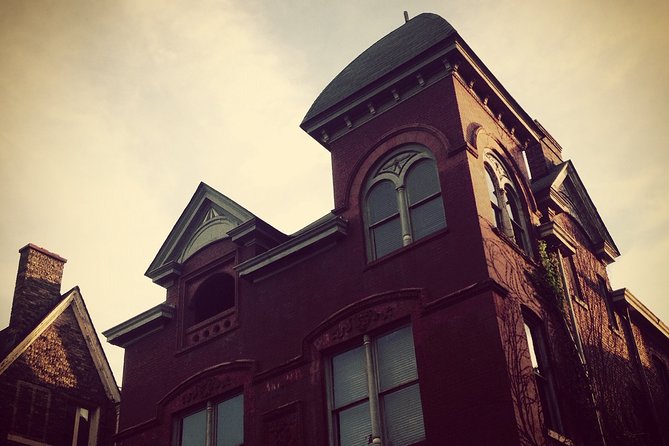
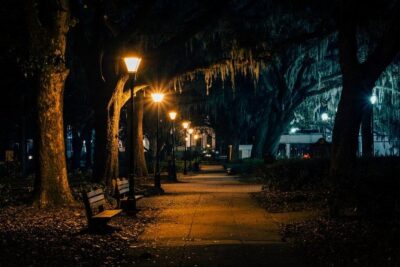
This tour works because it mixes two things people usually keep separate: atmosphere and explanation. At night, the stories land harder. During the day, you’d just see old houses and walk past them. Here, you get the setting, the lore, and the why behind it.
Expect a guided stroll through Old Louisville’s historic blocks—especially around St. James Court and the Central Park area—where you’ll see impressive Victorian mansions and get a sense of how wealth, industry, and community life shaped the neighborhood. Then the guide adds the supernatural layer: ghostly tales tied to specific addresses, residences, and landmark spots.
You should also know the tone is more “haunted history” than jump-scare performance. You’re not waiting for a cat to jump out of a window. You’re listening for the connections between people, buildings, and what locals say lingered.
You can also read our reviews of more tours and experiences in Louisville.


Meeting at 4th and Ormsby: easy start, real neighborhood context
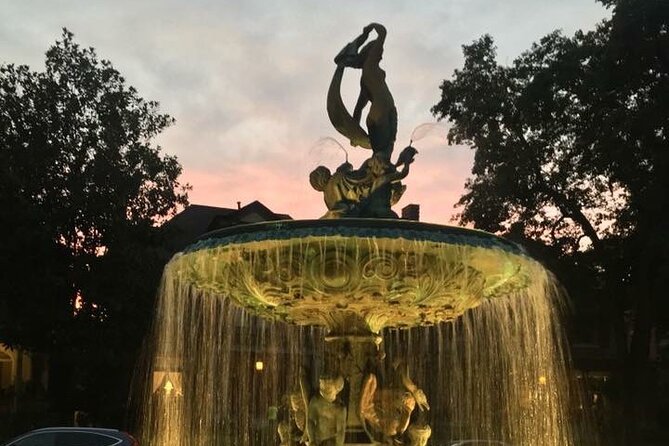
The tour meets at the corner of 4th & Ormsby in Louisville, and it ends back at the same meeting point. That simple “start and finish here” design matters on walking tours—especially at night—because it reduces the stress of figuring out where to go next.
One practical note: the meeting area is described as transitional. That means you might see homeless people or panhandlers, like you would in other larger American cities. If that kind of street scene would make you uncomfortable, this is the one thing I’d think about first.
Also, this isn’t the type of tour where you can wander off and catch up later. You’ll want to arrive on time so the group can start together, and you’ll want comfy shoes from the start.
The guide lineup: David Dominé plus the storytellers who bring it to life
The tour is associated with best-selling author David Dominé, and his style is built for walking tours: stories are structured, paced, and tied to what you’re actually looking at. In day-to-day operation, you may end up with different guides, and the reviews highlight a few names often.
I’d especially take note of how guides like Quentin, Angelique, Jamie, and Val are described: they keep the group moving, tell stories with a narrative arc, and explain enough history that the haunting feels grounded. One review even calls out that a microphone is used, which helps a lot when you’re outside and trying to hear clearly.
If you love a storyteller who can switch between architecture, local events, and supernatural claims without losing the thread, this is a strong match.
Stop-by-stop: how the tour builds spooky momentum
Old Louisville and the Ferguson Mansion area
Your first major chunk is the heart of Old Louisville: an area known for Gilded Age grandeur and Victorian residential charm. The guide frames the neighborhood’s era—wealthy families, status, and the social world that produced these houses.
This is also where you’ll hear about specific sites and legends, including the Ferguson Mansion. It’s noted as a building completed in 1905 that only housed one family in its intended residential capacity. Later, it became a well-known funeral home and held that role until the 1980s, when The Filson moved its headquarters there. In other words: the building’s use shifted over time, which is exactly the kind of detail that makes the ghost stories feel more than just folklore.
Realistic expectation: this tour points you toward these places and stories, but it also notes that entry is not guaranteed for every stop. For the Ferguson Mansion, the guidance is to contact the front desk if you want to figure out how to get inside.
The Filson Historical Society stop: where history has a home base
The Filson Historical Society comes into the story as a key Old Louisville anchor. Even if you only pause for the guided portion, the value is that you’re learning why these organizations matter in the neighborhood’s modern identity.
From a viewer’s perspective, this helps the tour avoid the common trap of ghost tours that feel like disconnected tales. Here, the historical thread is constantly present.
Conrad-Caldwell House Museum (Conrad’s Castle)
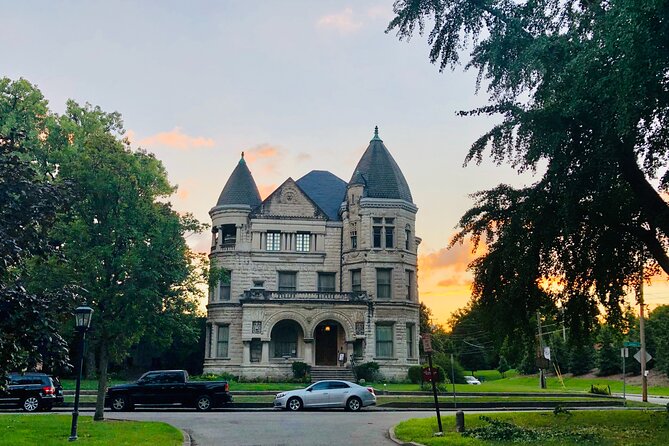
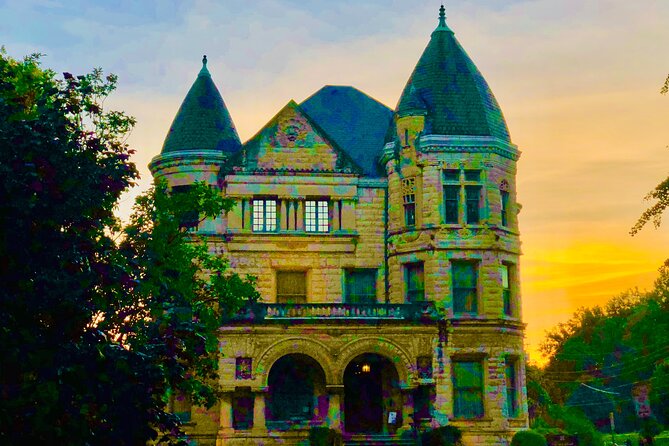
Next comes Conrad-Caldwell House Museum, often called Conrad’s Castle. This is the big architecture moment: a limestone Richardsonian Romanesque mansion from the 1890s. If you like buildings, this is worth the focus. Even in the dark, you’ll feel the weight and presence of the structure.
Important practical detail: the tour notes that Conrad’s Castle has its own tours, and admission is not included in the walking tour. So if the exterior stop is enough for you, you’re good. If you want to go inside, plan on additional cost and follow the museum’s info on site.
And yes—this stop is tied into the ghost lore. The guide sets it up as a place where paranormal stories are part of the local conversation, which fits the tour’s style.
Central Park and the Witches’ Tree: the spooky landmarks that are easy to enjoy
Central Park, Old Louisville’s breathing heart
You’ll pause at Central Park, designed by the same artist behind New York City’s famous Central Park. This green space becomes the tour’s emotional reset: the walk continues, but the scene shifts to open space and quieter corners.
At night, it can feel eerie. That’s the point of the stop, but it’s also useful. After mansion after mansion, a breathing space helps your brain process what you just learned.
The Witches’ Tree: a small stop with big atmosphere
Then you reach the Witches’ Tree, where the guide shares why the tree looks the way it does and why people leave trinkets, beads, and good luck charms. It’s not about elaborate special effects. It’s about a local tradition that makes the spooky side feel communal rather than random.
This is the stop I’d call “short but memorable,” especially if you want a photo moment without a long museum detour.
How long is it, and what pace should you plan for?
Plan on about 1 hour 40 minutes to 2 hours total. The exact duration can vary based on group flow and how stories land at each stop, but the structure stays consistent: meet, walk, stop, listen, finish where you started.
You’ll be walking enough that you need moderate physical fitness. The tour is also clear that you must be able to walk 2 hours without a bathroom break. So treat this like an event: go before you meet, then settle in.
Good news: the route is described as flat and manageable in practice. You may also get chances to pause near spots where you can sit during story breaks, which helps if you’re tired from the day’s sightseeing.
Price and value: is $27.50 a good deal?
At $27.50 per person, this is priced like an affordable nighttime activity. The value comes from what you’re buying: a guided walk through a historic district, with multiple curated stops and a guide who ties the haunting layer to neighborhood context.
You don’t pay extra for the walking tour itself. But you should treat some stops as optional add-ons. Conrad’s Castle, for example, notes that admission is not included if you decide to go inside.
So I’d frame the decision like this: if you want a guided way to understand Old Louisville and you’re happy with exterior viewing plus storytelling, the price is strong. If you plan to add multiple interior tickets, the overall cost rises, but you’ll also be getting deeper access.
Practical tips so your ghost tour stays fun (not annoying)
Here’s how I’d prep if you want this to feel like an easy win:
- Wear comfy shoes. You’re walking for about two hours and the tour is built for night streets and stops.
- Bring bug spray in warmer months. One review specifically recommends it because mosquitoes can show up in summer and fall.
- Carry water. The tour runs in evening weather but can still get humid and hot at certain times of year.
- Use your brain for the mix of history and spooky. The guide’s best work is connecting the story to what you see, not just repeating ghost claims.
- Be ready for a street-scene reality. The meeting area is in a transitional neighborhood where you may see panhandlers. You’re still safe with a guide who knows the area.
If you’re traveling with kids, the reviews describe it as family friendly, with a walking pace that works for families—just keep the no-bathroom-break rule in mind.
Should you book the Old Louisville Ghost Tour?
Book it if you want a nighttime introduction to Louisville that feels more like a smart walking story than a random haunted house vibe. This is a great choice for first-timers because you cover major Old Louisville landmarks—Victorian architecture, Central Park, the Witches’ Tree—and you hear the neighborhood context behind them.
Skip it (or reconsider) if you can’t comfortably walk for about two hours without a break, or if you know you’ll be very uncomfortable with the real-world street environment around the meeting point.
If you’re on the fence, here’s the simplest decision rule: if you like architecture and you enjoy stories with a historical backbone, this tour is a solid use of an evening in Louisville.
FAQ
How long is the Old Louisville Ghost Tour?
It runs about 1 hour 40 minutes to 2 hours.
Where do I meet for the tour, and does it end there too?
You meet at 4th & Ormsby in Louisville, and the tour ends back at the same meeting point.
Is the tour in English, and do I get a ticket on my phone?
Yes. The tour is offered in English and you’ll use a mobile ticket.
What stops are included on the walking route?
The tour includes Old Louisville, the Conrad-Caldwell House Museum (Conrad’s Castle), Central Park, and the Witches’ Tree, with additional spooky-history storytelling around notable local places such as the Ferguson Mansion and the Filson area.
Is admission included for Conrad’s Castle?
No. Conrad-Caldwell House Museum admission is not included. The walking tour includes the guided stop, but you’d need separate access details if you want to go further.
Can I bring a service animal?
Yes, service animals are allowed.
What if the weather is poor, or I need to cancel?
It requires good weather. If it’s canceled due to poor weather, you’ll be offered a different date or a full refund. The experience itself is non-refundable and cannot be changed for any reason.
If you’d like, tell me your travel month and whether you’re more into architecture or pure ghost stories, and I’ll suggest the best way to time this with the rest of your Louisville evening.