REVIEW · OAHU
Honolulu Night Marchers Ghost Tour
Book on Viator →Operated by Mysteries of Hawaii · Bookable on Viator
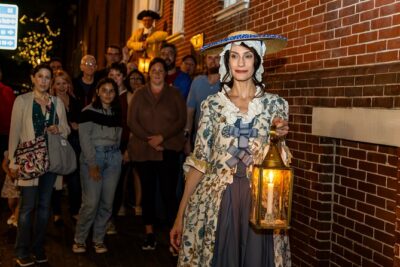
Downtown Honolulu has a second set of rules after dark. This 90-minute Night Marchers ghost tour mixes Native Hawaiian storytelling with downtown hauntings and night marcher lore—so it’s not just spooky for spooky’s sake.
I especially like the way the tour centers on Hawaiian mythology and culture, led by Master Storyteller Lopaka Kapanui. You also get a format that works for real people: a walking tour you can follow, with stories paced for the group and plenty to react to as you move.
One possible drawback to plan around: if you show up late, you may miss the intro and the context that makes the stories click—so aim to arrive early at the King Kamehameha I Statue.
In This Review
- Key highlights worth your attention
- Ghosts with real culture: what makes this tour different
- Price and timing: is $35 worth 90 minutes at night?
- Starting point at King Kamehameha I Statue: how to set yourself up
- The 90-minute route: what you’ll actually do
- 1) Set the context in Downtown
- 2) Follow night marcher paths toward Pakaka
- 3) Eyewitness accounts and what “evidence” means on a ghost walk
- 4) Wrap back around Downtown
- Lopaka Kapanui’s storytelling: why the guide is the whole point
- Night marchers in Honolulu: what to expect from the lore
- Photos, videos, and the moment people talk about
- Comfort, pacing, and who this tour fits best
- Included vs not included: plan your evening like a local
- Weather and respectful spook level
- The one thing that can go wrong (and how to avoid it)
- Should you book this Honolulu Night Marchers Ghost Tour?
- FAQ
- What time does the Honolulu Night Marchers Ghost Tour start?
- Where is the meeting point?
- How much does it cost?
- Is the tour offered in English?
- Is food or drink included?
- What’s included in the ticket?
- How big is the group?
- Can I bring a mobile ticket?
- Does the tour allow service animals?
- What happens if the weather is bad?
Key highlights worth your attention
- Native Hawaiian-owned and operated with culture-first storytelling
- Master Storyteller Lopaka Kapanui leads the experience
- Night marcher paths tied to Pakaka, an ancient sacrificial heiau site
- Eyewitness accounts and documented haunting-style stories
- Small-group feel with a maximum of 50 travelers
- Comfy walking requirement for a 90-minute downtown route
Ghosts with real culture: what makes this tour different
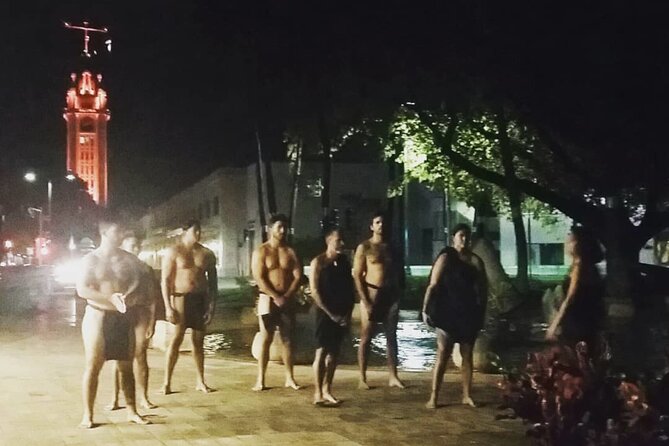
This tour earns its place in the category of ghost tours that actually respect the setting. Instead of treating Honolulu as a haunted backdrop, you hear how Hawaiian tradition frames spirits, warnings, and the sense that certain places have memory.
You’ll also notice the guide’s tone matters here. The best moments aren’t just scary-sound effects. They’re the slow build—story by story—when you’re walking through Downtown streets and realizing how often people talk about the same kinds of strange activity in the same kinds of buildings. That’s what makes the experience stick: it’s storytelling tied to place, not jump scares.
And yes, it’s spooky. But it’s also educational in a way that doesn’t feel like homework. You’re not just collecting ghost stories; you’re learning the cultural meaning behind the supernatural.
You can also read our reviews of more tours and experiences in Oahu.


Price and timing: is $35 worth 90 minutes at night?
At $35 per person for about 1 hour 30 minutes, the value comes down to what you’re hoping for. If your idea of a great night is a guided walk with context, this price is reasonable for a tour led by a named local storyteller and focused on one theme: Honolulu’s night marcher lore and hauntings.
A few things to keep in mind so you can judge value for your own style:
- This is not a “show” tour. It’s a walking storytelling experience, so you’ll get the most from it if you like listening and moving.
- You’ll likely spend your money on a single highlight evening rather than multiple attractions in one day. That’s often the best way to use a limited Oʻahu schedule.
- Food and drink aren’t included, so plan a snack or dinner earlier (more on that below).
If you’re the kind of traveler who likes spooky stories with cultural roots—plus a guide you can talk to—this is a solid fit for the price.
Starting point at King Kamehameha I Statue: how to set yourself up

The tour starts at the King Kamehameha I Statue, 447 S King St, Honolulu, HI 96813, and it ends back at the same meeting point. It begins at 7:00 pm.
Here’s why that matters for your experience:
- Being downtown at night means you’ll want to get there early enough to settle in. One of the few negative experiences tied to the tour mentioned arriving late and missing the introduction, and that intro is where the stories get their shape.
- Because it ends where it starts, you avoid the common post-tour headache of figuring out transport in the middle of the night.
Mobile ticket is part of the deal, and the confirmation arrives after booking. So you’re not dealing with will-call lines during the stressful part of travel.
The 90-minute route: what you’ll actually do
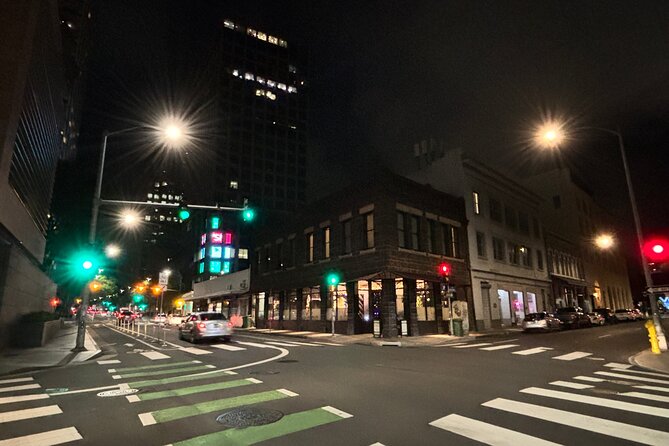
You’ll be walking around Downtown Honolulu for the full session. The tour centers on the idea that Honolulu’s modern streets sit on older pathways tied to night marchers—and that traces of the past show up as hauntings today.
Even though the itinerary lists the tour area as one main stop, the experience has a clear flow once you’re on your feet:
1) Set the context in Downtown
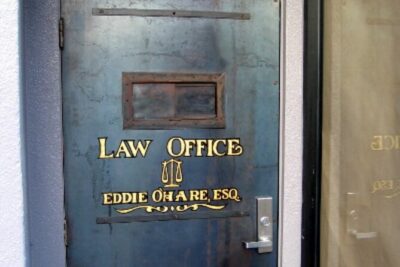
Early on, you get the framework: why people in the area talk about buildings that feel active after dark. You’ll hear examples like moving shadows, objects being moved, and the spooky “skin-crawl” feeling people associate with places that don’t feel fully normal—even when it’s not just air conditioning.
This is the part that’s worth arriving on time for. The better you understand the theme, the more the later stories land.
2) Follow night marcher paths toward Pakaka
A key idea here is that Downtown Honolulu has hidden or forgotten pathways connected to night marchers—routes that many stories say lead toward Pakaka, once an ancient sacrificial heiau. You won’t be touring ruins with fencing around them; instead, you’re hearing how older routes shaped where things happened, and how those movements left emotional and spiritual traces.
That’s a useful approach for travelers: you get meaning without needing technical archaeology details. The guide turns the “where” into “why it matters.”
3) Eyewitness accounts and what “evidence” means on a ghost walk
Midway through the tour, the tone shifts from general stories to personal accounts. The tour includes true documented accounts of hauntings and paranormal activity, presented as eyewitness-style narratives.
Some guests also reported that the guide shared paranormal evidence you can’t ignore. One memorable type of moment involved photos that later looked different than what was seen during the walk. Even if you’re skeptical, that kind of story does something important: it makes you slow down and watch what’s in front of you instead of rushing to judge.
4) Wrap back around Downtown
Because the tour ends back near where you start, you finish while you still have daylight-dark orientation. It helps your brain connect the places you visited with the stories you heard.
Lopaka Kapanui’s storytelling: why the guide is the whole point
This experience is explicitly led by Master Storyteller Lopaka Kapanui (and it’s described as Native Hawaiian owned and operated through Mysteries of Hawaii). That matters because good ghost tours depend on delivery: pacing, humor, and a willingness to answer questions.
What stands out from the strongest feedback is that Lopaka’s approach feels human. People mention that he’s warm and easy to talk to, and that the stories carry family weight—passed down from his mother and relatives. That doesn’t just add emotion; it gives the stories credibility in an emotional sense. You’re not hearing a script built for tourists. You’re hearing a tradition being shared.
You’ll also likely appreciate the guide’s humor. Some guests pointed out his witty or even lightly sarcastic sense of humor, which helps the tour breathe. The result is a pace where you can be spooked without feeling lost.
One small detail that shows how personal the experience can be: at least one guest mentioned an orange cat sighting as part of the vibe on the walk. It’s not the “main event,” but it signals that the evening can feel lived-in, not staged.
Night marchers in Honolulu: what to expect from the lore
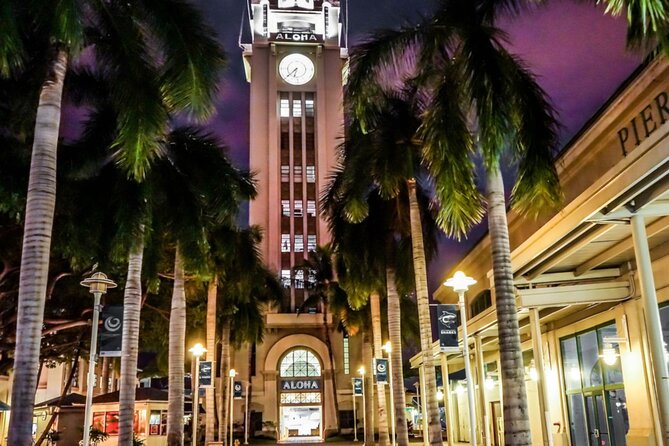
The night marcher theme is the engine of the tour. In plain terms, you’ll hear about:
- Night marcher paths hidden in the modern city layout
- The idea that many routes end around Pakaka, an ancient sacrificial heiau
- How modern buildings and streets can carry traces of past spiritual activity
- Specific haunting-style stories tied to these locations
What’s valuable for you is the way this theme keeps returning, so the tour doesn’t feel like random spooky trivia. It’s more like a guided “pattern recognition” session: you start to notice how stories cluster around certain kinds of places, and you start asking why.
And again, it’s not only fear. The tour frames supernatural elements inside Hawaiian mythology and local context, which helps you understand the tradition behind the chills.
Photos, videos, and the moment people talk about
This tour is set up to create reactions. Guests mention images and stories tied to hauntings, and some described a practical effect: they took photos during the walk, and later those images looked blurry compared with what they expected.
I don’t treat that as proof of anything in a scientific sense. But I do treat it as part of the experience design. On a ghost tour, your attention is the product. If the story prompts you to look closer and document what you see, you’ll leave with a stronger memory than you would from a purely verbal tour.
If you’re the type who likes to take photos, just keep expectations realistic. At night, Downtown lighting can be tricky. What matters is staying present while you listen, not turning the tour into a camera challenge.
Comfort, pacing, and who this tour fits best
You’re on foot for about 90 minutes, so your comfort matters. The tour is described as suitable for most travelers, and one review mentioned it worked for someone using a sit-down walker.
So this can work for families and mixed groups, as long as you’re okay with walking through Downtown for the time block. If you have limited mobility, you’ll want to plan your energy and check with the provider ahead of time.
A few practical pointers that help no matter what ghost tour you choose:
- Wear comfy shoes. This is a night walk where stopping to listen happens often.
- Bring layers. Evening in Honolulu can feel different from late afternoon.
- Give yourself a buffer so you don’t arrive rushed. Missing the intro can make the stories harder to follow.
Also, the group max is 50 travelers. That’s big enough to feel lively, but small enough that you can still feel the guide’s attention.
Included vs not included: plan your evening like a local
Here’s what you get with your ticket:
- Admission ticket included
- Authentic Hawaiian legends, history, and culture
- Led by Master Storyteller Lopaka Kapanui
- True documented accounts of hauntings and paranormal activity
- Mobile ticket format
- English language delivery
Not included: Food & drink.
So I’d plan dinner before you go, and then treat the tour like a dessert: one focused experience that takes over the night for a short window. If you get hungry during the walk, you’ll be distracted—because there’s nothing in the tour design meant to satisfy hunger.
The tour also allows service animals, and it’s near public transportation, which is helpful if you’re using buses or rideshare and don’t want to over-plan parking.
Weather and respectful spook level
This experience requires good weather. That matters because the tour is outdoors and walking-focused. If weather is poor, you’ll be offered a different date or a full refund.
So treat it as a flexible plan item. If you’re choosing which evening to schedule it, pick a day with a better forecast.
Respect matters here too. The tour is tied to Hawaiian tradition and mythology, so it’s a good idea to keep your tone curious and your questions thoughtful. You’ll get more out of it when the atmosphere is respectful, not performative.
The one thing that can go wrong (and how to avoid it)
The most clear negative feedback wasn’t about the theme—it was about the experience flow. One guest felt the guide didn’t engage the group and that the stories lacked enough background, and another detail mentioned arriving late and missing the introduction.
You can prevent that easily:
- Arrive early so you don’t miss the framing.
- Listen for the theme cues; they’re what help later stories make sense.
- If you’re confused, ask. The tour format supports interaction, and the stronger feedback includes people enjoying Lopaka’s conversational style.
If you’re the type who expects a tightly scripted “horror movie” experience with constant action, note that this is more story and context than chase scenes.
Should you book this Honolulu Night Marchers Ghost Tour?
Book it if you want a ghost tour that treats Hawaiian mythology seriously and gives you a real local guide named Lopaka Kapanui as the centerpiece. The culture-first approach, the night marcher theme tied to Pakaka, and the mix of haunting stories with eyewitness-style accounts are the big reasons this works.
Skip it (or adjust expectations) if you want non-stop thrills or you’re likely to arrive late, tune out during introductions, or prefer ghosts presented without cultural context.
If your goal is one strong evening in Downtown Honolulu—something spooky, but also grounded—this is an easy yes. Just plan your night so you arrive on time, wear comfortable shoes, and go in ready to listen as much as you look.
FAQ
What time does the Honolulu Night Marchers Ghost Tour start?
It starts at 7:00 pm and runs for about 1 hour 30 minutes.
Where is the meeting point?
You’ll meet at the King Kamehameha I Statue, 447 S King St, Honolulu, HI 96813.
How much does it cost?
The price is $35.00 per person.
Is the tour offered in English?
Yes, the tour is offered in English.
Is food or drink included?
No. Food & drink are not included.
What’s included in the ticket?
The ticket includes authentic Hawaiian legends, history, and culture, and the tour is led by Master Storyteller Lopaka Kapanui. It also includes documented accounts of hauntings and paranormal activity.
How big is the group?
The maximum group size is 50 travelers.
Can I bring a mobile ticket?
Yes. The tour uses a mobile ticket.
Does the tour allow service animals?
Yes, service animals are allowed.
What happens if the weather is bad?
The experience requires good weather. If it’s canceled due to poor weather, you’ll be offered a different date or a full refund.