REVIEW · WARWICK
Warwick: Ghost, Crime & Murder Walking Tour
Book on GetYourGuide →Operated by Dark Warwick · Bookable on GetYourGuide
Warwick gets a little darker after dark, and this walking tour leans right into it. You start outside the Tudor timber-framed Lord Leycester Hospital and spend about 90 minutes following a costumed guide through stories of ghosts, murders, and local legends. I like that the pacing stays tight, so you get real town sights without feeling rushed.
Two things I especially liked: first, the way the guide connects the spooky talk to specific places, including a secret angle from Warwick Castle; second, the storytelling style is playful but still clear enough to follow the grim details. One thing to consider: this tour includes graphic depictions of death and executions, so it’s not a casual, lighthearted stroll.
In This Review
- Key tour takeaways
- Entering the Weird Walk: meeting outside Lord Leycester Hospital
- The first stop: Lord Leycester Hospital and opening the case
- The castle angle you won’t get on your own
- The short walks between stops: how you keep your bearings
- Old Warwickshire County Courts: crime and consequence in the town center
- Tudor Thomas Oken: the wealthy merchant with a darker shadow
- St Mary’s Church stop: a quick breath between heavier tales
- The Great Fire of Warwick: when trouble wasn’t supernatural
- Ending in Warwick market square: keep the night going
- Price and value: what $13 buys you in a 90-minute night out
- Who this tour fits best (and who should skip it)
- A quick guide to getting the most out of your evening
- Should you book Warwick: Ghost, Crime & Murder Walking Tour?
- FAQ
- Where do I meet for the Warwick ghost, crime, and murder tour?
- How long is the tour?
- What is the tour price?
- Is the tour guided and in English?
- Where does the tour end?
- Is the tour suitable for children?
- Is the tour suitable for people with mobility impairments?
- Does the tour include graphic content?
Key tour takeaways
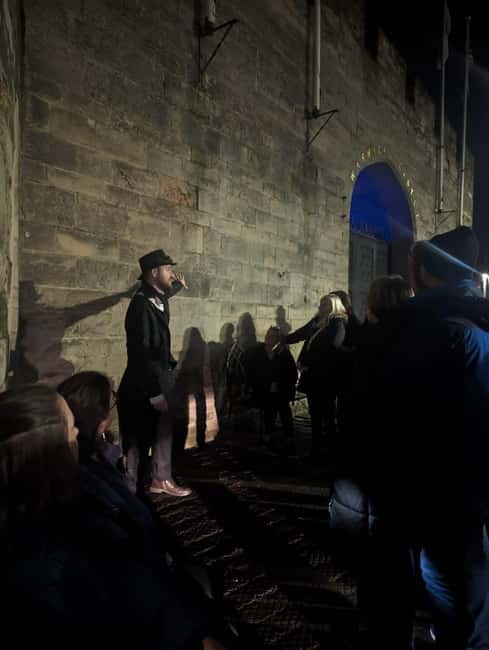
- Costumed, in-character guides (for example, Warrane Worthington) make the stories feel lived-in, not read from a script.
- Warwick Castle from a secret spot adds real perspective beyond the usual tourist viewpoint.
- Old Courts + execution stories turn the town center into a crime scene you can walk through.
- Warwick’s oldest buildings give you a stronger sense of who lived here—and who didn’t make it.
- The Great Fire of Warwick rounds out the evening with a disaster story, not just murders and ghosts.
Entering the Weird Walk: meeting outside Lord Leycester Hospital
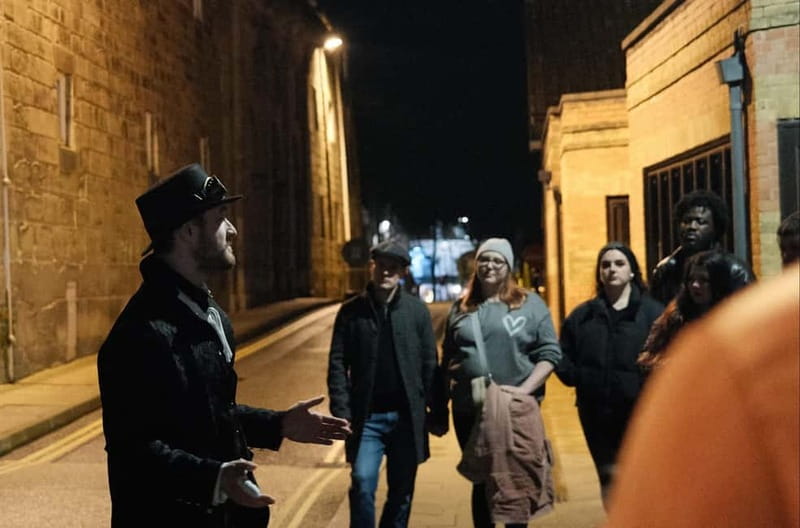
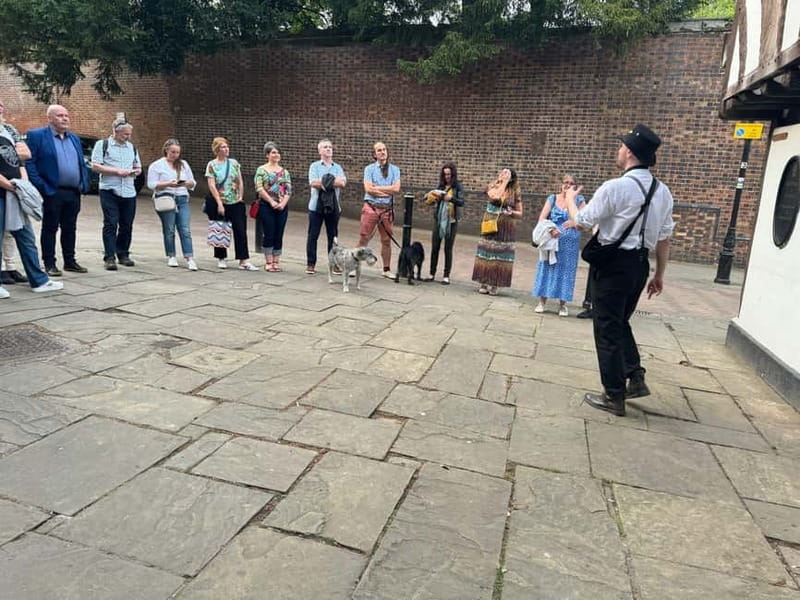
I love how this starts in a place that already feels like part of the story. You meet outside The Lord Leycester Hospital, an old Tudor, timber-framed building, near the bollards. The guide greets you in costume, and right away the tone is set: you’re not doing museum history—you’re walking the town and hearing what happened to real people.
Warwick at night is quieter than it is in daylight, which helps. The walk is guided, so you’re not just wandering between landmarks hoping you’ll notice the interesting stuff. And the ending back in the market area means you can keep the night going with pubs and restaurants nearby.
A small practical note: if you’re arriving from the railway station, give yourself extra time to find the meeting spot. One traveler flagged that signage can be poor, so arriving early is smart.
You can also read our reviews of more tours and experiences in Warwick.

The first stop: Lord Leycester Hospital and opening the case
Your first guided segment focuses on the hospital itself, setting the stage for what kind of stories you’ll hear for the next hour and a half. Expect short, story-driven explanations rather than long lectures. This matters because a ghost-and-crime tour works best when you get hooked early, then keep moving before the attention wanders.
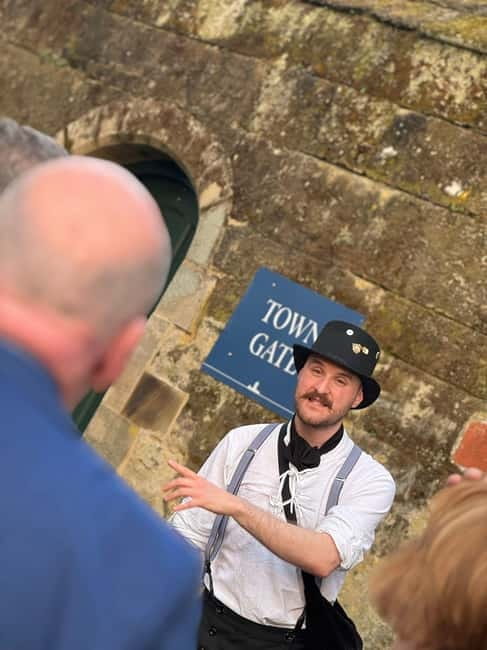
The guide—led by Warrane Worthington, described as a Dark Investigator of things strange in Warwick—works hard to keep voices easy to hear. In the best moments, you feel like you’re watching someone narrate a live investigation, not just giving directions.
The castle angle you won’t get on your own
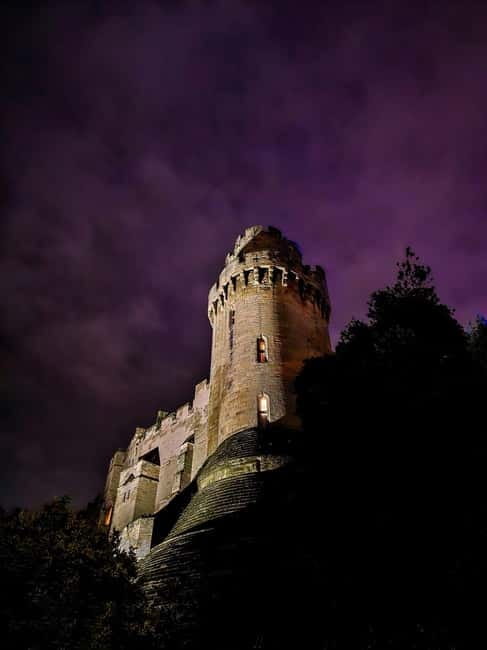
Next comes Warwick Castle, but the tour doesn’t just say, That’s a castle. It points you toward ways to look at it that you’d likely miss if you were strolling around independently.
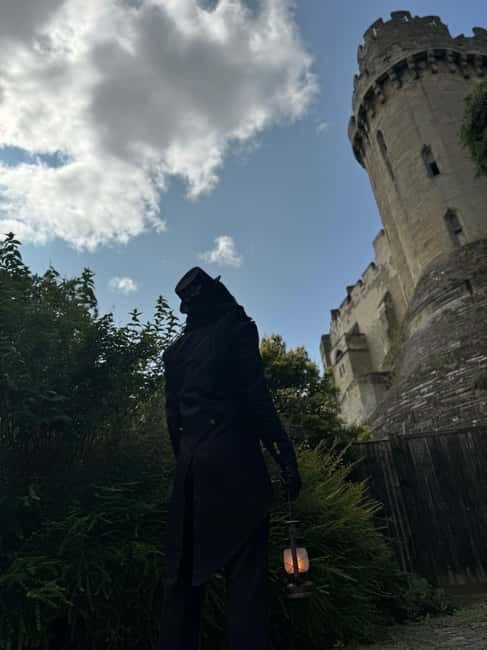
You get guided time at the castle, then a few short walks between viewpoints, including a longer guided segment. This is where the tour feels most “worth it” as a guided experience. You’ll learn about the castle’s darker side and see it from a secret spot at the bottom, which shifts the whole atmosphere. From that perspective, the castle reads less like a postcard landmark and more like a place tied to power, punishment, and fear.
There’s also a psychological trick at work here: you don’t just learn facts—you get positioned. When you’re standing somewhere specific, even familiar architecture can feel different, and that makes the ghost stories land harder.
The short walks between stops: how you keep your bearings
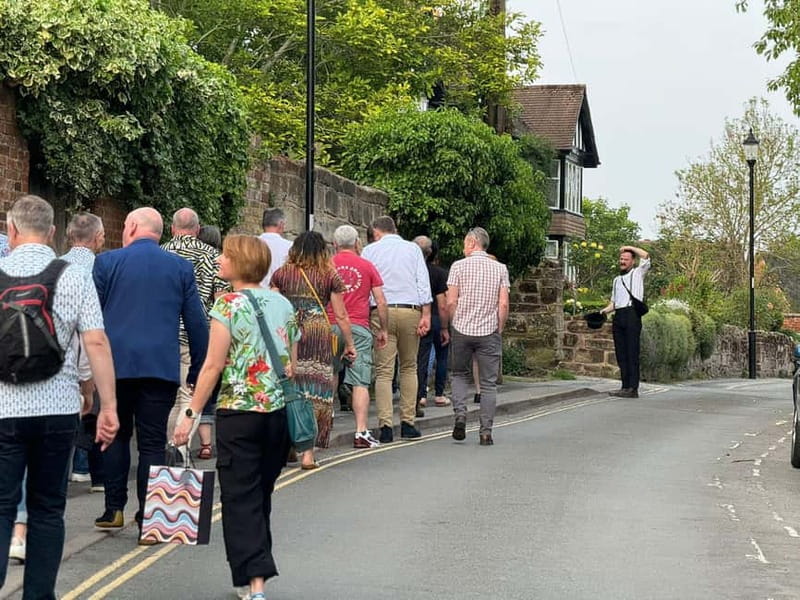
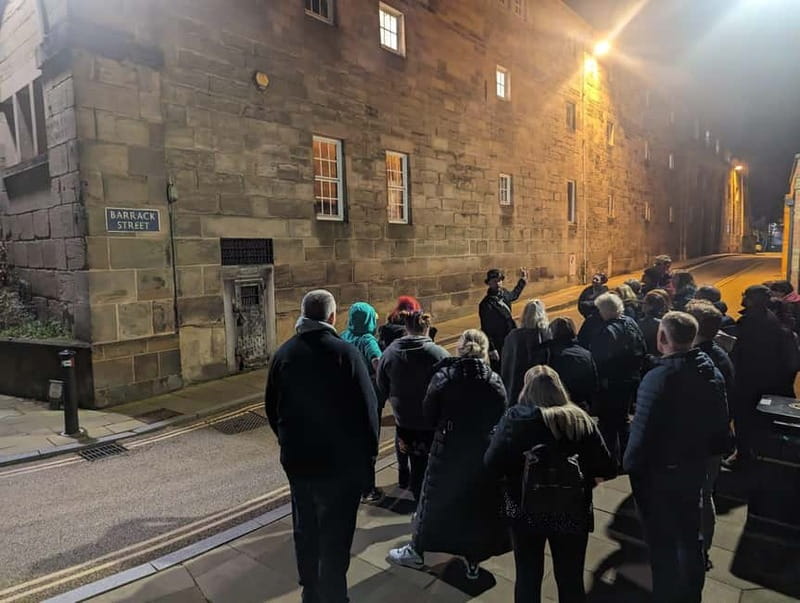
A ghost walk can feel long if the gaps are too big. This one uses quick, on-foot segments to keep the flow moving. Those little stretches are useful. You get time to catch your breath, and you also get chances for your guide to point out small cues you might otherwise overlook—street layouts, old building fronts, and the way the town centers itself around its historic core.
You’re also moving close to other historic areas as the night goes on, so you don’t feel like you’re crossing the entire town to get to each story.
Old Warwickshire County Courts: crime and consequence in the town center
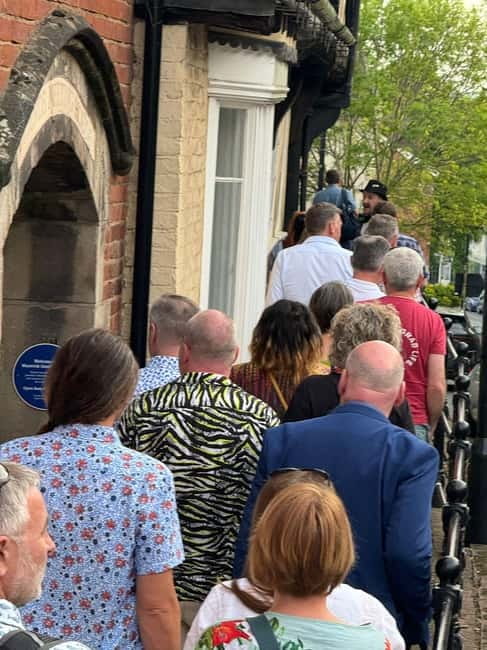
One of the highlights is the stop at the Old Warwickshire County Courts, where criminals were tried and executed. This is not the kind of subject that stays vague. The tour uses the location to explain the grim logic of the era—what punishment meant, how justice played out, and how quickly a life could be cut short.
Because the tour includes graphic depictions of death and executions, I’d treat this stop as the emotional peak of the evening. If you’re sensitive to that kind of detail, you’ll want to know in advance so you can pace yourself.
On the other hand, if you like history that has teeth—history that doesn’t sand down the brutality—this part delivers. It turns the town center into something you can actually “read,” like you’re seeing the machinery of the past at ground level.
Tudor Thomas Oken: the wealthy merchant with a darker shadow
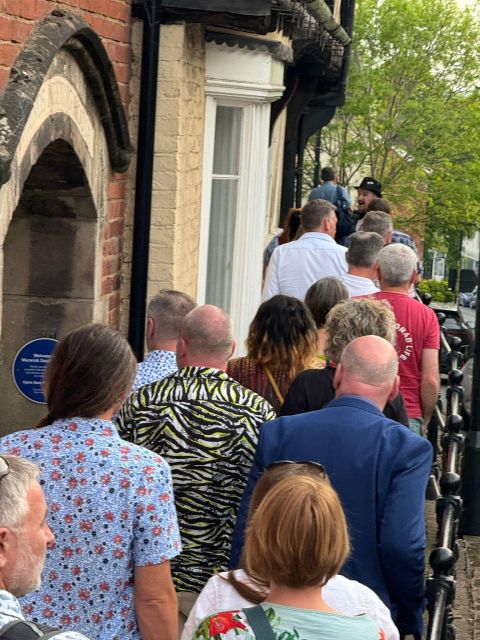
Another standout location is the Tudor home of wealthy merchant Thomas Oken. It’s a reminder that the people at the center of old Warwick weren’t only soldiers, priests, or court officials. Merchants mattered too, and their homes and stories reflect the trade networks and social ladder of the time.
The smart part about including a wealthy residence in a murder-and-ghost tour is balance. You get the contrast between everyday life and the harsh outcomes that could spill out of the law, the streets, or the rumors that traveled faster than facts.
St Mary’s Church stop: a quick breath between heavier tales
You also visit St Mary’s Church, East Midlands, with a short guided segment. The tour uses this like a breather. You go from court-level darkness back into something tied to community and long-standing local faith.
Even if the stories here are still spooky, the church setting changes the vibe. It’s a good moment to reset your head so the next longer story round feels fresh instead of repetitive.
The Great Fire of Warwick: when trouble wasn’t supernatural
By the time you reach the longer guided segment near the end, you get The Great Fire of Warwick story. This is a key inclusion because not every horror is ghost-shaped. A fire can erase buildings, reshape streets, and scramble the future of a whole town.
For me, this is where the tour broadens. It takes you beyond entertainment and into “how cities survive disasters.” You start connecting the legends to real civic changes: what might have been rebuilt, what might have vanished, and why old towns carry certain scars even when the danger has moved on.
Ending in Warwick market square: keep the night going
The tour finishes in Warwick’s market square, at 3–7 Market Pl, Warwick CV34 4SA, UK. I like that ending because it’s practical. You can grab dinner, pop into a pub, or just wander a few streets longer while the atmosphere is still in your head.
And with a walking tour, that’s the real payoff: you don’t leave the story at the last sentence. You carry the town with you for the rest of the evening.
Price and value: what $13 buys you in a 90-minute night out
At $13 per person for about 90 minutes, you’re paying for time, a guide, and an intentionally timed route through places you’d otherwise need to plan yourself. The value is in the sequencing: you get a guided start outside a historic landmark, then you move toward the castle, the courts, and the older buildings that make Warwick feel like Warwick.
You’re also getting theater without spending all night inside. The guide is costumed, and the storytelling style is clearly meant to keep you engaged—friendly, theatrical, and easy to follow. That matters because a cheap tour that drifts can feel long. This one is built around staying sharp and moving.
If you enjoy walking tours, even better. This is the kind of outing where you’re actively looking at buildings the whole time, which makes it harder to feel like you paid for “just stories.”
Who this tour fits best (and who should skip it)
This tour is best for adults and older teens who like spooky history and dark storytelling. The content includes graphic depictions of death and executions, and it’s listed as not suitable for children under 9.
Also note the tour is not suitable for people with mobility impairments. If your group has anyone who struggles with uneven streets or longer walking segments, you may want to choose a different type of tour.
If you’re the type who reads about true crime history, local legends, or old British court life, you’ll probably have a great time. If you want something strictly comedic and light, this isn’t that.
A quick guide to getting the most out of your evening
A few small choices can make the tour more fun:
- Wear shoes you trust. Even in a “light” walk, you’re on foot the whole time for about 90 minutes.
- Go in with curiosity, not just fear. The best spooky tours explain the why behind the fear.
- If you’re sensitive to execution details, decide ahead of time how much you want to hear. This is clearly part of the program.
And listen for how the guide ties stories to the exact spots. The tour works because the town itself is the stage.
Should you book Warwick: Ghost, Crime & Murder Walking Tour?
I’d book it if you want a guided night walk that feels rooted in real Warwick buildings, not vague spooky talk. The highlights—the secret-angle views tied to Warwick Castle, the Old Warwickshire County Courts, and the mix of legends plus a major disaster like The Great Fire of Warwick—give you more variety than the typical one-note ghost tour.
I’d think twice only if graphic descriptions of death and executions would put you off, or if mobility needs make a walking tour tough. Otherwise, for the price, it’s a solid 90-minute way to experience Warwick after dark—stories first, then the town around you starts making sense in a whole new way.
FAQ
Where do I meet for the Warwick ghost, crime, and murder tour?
You meet outside The Lord Leycester Hospital (an old Tudor, timber-framed building), near the bollards.
How long is the tour?
The tour lasts about 90 minutes.
What is the tour price?
The price is $13 per person.
Is the tour guided and in English?
Yes. It’s a walking tour with a live English guide.
Where does the tour end?
The tour ends in Warwick’s market square at 3–7 Market Pl, Warwick CV34 4SA, UK.
Is the tour suitable for children?
No. It is listed as not suitable for children under 9.
Is the tour suitable for people with mobility impairments?
No. It is listed as not suitable for people with mobility impairments.
Does the tour include graphic content?
Yes. The tour contains graphic depictions of death and executions.