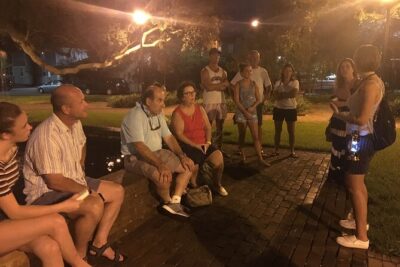
REVIEW · SEOUL
Seoul: Evening Dark History, Folklore & Ghost Story Walking Tour
Book on Viator →Operated by ZenKimchi Experiences · Bookable on Viator
Ghost stories, palace shadows, and Seoul street grit. This evening walk threads Korean folklore through real stops like Gyeonghuigung Palace and the back-alley feel of Pimatgol, and you also leave with a map link to revisit the exact places you walked. It’s built for people who want their Seoul history with a spooky edge, from royal-era rumors to urban legends you can’t easily find on your own.
The one drawback to plan for: it’s not a sit-back theater act. You do a moderate amount of walking at night, and the tone leans more story-and-atmosphere than jump-scare horror.
In This Review
- Key highlights to know before you go
- Seoul’s Evening Dark History: what this tour feels like on foot
- Price, duration, and where the value really comes from ($42.90)
- Regular vs extended editions: how to choose the right spooky runtime
- 8:00 pm logistics that keep your evening smooth (and stress-free)
- Gyeonghuigung Palace at night: why this stop gets so much attention
- Pimatgol Alley: the kind of Seoul you don’t find by accident
- Tapgol Park: independence history with a supernatural twist
- Storytelling style: what guides like Joe and Shawn do differently
- How scary is it, really? Plan for eerie, not certainty
- What you’ll get afterward: using the map link to keep the night going
- Walking at night in Seoul: how to prepare so the tour stays fun
- Who this Seoul ghost and folklore tour fits best
- Should you book the Evening Dark History, Folklore & Ghost Story Walking Tour?
- FAQ
- How long is the Evening Dark History, Folklore & Ghost Story Walking Tour?
- Where does the tour start and when?
- What’s included in the price?
- Is food or drinks included?
- What stops are part of the route?
- Is the tour scary?
- What should I do if I need to cancel?
Key highlights to know before you go
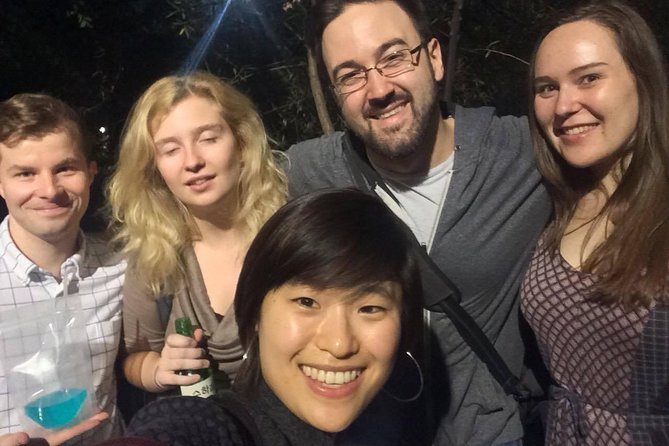
- Gyeonghuigung Palace as the headline stop: Often framed as the most haunted palace in South Korea, with heavy atmosphere after dark.
- You get a map link afterward: The tour includes a post-walk map of the sites you visited, even noting secret torture chamber areas mentioned on the route.
- Small group size (max 25): Easier pacing, more room for questions, and fewer people to hold up the sidewalk.
- Regular vs extended timing: Tue/Wed/Fri offer both versions, while Thurs/Sat/Sun run the extended version only.
- Guides with sharp storytelling energy: Names you may hear include Joe and Shawn, with a mix of folklore, macabre history, and jokes.
- It’s “eerie” even if you don’t spot ghosts: Expect mood, legends, and real sites—literal sightings aren’t guaranteed.
Seoul’s Evening Dark History: what this tour feels like on foot
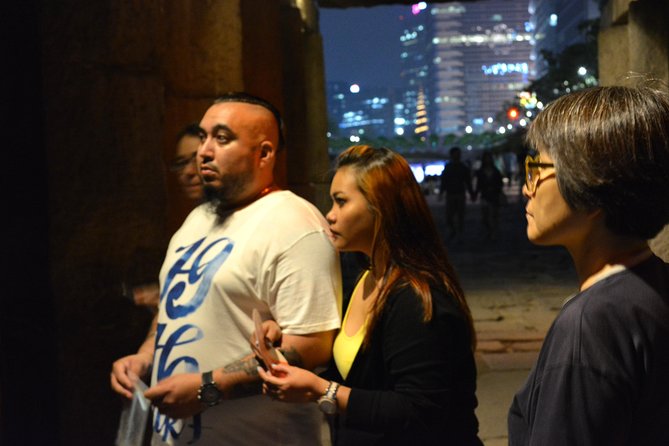
This is the kind of Seoul experience that works because it’s done at night, at walking pace, on streets you might skip in daylight. The core idea is simple: you follow a guide through hidden alleys and famous landmarks, and you get the stories that sit behind local myths. Think royal-era horror rumors, ghost lore, and urban legend explanations tied to places you can actually see.
What I like most is the combination of specific locations and context. You’re not just being told spooky tales in a vacuum. You’re walking up to the kind of places where those tales make sense, then hearing why people connected them to fear, grief, or the supernatural.
And the practical perk: you’re handed a link to a map afterward. So even after the night ends, you still get a “receipt” of where you went and what the stories were about.
You can also read our reviews of more tours and experiences in Seoul.
Price, duration, and where the value really comes from ($42.90)
At $42.90 per person, you’re paying for three things: a professional guide, an evening route through multiple key spots, and a map link with the places discussed. In a city where a lot of paid tours are basically a bus line with a microphone, this one spends your money on time in the street with a human storyteller.
The duration is listed as 2 to 3 hours (approx.). That matters because Seoul at night can feel like a blur if you’re sightseeing solo. This gives you a structured route that keeps you moving and helps you connect the dots between different neighborhoods and historical layers.
Also, the group is capped at 25 travelers. That small cap is part of the value. Smaller groups tend to move better on narrow alleyways and don’t feel like a moving crowd barrier. You also get a better chance to ask questions when the guide pauses.
Regular vs extended editions: how to choose the right spooky runtime
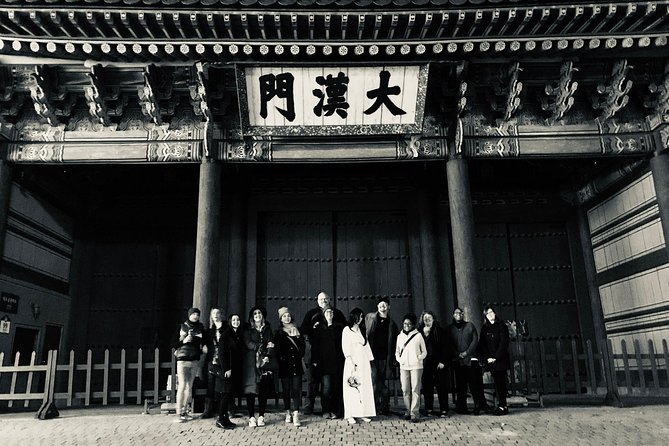
Not all nights are the same length. The tour has a regular and extended option, with extended version only on Thurs, Sat, and Sun.
So how do you choose?
- Pick regular if you want the main hits without committing to a longer sidewalk session.
- Pick extended if you want more stories, more stops, and the fuller “spooky part” feel people are talking about most.
Reviews repeatedly describe the extended edition as the version that gives the complete spooky run. Even if you don’t care about max-creepiness, more time usually means you’ll see a wider slice of the route and hear a better mix of folklore and dark history context.
If you’re tight on energy, start with regular. If you want the night to count, go extended.
8:00 pm logistics that keep your evening smooth (and stress-free)
The tour starts at 8:00 pm, and it ends in a different location from where it begins. That’s good planning advice: don’t book dinner right at the finish unless you like improvising.
Meeting points vary depending on the day of week, so don’t assume it’s the same place every time. The good news is the tour notes that the subway is the best way to arrive—taxis can get stuck in traffic.
This matters because ghost tours often run on tight timing. If you arrive late, you’ll lose the opening stories and the route rhythm. Use the subway, give yourself buffer time, and be ready for night-walking.
Also note: you’ll get a mobile ticket, and it operates in all weather conditions. So if the forecast is messy, don’t panic—just dress for it.
Gyeonghuigung Palace at night: why this stop gets so much attention
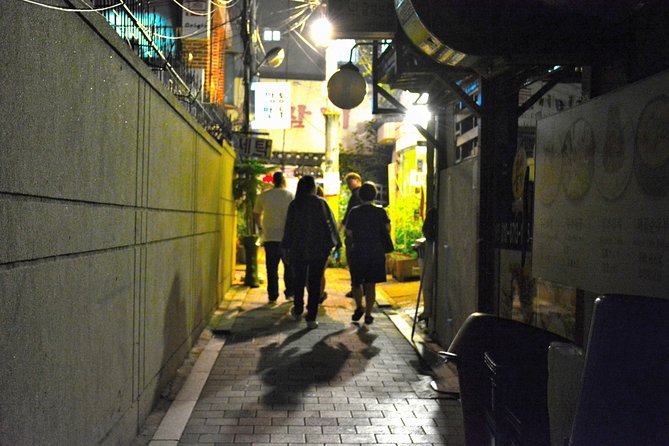
The headline stop is Gyeonghuigung Palace. The tour frames it as the most haunted place in South Korea, and the stories tied to the palace are the kind that stick with you because of how the legend is connected to place.
What makes this stop work is the feeling of arrival. You’re not hearing “ghost stuff” on a random street corner. You’re standing near a site that people already associate with royal power, confinement, and historical fear. Even on nights when nothing dramatic happens in the literal sense, the atmosphere can feel heavy.
There’s also a practical side: palaces take time. You’ll need to be patient walking through the grounds and listening. The upside is that the guide uses the architecture and setting as a storytelling tool, so you’re not just moving through dark space—you’re interpreting it.
One more thing: if your night is foggy, it can crank up the mood. The tour includes multiple nights where weather helps make the stories feel more real.
Pimatgol Alley: the kind of Seoul you don’t find by accident
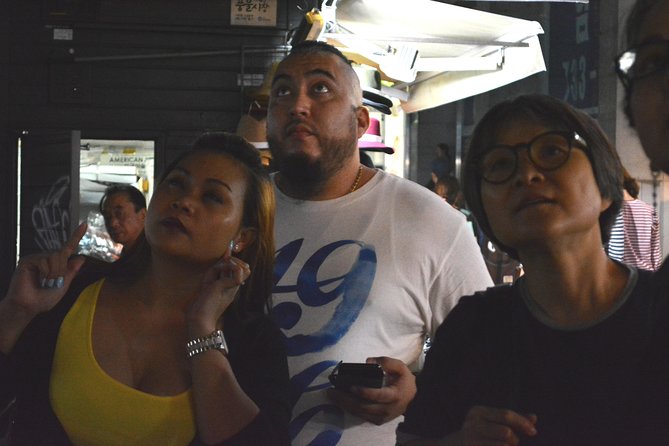
After the big-name historical stop, the route turns toward the quieter side of the city, including Pimatgol Alley. This is where the tour earns its “folklore street” reputation.
Why does Pimatgol fit a ghost-and-dark-history walk? Alleys are where rumors grow. They’re narrow, they feel private, and they make it easier for a guide to connect legend to daily life. In other words, the stories don’t feel like generic scary bedtime tales. They feel like something that belongs to this specific neighborhood rhythm.
From a practical standpoint, narrow lanes mean you should keep your pace steady and stay aware of footing. You’re walking at night with a group, so comfortable shoes aren’t optional. This is also a spot where a small group size helps—tight alley space doesn’t handle big clusters well.
Tapgol Park: independence history with a supernatural twist
The tour includes Tapgol Park, described as the birthplace of Korean independence. This stop adds a big layer of meaning. It’s not just haunted romance or monster stories. It’s history tied to the identity of modern Korea.
What’s clever about the way this fits the tour is that the legends aren’t treated as separate from history. The supernatural framing helps you notice how fear, hope, and national trauma can get carried forward through myths and ghost stories. You’re seeing how folklore can act like a social memory system.
Tapgol Park also gives you a breather in the route. It’s a public place, so the feel can be less “creepy alley” and more “this happened here” grounded. That balance keeps the evening from turning into pure spooky mode.
Storytelling style: what guides like Joe and Shawn do differently
Guides you might get include Joe and Shawn (and the tour materials also show other guide name variations you may see listed). The consistent pattern is that the guide isn’t just reading a script. The best storytelling is interactive in small ways—pauses, attention to pacing, and humor that keeps the group from getting stiff.
Several reviews point out the guides’ mix of:
- folklore and urban legends,
- historical context,
- and a sense of humor (including dad-joke energy).
One detail I really appreciate as a listener: the stories are often tied to what you can physically see. That turns the night walk into a kind of “interpretation game.” You start looking at details that you’d normally walk past.
That said, there can be a tone difference depending on the guide. Some people describe the approach as fact-forward rather than theatrically spooky. If you want horror-movie vibes, keep expectations grounded: you’re getting eerie stories and dark context, not a staged scare show.
How scary is it, really? Plan for eerie, not certainty
This tour markets itself for fans of ghosts and the supernatural, but it doesn’t promise literal ghost sightings. And that’s wise planning.
In practice, you should expect:
- creepy atmosphere at key sites (especially during the palace portion),
- legends and explanations that explain why people believed certain things,
- and a playful, spooky tone that can be humorous rather than pure fear.
One review mentions a “protection package against the ghosts,” which hints at the tone: it’s spooky, but it doesn’t have to be grim. Another review notes that some nights feel less scary in the obvious way, but still fascinating and historically intense.
If you want a 100% scary night with constant chills, this might feel more like dark folklore with chills than a horror scare-fest. If you want stories you can talk about later, with locations you can actually visit again, this is the right direction.
What you’ll get afterward: using the map link to keep the night going
A standout included item is the link to a map of everything discussed, including areas tied to “secret torture chambers” referenced during the tour.
This is more useful than it sounds. It helps you:
- remember the route without scrolling back through your phone at 2 am,
- reconnect each story to the site you stood near,
- and decide what to revisit in daylight.
In Seoul, context is everything. Many neighborhoods look similar unless you know what to look for. The map link turns the walk into a mini study guide you can carry into the rest of your trip.
Walking at night in Seoul: how to prepare so the tour stays fun
The tour lists a moderate amount of walking. That’s honest, and it’s exactly what you should plan for. You’ll be moving between multiple stops, and it’s at night, when you can’t rely on daylight cues.
My advice:
- Wear comfortable shoes with grip.
- Dress for weather. It runs in all weather conditions.
- Keep your phone charged, especially if you want to use the post-tour map link right away.
If you’re coming straight from dinner, plan to finish earlier than usual. You want time to meet up and get settled before the stories start.
Who this Seoul ghost and folklore tour fits best
This tour is ideal if you:
- love Korean folklore, urban legends, and the way myth mixes with history,
- want a structured evening walk instead of guessing your own route,
- enjoy learning from a guide who can balance spooky stories with cultural context,
- and you’re okay with a decent nighttime walking pace.
It’s also a good first “dark Seoul” activity because it gives you bearings fast. Once you understand the story links between places, the city feels less like a grid and more like a set of connected chapters.
If you only want famous sights with zero weirdness, this might not be your thing. But if you want a different side of Seoul—the one that lives in legends—this is built for you.
Should you book the Evening Dark History, Folklore & Ghost Story Walking Tour?
Book it if you want a night in Seoul that feels specific. This tour isn’t just haunted for haunted’s sake. You’re walking to real landmarks like Gyeonghuigung Palace, hearing legends tied to actual places like Pimatgol Alley, and getting a history anchor with Tapgol Park.
Don’t book it if you need a horror-movie style scare show. The experience leans story-driven and atmosphere-driven, with humor and historical framing. It’s also best if you’re comfortable walking for a couple hours at night.
My quick decision rule:
- Want eerie folklore + landmarks + a map to remember it? Yes, book the tour.
- Want a short, casual stroll with minimal walking and constant jump scares? Pick a different type of tour.
If you do go, wear good shoes, arrive early enough to settle, and let the evening take its time. That’s when the stories make the most sense.
FAQ
How long is the Evening Dark History, Folklore & Ghost Story Walking Tour?
It runs for about 2 to 3 hours.
Where does the tour start and when?
The start time is 8:00 pm. The meeting point can vary depending on the day of the week, and the tour ends in a different location.
What’s included in the price?
Included are a professional guide and a link to a map covering everything discussed on the tour, including secret torture chambers mentioned during the walk.
Is food or drinks included?
No. Food and drinks are not included unless specified.
What stops are part of the route?
The tour includes stops such as Gyeonghuigung Palace, Pimatgol Alley, and Tapgol Park, along with other streets and landmarks connected to the stories.
Is the tour scary?
It’s designed for fans of ghosts and the supernatural, but it’s more about folklore and dark history in an evening setting than guaranteed ghost sightings.
What should I do if I need to cancel?
You can cancel for a full refund if you cancel at least 24 hours in advance of the experience start time.