REVIEW · WESTCHESTER COUNTY
Self Guided Audio Ghost Tour of Sleepy Hollow
Book on Viator →Operated by Ghost Tour Fun · Bookable on Viator
A chill walk through Sleepy Hollow is surprisingly easy. This self-guided audio ghost tour strings together famous literary hauntings and real Revolutionary-era locations, all for about $10 and roughly an hour and a half. You’re moving step to step from Tarrytown into Sleepy Hollow, with the audio guiding you as the area shifts from daylight history to after-dark creep.
I like two things the most. First, the route is built around major places you’d otherwise visit on separate days—Tarrytown Music Hall, Old Dutch Church, and Sleepy Hollow Cemetery—so your time feels efficient. Second, the audio leans into darker details; people who want the story to get graphic (and not stay polite) tend to be happy here.
One thing to consider: since it’s self-guided, you need to be ready for a digital start process and the possibility of closures at certain stops due to events. If you arrive expecting a staff member to hand you everything, you might feel let down.
In This Review
- Key highlights before you go
- How this self-guided audio tour works (and why it’s good value)
- Starting at Tarrytown Music Hall: 1885 meets paranormal lore
- Patriot’s Park: where the Revolutionary War story turns personal
- 28 Beekman Avenue: municipal building, echoing footsteps
- Philipsburg Manor: tranquil exterior, restless past
- Headless Horseman Bridge: the Ichabod Crane ending
- Old Dutch Church and Burying Ground: late 1600s and leaning graves
- Sleepy Hollow Cemetery: Washington Irving closes the loop
- Price, walking time, and whether $10 is fair
- What to watch out for: setup hiccups, closures, and gore
- Who this tour fits best (and who should skip it)
- Should you book the Self-Guided Audio Ghost Tour of Sleepy Hollow?
- FAQ
- How much is the Self-Guided Audio Ghost Tour of Sleepy Hollow?
- How long does the tour take?
- Where does the tour start and where does it end?
- What language is the audio offered in?
- Is the tour ticket mobile?
- Do I need separate admission tickets at every stop?
- Are service animals allowed?
- What are the opening hours for the tour?
- Is this tour refundable?
Key highlights before you go
- Audio you can revisit: there’s a chance to re-listen later if you miss details.
- Real historic markers, not just spooky talk: Revolutionary War sites appear alongside the legends.
- Tough on gore, not kid-safe: the tone can turn pretty bloody for a ghost tour.
- Some stops need extra entry: Tarrytown Music Hall and Philipsburg Manor mention admission tickets not included.
- Most of the walking is one direction: plan for a straight-line feel, not a tight loop.
How this self-guided audio tour works (and why it’s good value)
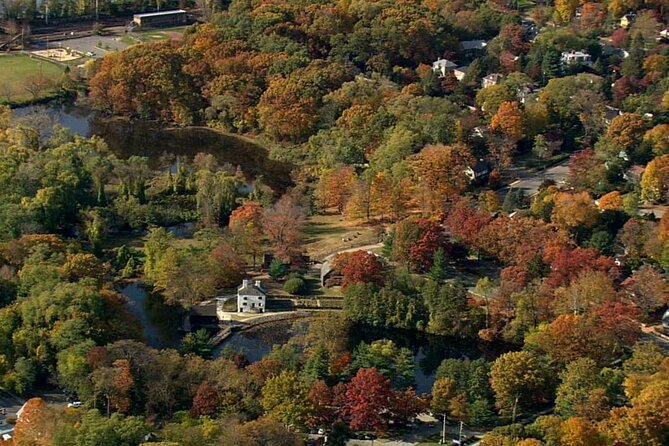
This is a mobile-ticket, English-language ghost tour in Westchester County. You walk between seven points, and each one is paired with a short audio segment—so you’re not trapped sitting anywhere. Total time is about 1 hour 15 minutes (approx.), which is a solid fit for a quick half-day in the New York suburbs.
At $10 per person, the value is in the “guided” part. For most self-guided tours, you’re paying to access audio. Here, the audio is built around places you’d reasonably want to see anyway: theaters, churches, Revolutionary landmarks, and the cemetery tied to Washington Irving. Even better, the route is clearly designed to be walked at an easy pace—when you take your time at each stop.
Two small logistics notes matter. Opening hours run 8:00 AM to 11:00 PM (daily), so you can schedule around your day. And the tour is capped at a maximum of 999 travelers, which is reassuring in a “this won’t be chaos” sort of way, even though it’s self-guided.
Starting at Tarrytown Music Hall: 1885 meets paranormal lore
Your tour begins at Tarrytown Music Hall, 13 Main St, Floor 2 in Tarrytown. The building dates to 1885 and has hosted vaudeville acts, silent films, and world-famous performers. That matters because the audio doesn’t treat the theater like a random backdrop; it uses the venue’s past as a reason the hauntings feel believable.
This is also one of the two places that flags an important extra: admission ticket not included. So if you want to step inside for anything beyond looking around, you’ll need to handle entry separately. One more practical point: theaters and event venues can have access limitations, and if the doors are closed for an event, you may need to rely on what you can see from outside while your audio plays.
Why this stop works: it gives you an actual setting with age and stage energy, then flips into the haunted-history angle fast. It’s an effective opener because it sets the tone before you head into darker, quieter spots.
Patriot’s Park: where the Revolutionary War story turns personal
Next comes Patriot’s Park, a free stop. This is tied to the Revolutionary War capture of British Major John André, and the wider story of Benedict Arnold’s treason. The Captors’ Monument honors the local militiamen whose vigilance helped change history’s outcome.
Today, the park functions as a peaceful green space, which is exactly why it’s creepy in the context of a ghost tour. A quiet place can make strange audio effects feel louder. And there’s even a hint in the tour framing about strange activity at dawn, so if you’re tempted to walk early, this is one stop where that timing fits the mood.
Practical advice: keep your phone battery healthy here. Parks are where you might pause for a moment, check bearings, and decide if you’re going to lean into the audio fully or skim the next segment while walking.
28 Beekman Avenue: municipal building, echoing footsteps

Your third stop is the municipal building at 28 Beekman Avenue. Like the other early stops, it’s short, but the audio direction gives it a heavy, late-night feel—footsteps echoing late into the night and shadow figures showing up where they shouldn’t.
This kind of stop is a clever technique for a self-guided tour. Instead of only pointing you at obvious “haunted attractions,” it uses an everyday-looking building and makes you listen for the eerie story behind it. That contrast is what turns the walk into more than just scenery.
One consideration: if the building area is busy or blocked at the time you’re there, you may have limited space to stand and listen comfortably. Still, because this is a free stop, it’s a low-risk one to attempt even if your timing is off.
Philipsburg Manor: tranquil exterior, restless past
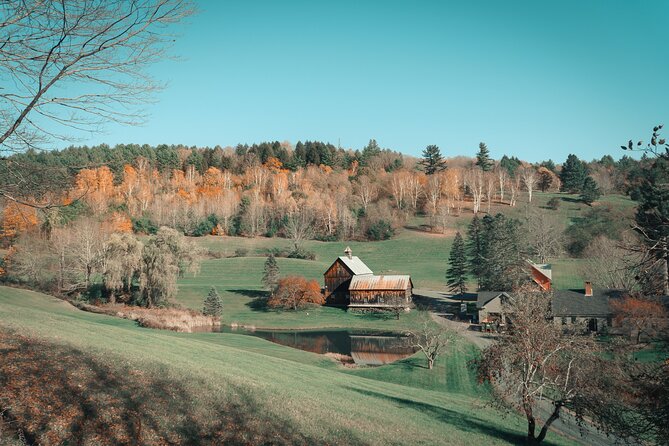
Then you reach Philipsburg Manor, another short stop. The framing here is more than spooky. It’s described as an 18th-century milling and trading center, built on labor where people’s names and stories still resonate.
This stop is also flagged with admission ticket not included, which is important for planning. You’ll likely want to know whether you can access areas just by walking around outside versus needing entry to hear or see more. If you’re trying to keep the whole experience budget-friendly, treat this as a “nice-to-enter if open” stop rather than an automatic.
Why I think this works well: the audio doesn’t only chase chills. It also pushes you to think about how places held work, movement, and daily life. When a story includes that kind of human weight, the haunting tone can feel more grounded—and less like cheap theatrics.
Headless Horseman Bridge: the Ichabod Crane ending
The tour’s next highlight is Headless Horseman Bridge—a modest crossing tied to the legend from Washington Irving, where Ichabod Crane’s fate was sealed. Even though the original bridge is gone, the audio leans into locals’ claims that a cloaked rider still charges through mist on moonless nights.
This is a strong stop for two reasons. First, bridges are natural “sound places.” The walking rhythm plus any audio cues can make footsteps and pacing feel sharper. Second, it links the story you’ve likely heard before to actual geographic points, so it feels less like a bedtime tale and more like you’re chasing a legend’s last known trail.
Practical note: the bridge is free, but your experience depends on visibility. If it’s foggy or dark, it can feel extra creepy. If it’s bright and clear, it can still be fun, but the tone will be more story-driven than atmosphere-driven.
Old Dutch Church and Burying Ground: late 1600s and leaning graves
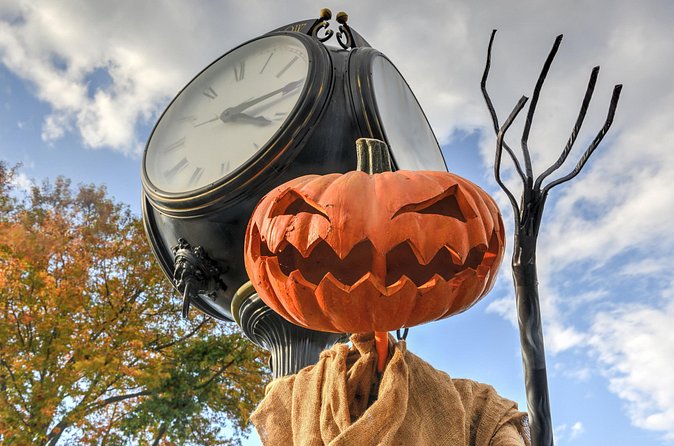
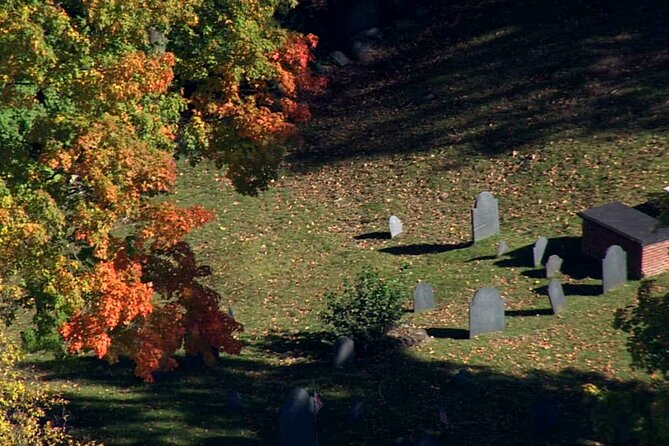
After the bridge, you’ll hit Old Dutch Church and Burying Ground. The church is built in the late 1600s and is described as one of the oldest in New York. This stop is free and focuses on the surrounding cemetery and graveyards, including Revolutionary War soldiers, local villagers, and figures said to have inspired Irving’s tale.
This is where the walk gets more still. Graves lean and crumble under centuries of weather, and that physical aging makes the audio feel less like it’s pretending. You’re not just hearing a ghost story—you’re standing near the kind of place where time is obvious.
If you’re doing this in fall (the vibe here), wear shoes with traction. Ground around older graveyards can be uneven, and you’ll want to concentrate on listening rather than watching your step every ten seconds.
Sleepy Hollow Cemetery: Washington Irving closes the loop
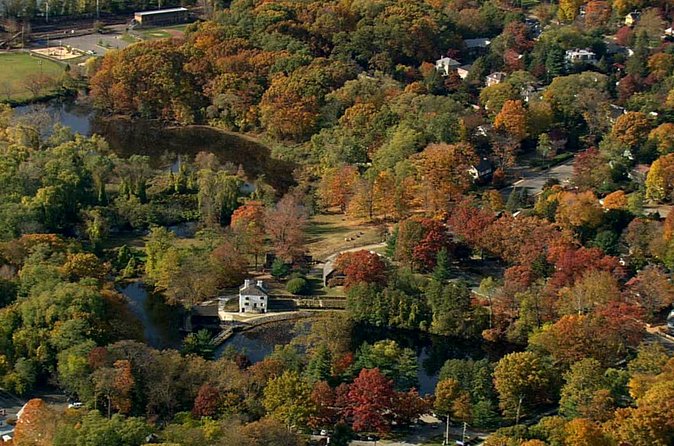
Your final stop is Sleepy Hollow Cemetery, located at 540 N Broadway. It’s described as established in 1849, and it’s also the final resting place of Washington Irving, along with countless local legends.
This ending is satisfying because it anchors the literary side in a real, named person and a real cemetery timeline. If the rest of the tour is about legend building, this is where it feels like the legend lands—like the story can’t just float away.
One last practical note: the tour can feel like a straight-line walk rather than a perfect loop. If you’re tired at the end, it can help to plan a quick ride option rather than assuming you’ll want to keep walking.
Price, walking time, and whether $10 is fair
Let’s talk value plainly. $10 per person for a self-guided audio experience is usually in the “totally doable” range. Here, it works because you’re paying for:
- guided audio in English,
- access to a sequence of historically meaningful stops,
- and a route that takes you through places with enough identity that even the non-scary parts feel worth your time.
In terms of time, expect something close to the advertised 1 hour 15 minutes, plus your natural pace. One helpful real-world detail: if you stop and listen at every point, it can run closer to 1.5 hours. That lines up well with a late morning or early evening plan, especially because the tour is open from 8:00 AM to 11:00 PM.
So is it a bargain? For adults who enjoy creepy storytelling and historical settings, yes. For people who dislike gore or want very mild “spooky” content, it might not feel as good, because the tone can get intense.
What to watch out for: setup hiccups, closures, and gore
Self-guided tours are great—until you hit the one part you can’t “walk through”: the start.
At least a few people have run into issues like:
- not receiving a link right away,
- needing to use a help link/chat flow,
- completing an intake form,
- and using a password-like access step to get the audio going.
Also, don’t count on a staff member meeting you at the address holding headphones or doing a handoff. If you rely on human guidance to begin, bring patience. For the best experience, give yourself extra time at the start so you’re not rushing.
Closures can also happen. One stop at a theater/venue and another site like Philipsburg Manor can be unavailable due to events. If a location looks closed when you arrive, don’t panic—just keep walking and let the audio do its job.
Finally, intensity: the tour’s tone can be bloody and graphic. If you’re traveling with kids or anyone who prefers light chills over gore, you’ll want to think twice before choosing this specific ghost walk.
Who this tour fits best (and who should skip it)
This works best for you if you:
- like dark history and ghost storytelling that doesn’t pull punches,
- enjoy walking between multiple real landmarks,
- want an affordable plan in a tight time window,
- and can handle a digital self-guided start process.
It may not be ideal if you:
- hate any graphic content,
- need a lot of in-person guidance,
- or want to be sure every building door is open at the moment you arrive.
If you’re a solo walker or a couple, it’s easier to control your pace and keep the audio comfortable. If you’re in a larger group, you’ll still manage fine, but everyone’s timing can slow you down.
Should you book the Self-Guided Audio Ghost Tour of Sleepy Hollow?
I’d book it if your goal is a low-cost haunted walk that mixes legend with recognizable real places. The pricing is fair for what you get, the route has identity, and the audio tone is strong enough to satisfy people who feel most ghost tours are too polite.
Skip it (or reconsider) if gore and graphic details make you uncomfortable, or if you don’t want to deal with a self-guided start process and the possibility that a venue entrance could be restricted.
If you do book, the best move is simple: plan your timing so you’re not rushing at the start, and keep expectations realistic about closures and extra entry at Tarrytown Music Hall and Philipsburg Manor.
FAQ
How much is the Self-Guided Audio Ghost Tour of Sleepy Hollow?
It costs $10.00 per person.
How long does the tour take?
The duration is about 1 hour 15 minutes.
Where does the tour start and where does it end?
It starts at Tarrytown Music Hall, 13 Main St Floor 2, Tarrytown, NY 10591, and it ends at Sleepy Hollow Cemetery, 540 N Broadway, Sleepy Hollow, NY 10591.
What language is the audio offered in?
The tour audio is offered in English.
Is the tour ticket mobile?
Yes, it uses a mobile ticket.
Do I need separate admission tickets at every stop?
No. Admission ticket not included at Tarrytown Music Hall and Philipsburg Manor. The other stops listed are free.
Are service animals allowed?
Yes, service animals are allowed.
What are the opening hours for the tour?
From 08/08/2025 to 02/16/2027, it runs Monday through Sunday from 8:00 AM to 11:00 PM.
Is this tour refundable?
No. It is non-refundable and cannot be changed for any reason.