REVIEW · SALT LAKE CITY
Salt Lake Ghost Tour: Salt, Spooks, & Shadows
Book on Viator →Operated by Salt Lake City Ghosts By Us Ghost Adventures · Bookable on Viator
Salt Lake has a darker side. I love how it links downtown landmarks to real local history and then adds ghost-lore on top, and I also like the tight format: about six stops in an hour. One thing to plan for: you mostly stay outside and listen, so it’s more storytelling than interior sightseeing.
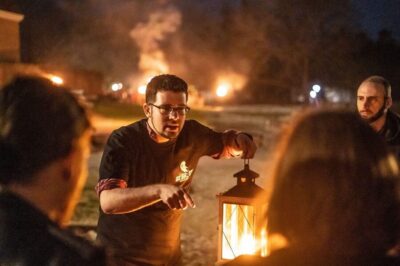
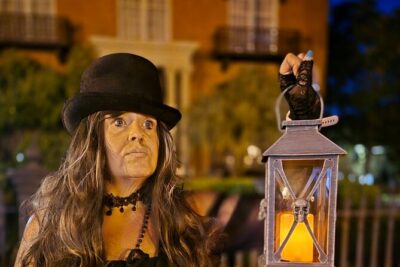
For me, the tour lives or dies on delivery, and the guides here seem to understand what makes a walk work. Names like Andy, Cody, David, Isabella, and Cory show up again and again for keeping groups engaged and mixing facts with eerie personal-style accounts.
Just note this is a nightlife-style walk, and a small number of reviews call out issues like missed starts, delays, cigarette smoke, or end-area discomfort. Most trips likely run fine—just come with the right expectations and a backup plan for getting back.
In This Review
- Key Things to Know Before You Go
- One Hour, Six Stops: How Salt, Spooks, & Shadows Feels on the Street
- Frank E. Moss Federal Courthouse (1905): Post Office, Court House, and Cold Halls
- Holiday Inn Express Downtown: When a Familiar Lobby Hides a Darker Chapter
- Capitol Theatre (1913): Vaudeville Glamour Meets Dickie Duffin Lore
- 19 E 200 S / The Walker Center: Old Money, Radio Waves, and Ghost Accounts
- Judge Building and the Steven Christensen Case: Tragedy as a Ghost Hook
- Whiskey Street: Tavern History and One of Downtown’s Most Mentioned Haunts
- Price and Logistics: Why $32 Can Still Feel Like a Good Deal
- Guides, Storytelling Style, and the EMF Factor
- Small Comfort Issues You Should Know About
- Who Should Book Salt, Spooks, & Shadows (and Who Might Skip It)
- Should You Book It? My Bottom Line for Salt Lake City
- FAQ
- How long is the Salt Lake Ghost Tour?
- How much does it cost?
- Where is the tour meeting point?
- Where does the tour end?
- Is the tour offered in English?
- What’s included in the ticket price?
- Are snacks included?
- How many people are in a tour group?
- Can I cancel for a refund?
- Is the tour okay for someone with moderate walking ability?
- Notes
Key Things to Know Before You Go
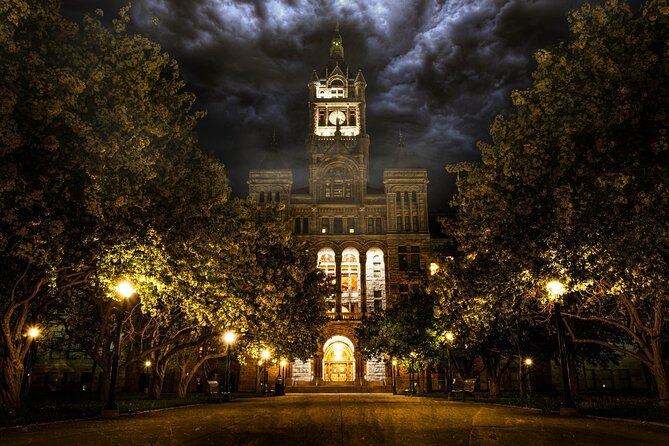
- Six downtown stops in about an hour means fast pacing and lots of story stops, not long chats at one location
- Outdoor viewing only: you generally don’t go inside the buildings you hear about
- Guides matter: Andy, Cody, David, Isabella, and Cory are repeatedly singled out for strong storytelling
- The EMF angle shows up: some groups detect activity on a monitor, and a few guests were surprised about device details
- Whiskey Street is a highlight: tavern history plus current hauntings makes the vibe feel grounded and spooky
One Hour, Six Stops: How Salt, Spooks, & Shadows Feels on the Street
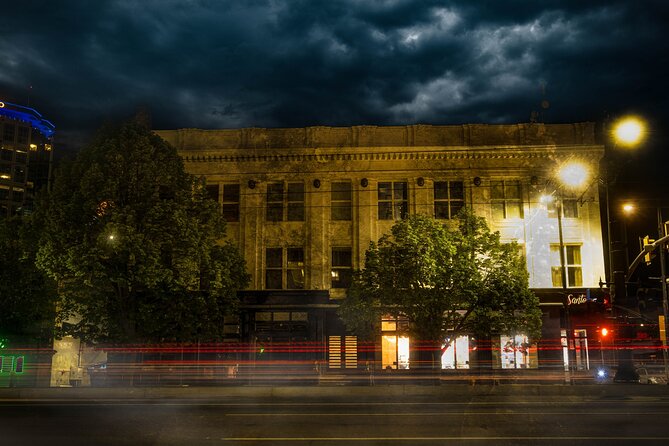
This is a 1-hour ghost walking tour of downtown Salt Lake City, priced at $32 per person. You’ll cover a cluster of historic sites near the city core—about ten minutes per stop—so it works well if you want something different without losing your whole evening.
The tour uses a mobile ticket and runs in English with a maximum group size of 35. You’ll want moderate walking stamina, since it’s standing-and-walking more than sitting, and you’ll be outside throughout.
My practical take: this is a tour for people who like stories on the move. If you’re hoping for a museum-style “go in, see artifacts, then learn,” you’ll feel a mismatch.
Frank E. Moss Federal Courthouse (1905): Post Office, Court House, and Cold Halls
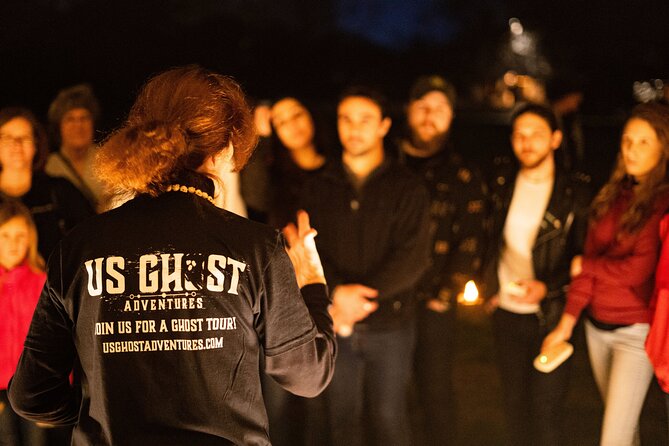
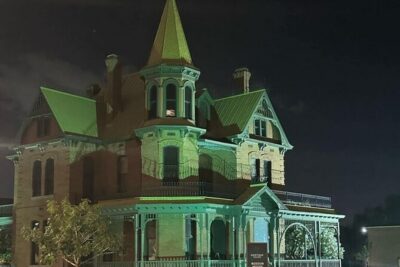
The tour starts with the Frank E. Moss United States Courthouse, completed in 1905. It originally served as a post office and courthouse, and the legend focuses on a stern judge and lingering presences people say still echo through the building.
Why this stop works: even if you’re not buying every supernatural claim, the courthouse setting helps the story feel anchored. Historic federal buildings in older cities tend to carry strong architecture energy, and this one gives you a natural place to start with “authority + mystery,” which is an effective setup for the rest of the walk.
A drawback to keep in mind: you’re not there to tour interior rooms for long. You’re there to hear what makes the place myth-worthy, then move on.
Holiday Inn Express Downtown: When a Familiar Lobby Hides a Darker Chapter
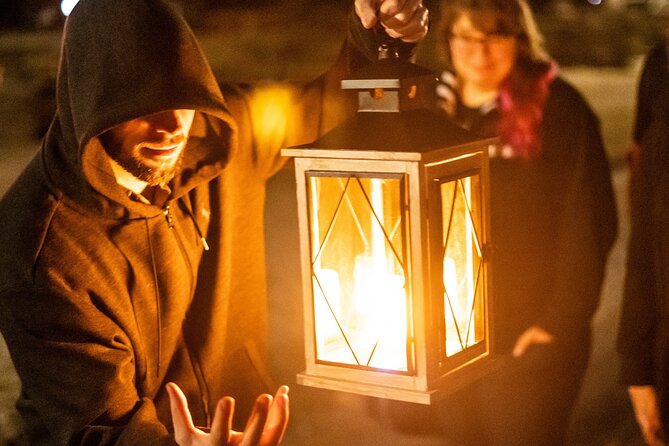
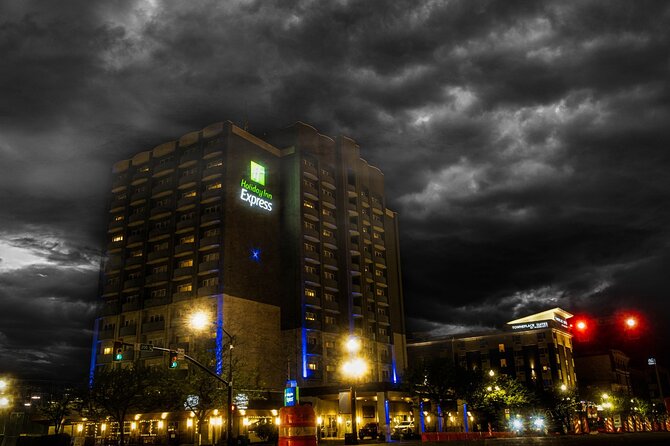
Next is the Holiday Inn Express Salt Lake City Downtown (IHG). From the outside it looks like the kind of place you might pass on your way to dinner, but the story frames it as a location with a disturbing past and paranormal rumors, even after remodels.
This stop is especially good if you like urban ghost stories—places you could realistically stay or visit. It also gives the tour a subtle theme shift: not all hauntings are in spooky ruins. Some are tied to everyday structures.
One thing I’d watch for: hotel areas can bring more foot traffic at night. If you prefer quiet, choose a night when streets are calmer—or accept that downtown has noise even when the stories get serious.
Capitol Theatre (1913): Vaudeville Glamour Meets Dickie Duffin Lore
The Capitol Theatre, built in 1913 (originally known as The Orpheum Theater), was a vaudeville hub in the early 1900s. Today, it’s known among paranormal fans for haunting legends, including the ghost of Dickie Duffin—with particular attention to activity said to happen in the basement.
This is the stop that a lot of people remember. One review specifically called out that they visited the building the day before and had no idea about the kind of underground activity linked to the stories. That’s a sign the guide can connect dots between a recognizable landmark and the darker layers you’d miss on your own.
If you’re bringing kids, this one tends to land well because it feels like theater plus mystery—two things young audiences usually respond to. Just don’t expect to walk downstairs and “prove it”; it’s still a storytelling format.
19 E 200 S / The Walker Center: Old Money, Radio Waves, and Ghost Accounts
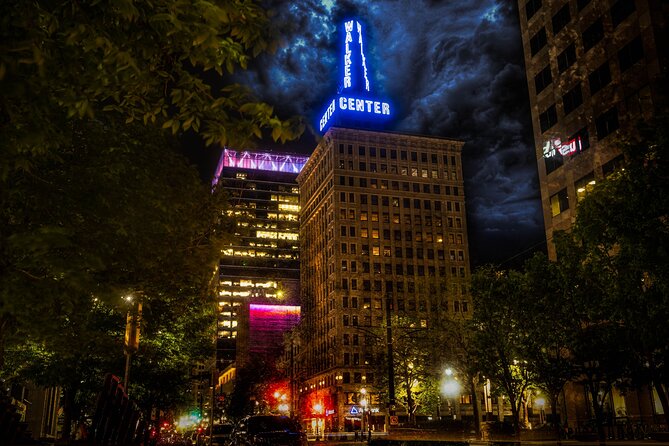
At 19 E 200 S, the tour points to the Walker Center, described as the last vestige of the Walker family legacy. The building has served multiple roles over time—bank, a radio transmitting station, and a weather tower—and that layered use becomes the fuel for the ghost legends and eerie occurrences tied to the site.
I like this stop because it explains something you can feel when you walk through old downtowns: the same address can change purpose for decades, and that history sticks in the stories. The guide’s job here is to connect the building’s functions to the kind of restless energy people imagine.
If you’re the type who enjoys architecture clues, listen closely here. When a story includes details about what the building did in the past—banking, broadcasting, weather—it’s easier to picture why people would later claim strange experiences.
Judge Building and the Steven Christensen Case: Tragedy as a Ghost Hook
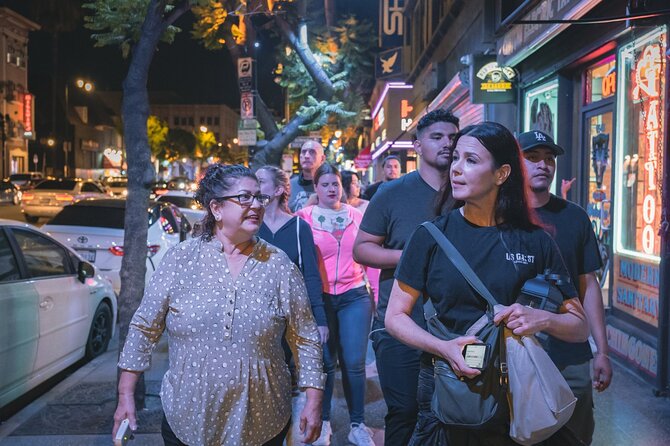
The tour’s tone shifts at the Judge Building, tied to the high-profile tragic death of Steven Christensen. The story frames the building’s reputation as moving from craftsmanship and elegance to a more somber association, making it a key stop for those drawn to real-world darkness.
This stop matters even if you’re not there for horror. It’s a reminder that some local hauntings are less about friendly phantoms and more about how communities process tragedy. If you prefer lighter “spooky fun,” you might feel this part is heavier than expected.
It’s also one of the reasons the tour can feel more like “history with chills” than “creepy prank night.” Plan for that emotional shift.
Whiskey Street: Tavern History and One of Downtown’s Most Mentioned Haunts
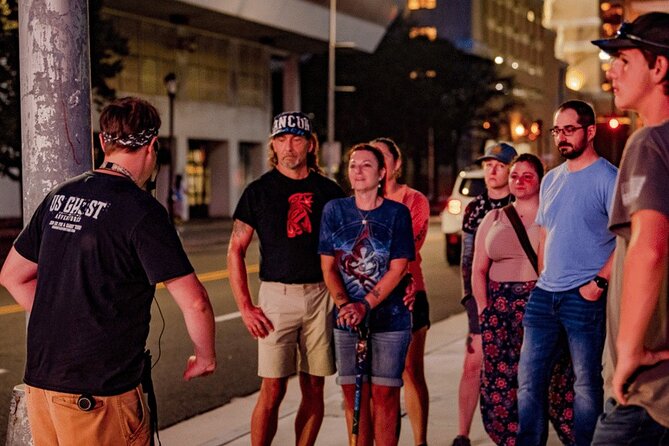
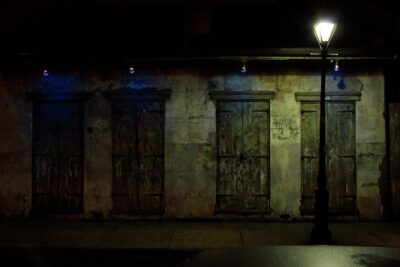
Finally, you reach Whiskey Street, named for the late-1800s concentration of taverns, saloons, and breweries. The tour ties that lively drinking past to present-day lore, describing Whiskey Street as notorious for hauntings where patrons and staff sometimes report eerie phenomena and ghostly presences.
This is a strong closer. You get a physical place where the past is easy to imagine—old-style social life in a corridor of historic blocks. And the stories here feel like they belong in the neighborhood rather than being pasted on.
Practical tip: the end point is near the Judge Building area, and one review flagged feeling unsafe near the end zone due to homeless presence and interactions that interrupted the group. I can’t predict what you’ll see on your night, but if you’re traveling with a teen or you’re a solo walker, plan your ride pickup or parking route ahead of time.
Price and Logistics: Why $32 Can Still Feel Like a Good Deal
At $32 per person for about an hour, the value depends on what you want. If you want a slow, inside-the-building experience, you’ll feel the price more sharply, because most stops are outside listening stations.
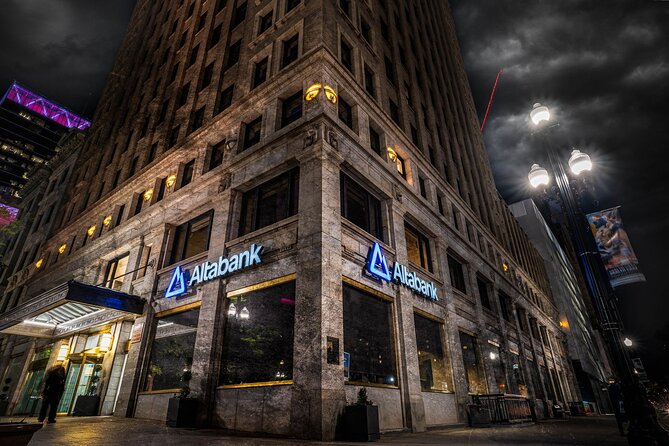
That said, you’re getting a concentrated route through downtown landmarks: courthouse, hotel, theater, a major tower-style building, the judge’s building, and Whiskey Street. You also don’t pay extra for typical admission stops; the stop descriptions list admission ticket free.
For me, this makes sense if you treat it like a themed city walk. You’re paying for:
- A set route you might not plan yourself
- A guide who brings story structure to downtown buildings
- A quick way to learn the names and locations behind the local legends
It may feel pricey if you expected interior access or a high-tech “ghost hunting” program. The tour’s vibe is human stories first.
Guides, Storytelling Style, and the EMF Factor
The guides appear to be the biggest variable in the whole experience. Several names come up as standout storytellers—especially Andy and Cody—with other guide names like David, Isabella, and Cory also noted for enthusiasm and keeping the group moving.
What I’d take from the feedback: some tours lean toward city history plus paranormal lore. Others lean more toward personal accounts. You’ll enjoy it more if you’re open to a mix of both.
There’s also an EMF monitor element that comes up in multiple accounts. One group said they detected activity on the monitor, and another mentioned the guide sharing EMF devices with some people. The tricky part: one family bought an EMF device online and then found a device was given to someone else in the party, which turned into disappointment.
So here’s the rule I’d follow: treat any EMF interaction as an add-on, not something you must “control.” If you bring your own EMF device, be ready that it might not match what the guide is using.
Small Comfort Issues You Should Know About
A couple of reviews mention things that can affect comfort during a night walk:
- Smoking/cigar smoke: one review said smoking by others during the tour made it rough for daughters with asthma.
- Communication delays or missed starts: a few reviews describe waiting a long time due to tour-guide issues or unclear updates.
I can’t guarantee how your specific tour night will run, but you can protect yourself a little. If you’re sensitive to smoke or you’re traveling with someone who has breathing issues, consider asking at check-in how the group handles smoking and where people will stand near you.
Also, keep your phone charged and watch for updates close to departure time. If plans change, you’ll want that message right away.
Who Should Book Salt, Spooks, & Shadows (and Who Might Skip It)
This tour is a good match for you if:
- You want a short, downtown-friendly ghost tour
- You like history landmarks that come with local legends
- You enjoy a guide who tells a lot of stories and keeps pace moving
- You’re okay with outdoor-only stops
It may not fit if:
- You expected to go inside buildings
- You want evidence-focused investigations instead of story-driven folklore
- You’re uncomfortable walking near the end area in the evening
If you’re traveling with a teen, some reviews suggest the experience can be fun for them—especially because the places are real downtown landmarks, not just a script recited in one alley.
Should You Book It? My Bottom Line for Salt Lake City
I’d book Salt, Spooks, & Shadows if you want an easy entry point into Salt Lake’s ghost-lore—fast, downtown, and guided by people who know how to tell a story on the move. The Capitol Theatre and Whiskey Street stops are the ones that most often feel memorable, and the itinerary hits a classic “civic buildings to nightlife street” arc.
Just go in with realistic expectations: you’ll mostly be outside, and the experience quality can vary based on the guide and how smooth the start time is. If you’re the kind of traveler who gets annoyed by delays or wants a tightly controlled “no distractions” environment, you might be happier choosing a different format.
FAQ
How long is the Salt Lake Ghost Tour?
The tour is about 1 hour.
How much does it cost?
It’s $32.00 per person.
Where is the tour meeting point?
The start is 239 S Main St, Salt Lake City, UT 84111.
Where does the tour end?
It ends near the Judge Building at 8 E 300 S, Salt Lake City, UT 84111.
Is the tour offered in English?
Yes, it’s offered in English.
What’s included in the ticket price?
The ticket includes all fees and taxes.
Are snacks included?
No, snacks are not included.
How many people are in a tour group?
The tour has a maximum of 35 travelers.
Can I cancel for a refund?
Yes. You can cancel up to 24 hours in advance for a full refund.
Is the tour okay for someone with moderate walking ability?
The tour recommends moderate physical fitness level, and it is primarily a walking/standing experience.
Notes
Service animals are allowed, and the meeting area is listed as near public transportation. Confirmation is received at booking.